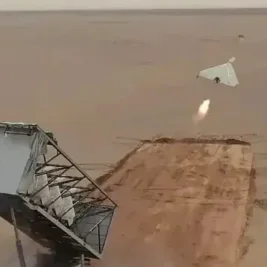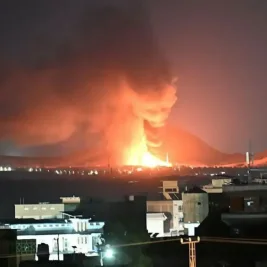
The United States military launched airstrikes against 90 sites across southern Iran on Thursday, July 9, 2026, to degrade Tehran’s capability to target commercial vessels navigating the Strait of Hormuz.
The operation triggered missile sirens across Gulf nations and caused global Brent crude oil prices to spike more than 5 percent to nearly $80 a barrel amid supply disruption fears.
US Central Command stated that the action followed recent attacks on three commercial ships in the strategic waterway, effectively ending last month's interim truce between Washington and Tehran.
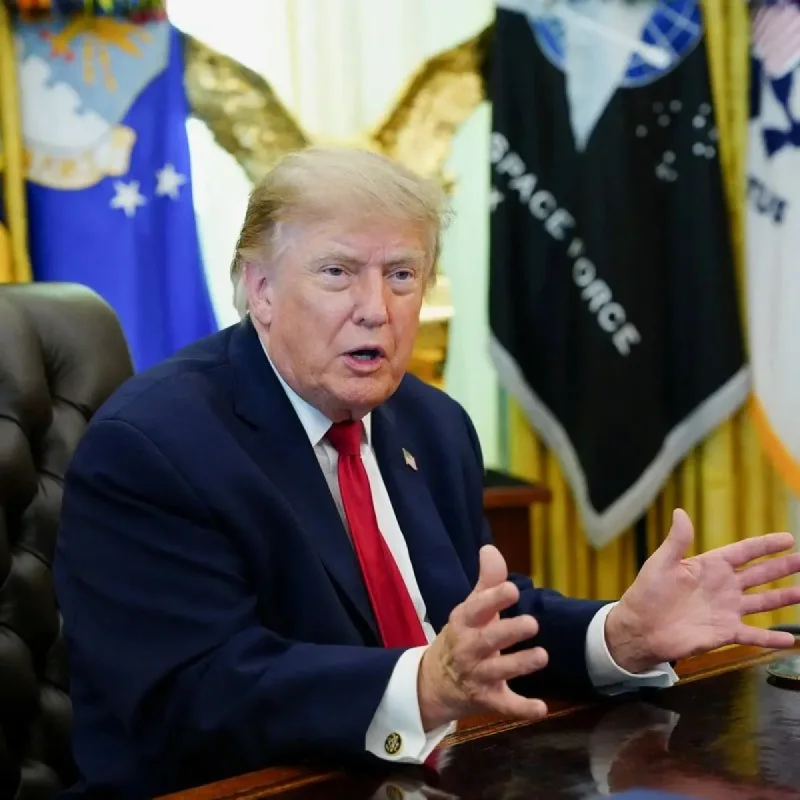
Trump Ends Ceasefire, Warns of Escalation
President Donald Trump announced the termination of the ceasefire after the initial wave of retaliatory bombardments on Wednesday.
He later posted on social media to explain that the deployment served as a direct response to maritime aggression, calling it "retribution for yesterday’s bombing of ships by Iran."
Trump further cautioned that the military engagement would intensify if Tehran continued its hostile operations, warning it would "get much worse."
Speaking to journalists during his flight, Trump mentioned receiving indications that the Iranian government wanted to negotiate "so badly."
He expressed uncertainty regarding future diplomatic engagements during the NATO summit in Turkey, saying he was "not sure."
When questioned by reporters about his critical stance toward the Iranian leadership, Trump noted his personal assessment, calling them "scum."
"I don’t want to deal with them anymore, they’re scum. You know what scum is?
They’re scum. They’re sick people," Trump said.
He raised doubts about whether Tehran would abide by any future diplomatic commitments.
"I just don’t know if they’re worthy of making a deal - I don’t know that they’re going to honour the deal, that’s the problem," he added.
Iran Responds: 'If You Strike, You’ll Get Hit'
Iranian Foreign Minister Abbas Araghchi rejected the possibility of further talks and condemned the American remarks on X.
"We do not answer vulgarity with vulgarity, but with action: fearlessly and with great valour," Araghchi wrote.
Iranian Parliamentary Speaker Mohammad Bagher Ghalibaf also issued a warning on X regarding potential counterstrikes. "Let me put it plainly: if you strike, you’ll get hit," he wrote.
US Central Command reaffirmed its objective to secure international shipping corridors in the region, aiming to "further degrade Tehran’s ability to threaten freedom of navigation."
The military command emphasized that the actions were intended to protect civilian crews.
"The United States is holding Iran accountable for recent unjustified aggression against commercial shipping and civilian crews freely navigating a vital international waterway," it said.
In financial markets, Tyler Rosenlicht of Cohen & Steers commented to The Wall Street Journal on the sudden instability.
"We always expected it to be a rocky road to resolution, but this is a pretty big rock," he said.
He expressed concern over market predictability amid the conflict. "It’s really tough to be confident in anything," Rosenlicht added.
Meanwhile, the Mehr news agency reported that the coffin of Iran's late supreme leader, Ali Khamenei, was moved from Najaf to Mashhad for burial, concluding six days of ceremonies.