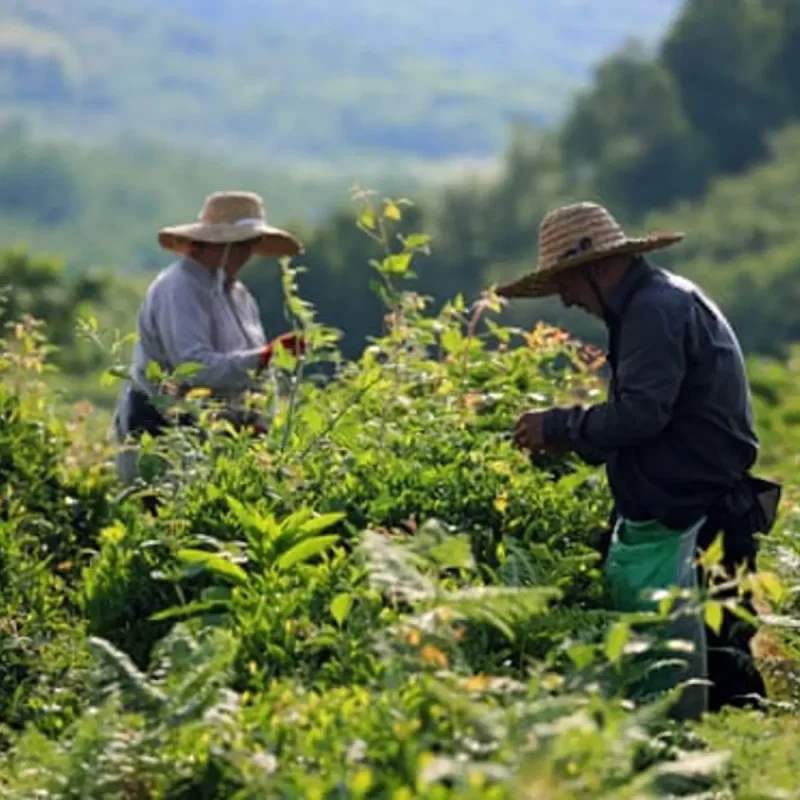
Georgia's domestic tea industry is experiencing a modern revival after collapsing alongside the Soviet Union.
Growers are now targeting the international luxury market, shifting focus toward high quality rather than the massive volumes of the Soviet era.
According to The Guardian, Georgia's humid Black Sea climate and freezing Caucasus winters create ideal conditions for growing sweet, pest-resistant, and organic tea leaves.
Importers across Europe and the United States are increasingly sourcing these premium leaves for high-end establishments.
"These plants are obviously very happy where they are because it just tastes incredible," said Ana Dane of New York-based In Pursuit of Tea, supplier to Michelin three-star restaurant Eleven Madison Park.
"They were just exquisitely-produced teas," she said, describing her first taste from Renegade Tea Estate in Georgia's Imereti region.
From Empire to Abandonment
Georgian tea cultivation dates back to the early 1800s when a local prince planted the first bushes near Ozurgeti.
The Russian Empire and later the USSR developed the Guria region, making Georgia the fifth-largest tea producer globally by the 1980s.
"All big empires, they really want to have their own tea," said Lika Megreladze, whose mother worked at the Institute of Tea and Subtropical Cultures in the 1970s.
"The Russian Empire really wanted to have their own tea."
After the Soviet Union dissolved, the massive collective farms were completely abandoned.
The modern revival began in 2006 when Shota Bitadze and 16 families formed the Georgian Organic Tea Producers Association to teach local hand-processing of premium leaves.
A government rehabilitation program financed 70% to 90% of costs, expanding active tea production from 800 hectares in 2014 to 1,900 hectares by 2019.
"We had situations where people had tea bushes in their garden, but they didn't know how to make tea with their hands," said Giorgi Bitadze, Shota's son.
While traditional buyers in former Soviet bloc nations remain active, boutique organic brands are penetrating Western retail spaces.
Specialized shops like Palais des Thés in Paris have increased Georgian tea orders 12-fold since 2019.
"Getting past the Iron Curtain is a struggle," said Timothy Merkel, an American tour guide in Tbilisi who created the Georgian Tea Makers website and previously aimed to sell Georgian tea in the UK.
New local enterprises are adopting innovative production methods to appeal to younger global tea drinkers.
Some startups use traditional clay wine vessels called qvevri to ferment tea leaves, creating new flavor profiles.
"The first step and first thing when we started the business was not to export to Russia," said Nika Sioridze, co-founder of growers GreenGold with Baka Babunashvili in 2017.
"It's not a stable market."
During an experimental green tea drying process, Sioridze accidentally created a unique roasted blend after noticing unexpected smoke in the facility.
"And then we realised that we have not burnt the tea, we have roasted it," he said, speaking of the Phoenix tea in GreenGold's catalog.
"I'm burning it and it's alive again, a new life."