Uganda hosts 2 million refugees across 13 settlements, the largest refugee population in Africa.
Severe funding shortages and international aid cuts have pushed the nation's progressive refugee programs into a deep crisis.
The UNHCR secured only 12% of the $850 million required for its Uganda operations this year.
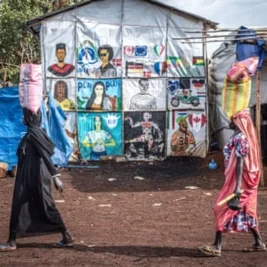
This financial deficit severely impacts overcrowding camps like Kiryandongo, which holds over 167,000 residents and welcomes new arrivals daily due to conflicts in Sudan and South Sudan.
Food Rations and Malnutrition
The World Food Programme drastically reduced its food rations, supporting only 663,000 refugees this year compared to 1.6 million in early 2025.
Acute malnutrition among children under five surged by nearly 50% within a single year.
The International Rescue Committee stated that extreme budget drops have brought the local healthcare system to the brink of failure.
The IRC health budget in Uganda plummeted from approximately $18 million in 2025 to just $4 million in January, forcing the closure of clinics across 11 settlements and the layoff of 80% of its workforce.
"Two million lives are at stake here.
Without a response, I worry the refugee health systems will collapse," says Elijah Okeyo, the IRC’s country director.
"We risk reversing all the work that has gone into the humanitarian health system."
Following the December closure of two IRC-supported clinics in Kiryandongo, refugees must travel much further to find functional medical care, where they frequently face severe medicine shortages.
Suzan Mandera, a 30-year-old refugee from South Sudan, now walks nearly 9 miles to the government-run Panyadole health centre.
"That is now my medicine.
I mix the leaves in a pot, boil them all and drink until I become dizzy with sleep.
I don’t think it is a good idea, but what can I do?" Mandera says, pointing at surrounding guava, mango, and eucalyptus trees.
Medical Staff Shortages and Rising Mortality
Panyadole health centre remains under massive strain after losing 58 of its 130 personnel in December, while attempting to serve a population of 300,000 people.
Dr Nicholas Sabiiti, a medical officer at the facility, expressed that he rarely gets a day off or finds time to eat before nightfall after letting go of more than half the staff in 2025.
His colleague, midwife Sarah Birungi, explained that massive travel distances and long queues cause patients to suffer dangerous medical delays.
Midwives are under extreme demand, leaving some deliveries unattended.
"We are seeing mothers with sepsis returning to hospital because of all these delays," she says.
"It’s either they delay getting to us because of long journeys and queues, or we are delayed attending to them, which was never the case before we lost all these staff."
While no puerperal sepsis cases occurred before the October staff cuts, Panyadole recorded at least five cases in January.
Furthermore, IRC data indicates that newborn deaths at the facility increased from 13 in October to 23 in January.
In January, the United Nations Population Fund identified a vital need for 267 midwives across all Ugandan settlements, but funding shortfalls left only 23% of these positions filled.
Kristine Blokhus, country representative for the UNFPA in Uganda, noted that camp, fuel, and salary cuts have largely grounded mobile midwife teams.
"When women in remote zones cannot access a mobile team or afford transport to a clinic, they are forced to give birth at home, dramatically increasing the risk of maternal death," she says.
Patient attendance numbers dropped from 15,065 in October to 10,926 in January, which residents attribute to a growing sense of resignation.
Mandera recalled calling an ambulance for a mother in labor, only to be told it was not an emergency because the entire settlement now shares a single ambulance driver, down from three active ambulances.
Volunteer translator Fatima Muhammad Ahmed added that volunteers no longer receive modest transport stipends, preventing them from walking miles to help patients communicate with healthcare workers.
The UNFPA also reported a 30% shortage of essential obstetric medicines and neonatal equipment in seven settlements, including Kiryandongo.
When specialized malnutrition programs ended due to lost funding, acute malnutrition prevalence in the settlements climbed from 5.4% to 7.8%.
While a recent $5.4 million injection from Unicef and UNHCR to the Ugandan ministry of health aims to assist, community outreach, mental health, and laboratory services remain heavily downscaled, and village health teams plummeted from 2,517 in 2025 to just 163.