A 65-year-old Sudanese refugee, Rahmatalla Abdeen, endured a dangerous two-day journey on a moped to escape Rapid Support Forces (RSF) militia members before crossing the border into Ethiopia on May 17.
Abdeen sought safety after being separated from his family when the RSF captured Wad Madani 883 days earlier.
The sprawling war in Sudan continues to destabilize neighboring territories, drawing in Africa's second-most populous country.
A clandestine RSF training hub has been set up at an Ethiopian military installation near the western town of Asosa.
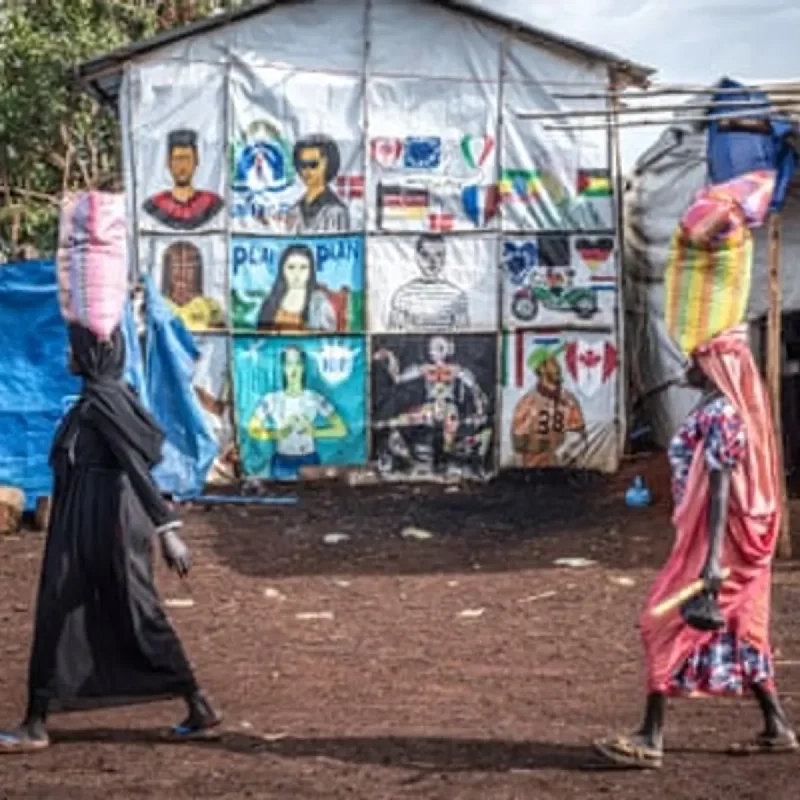
Located nearby down the B40 highway is the Ura refugee camp, which currently houses 14,500 Sudanese individuals who escaped RSF violence.
Camp residents report severe safety concerns, noting that militia members have entered the camp to compile target lists for the nearby base.
"They are so close to us here.
We are in a very dangerous situation," said Khadijah Ahmed, 42, who fled Khartoum two and a half years ago with her children.
Dawud Suliman, 31, escaped Zalingei in Darfur during a 2024 offensive that killed 25 of his family members, and he now fears remaining relatives will be targeted inside Ethiopia.
"We are scared they will report back," said Hamza Al Bashir, 52, regarding the presence of militia members near the camp.
On June 21, Prime Minister Abiy Ahmed secured another election victory, though experts warn his new term arrives alongside escalating risks of regional warfare.
Potential escalations could bring the Sudanese military, Eritrean forces, Tigrayan groups, and Egypt into alignment against the RSF and its supporters.
Diplomats in Addis Ababa noted that the risk of widespread destruction acts as a temporary deterrent against full-scale regional confrontation.
"They appreciate the likely outcome is mutually assured destruction," stated an official.
Three days prior to his election confirmation, Abiy Ahmed launched a project titled Makatet, meaning inclusion in Amharic, at the Adwa Victory Memorial Museum.
The initiative seeks to integrate more than 1.1 million refugees into the economy by granting access to jobs, public healthcare, and schooling.
"We need to make the refugee population more self-reliant: you cannot keep people dependent on humanitarian assistance year after year.
The nature of humanitarianism needs to be redefined," said Barham Salih, head of the UN refugee agency.
"Given the scale, this is not the moment to look away. This must not be about shifting responsibility.
This has to be about sharing responsibility. Ethiopia is showing the way," Salih added.
Educated refugees in Ura, including teachers and doctors, expressed eagerness to rebuild their livelihoods under the new framework.
Yousif Babiker, 49, a former hotel supervisor from Khartoum, expressed hope that his four children would secure proper careers through education.
His daughter, 23-year-old Ruaa Idris, has been striving to continue her education to become a gynecologist.
"Given a chance I will catch it with my teeth," said Idris, who recently reunited with her father in the camp.
Safety challenges persist across other Ethiopian facilities, including the Jewi camp in Gambela, where 70,000 Nuer refugees face attacks when searching for food outside camp borders.
"I don't feel safe here," said Peter Keang, 38, who arrived after fleeing drone strikes and armed clashes in South Sudan.
Nyamach Duoth, 20, noted that women face extreme danger in nearby forests: "Food supplies have reduced, but people are worried about looking for food in the forest.
Women are raped there."
Despite these perils, small businesses are emerging, such as a soap manufacturing venture in Jewi that produced 168,475 bars, as well as local perfume and food stalls in Ura.
"It's in our national interests as a whole," said Salih, emphasizing that global powers must assist hosting countries rather than ignore displacement crises.
For refugees residing in these remote camps, access to basic rights and security remains an urgent priority.
"What's the point of safety without living?" asked Idris.