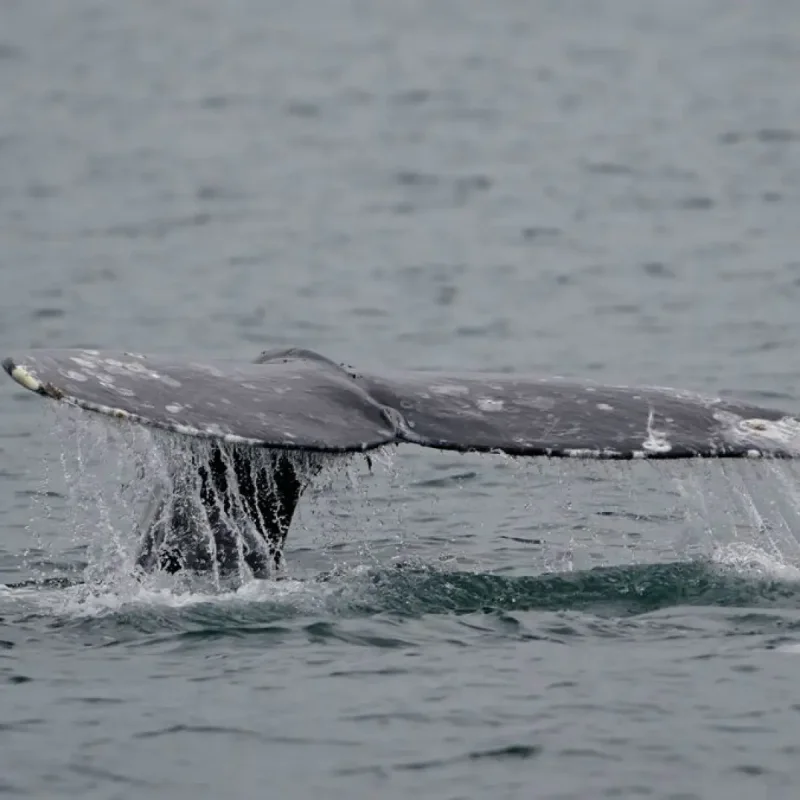
A severe marine crisis is unfolding along the Pacific Coast as environmental groups warn that surging gray whale mortalities could make 2026 one of the deadliest years on record for the species.
Data linked to the National Oceanic and Atmospheric Administration revealed that 145 Pacific gray whales have been found stranded on beaches so far this year, including at least 20 in California and 13 in Alaska.
This comes after 179 strandings were documented in 2025, raising alarms that the current population of approximately 13,000 individuals has plummeted to its lowest level since the 1970s.
Strandings Only a Fraction of Actual Deaths
Conservation groups report that beach strandings only represent a fraction of actual deaths because most whale carcasses sink at sea.
Experts utilize conservative metrics to estimate that the true offshore mortality rate for 2026 could already sit around 1,450 whales, driven primarily by starvation, ship collisions, and fishing gear entanglements.
Oceans Program Director Miyoko Sakashita explained that warming Arctic temperatures disrupt the marine ecosystem, forcing malnourished whales into hazardous, high-traffic coastal zones in search of food.
"There's much less prey for them, so they've undertaken this huge, long migration, and now they're on their way back up to Alaska, but they're looking for food, and they're pretty desperate, so they're ending up in these areas where there's lots of ships, and there's lots of fishing gear they have to traverse," said Miyoko Sakashita, Oceans Program Director.
"It's almost a deadly maze that they have to make it through."
Public Employees for Environmental Responsibility noted that the 145 reported strandings as of July 6 already outpace yearly numbers from the previous three years of the federal Unusual Mortality Event designation.
"As of July 6 of this year, 145 gray whale stranding deaths have been reported, a rate already exceeding yearly totals recorded during the last three years of the declared 'Unusual Mortality Event,'" according to a written statement from Public Employees for Environmental Responsibility.
The group also detailed how unobserved mortalities vastly exceed the visible shore strandings.
"The stranding numbers are only the tip of the iceberg since most gray whale mortality is unobserved as carcasses often sink before they wash up on the beach," according to the statement from Public Employees for Environmental Responsibility.
Using mathematical ratios, the group projected a catastrophic outlook for the Pacific population over the last two years.
"Using a very conservative ratio of 9-to-1 for the 145 observed stranded whales so far in 2026, this means that another 1,305 may have died offshore, making their true total mortality rate so far this year likely around 1,450," according to Public Employees for Environmental Responsibility.
"For the 324 stranded mortalities reported in 2025 and so far in 2026, total gray whale mortalities could range from 2,268 [to] 8,100.
Scientists consider this a 'Catastrophic Mortality Event.'"
Experts Call for Urgent Action
Alaska marine ecologist and PEER Board of Directors Chairman Rick Steiner stated that the massive loss of life within a vulnerable population requires immediate global concern.
"The gray whale appears to be suffering its second Catastrophic Mortality Event this decade," said Rick Steiner, Alaska marine ecologist and PEER Board of Directors Chairman.
"The loss of thousands of whales in just two years from a population at significant risk should be of concern to us all."
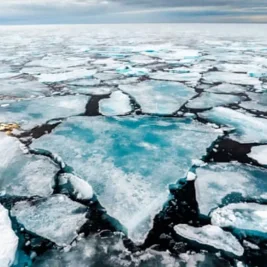
He connected the starvation patterns directly to the loss of northern sea ice, which compromises the benthic prey base that whales depend on.
"Gray whales seem to be starving, as Arctic sea ice decline is reducing their Arctic seabed prey resource," said Rick Steiner, Alaska marine ecologist and PEER Board of Directors Chairman.
"As we seek to reduce carbon emissions to mitigate this long-term threat, other shorter-term threats to these whales must also be reduced, including ship strikes, oil spills, entanglement in fishing gear, harmful algal blooms, microplastic pollution, ocean noise, disturbance, and the harvest in Russia."
Steiner noted that some whales are moving into new coastal areas and altering their feeding behaviors to survive.
"Switching from the benthic little bugs, the amphipods that live in the seabed sediment, to small fishes like Arctic cod up in the water column," said Rick Steiner, retired University of Alaska marine conservation professor.
He has petitioned federal authorities to restore protections for the species to establish better management parameters.
"The way to do that is to relist them on the Endangered Species Act, provide the management tools that NOAA needs in order to give these guys the best chance of making it through this climate bottleneck," said Rick Steiner, retired University of Alaska marine conservation professor.
PEER Science Policy Director Kyla Bennet criticized federal regulators for failing to implement mitigation measures like safety zones.
"Despite mounting threats, NOAA has yet to take any affirmative action to protect the gray whale," said Kyla Bennet, PEER Science Policy Director.
"Further inaction by NOAA will push the West Coast population of gray whales into an extinction spiral."
NOAA Fisheries spokesperson Michael Milstein responded via email that the agency is still analyzing the environmental patterns and the petition.
"At this point, elevated strandings have continued, but all indications are that the causes remain the same," said Michael Milstein, spokesperson for NOAA Fisheries.
The federal agency has not provided a specific timeline for its final administrative determination regarding the relisting petition.