The 2026 World Cup has captivated the United States, drawing record-breaking television audiences and packed stadiums across the country.
According to The Guardian, the tournament has become a vibrant showcase of multiculturalism, defying early concerns about logistics and politics.
Before the event, skepticism was high due to visa restrictions for fans from certain nations, high ticket prices, slow hotel bookings, and controversial corporate changes like commercialized hydration breaks.
However, data now shows unprecedented turnout at American arenas.
The first 78 matches averaged 64,511 spectators per game, an increase of 10,000 fans compared to the 2022 tournament.
FIFA reported selling 6.5 million tickets, with a stadium occupancy rate of 99.7%.
Record-Breaking Broadcast Ratings
Broadcast ratings have reached historic highs in US television history.
The round-of-16 match where the US men's national team lost to Belgium attracted an average of 33 million viewers on Fox.
The broadcast peaked at 41 million viewers during the final 15 minutes.
This audience surpassed the viewership of the 2025 World Series and Game 5 of the recent NBA finals.
It became "the most-watched soccer telecast on one network in US history," breaking previous records set when 26 million watched the USMNT defeat Bosnia and when audiences saw a 4-1 victory against Paraguay.
American viewers are also heavily tuning into non-US matches.
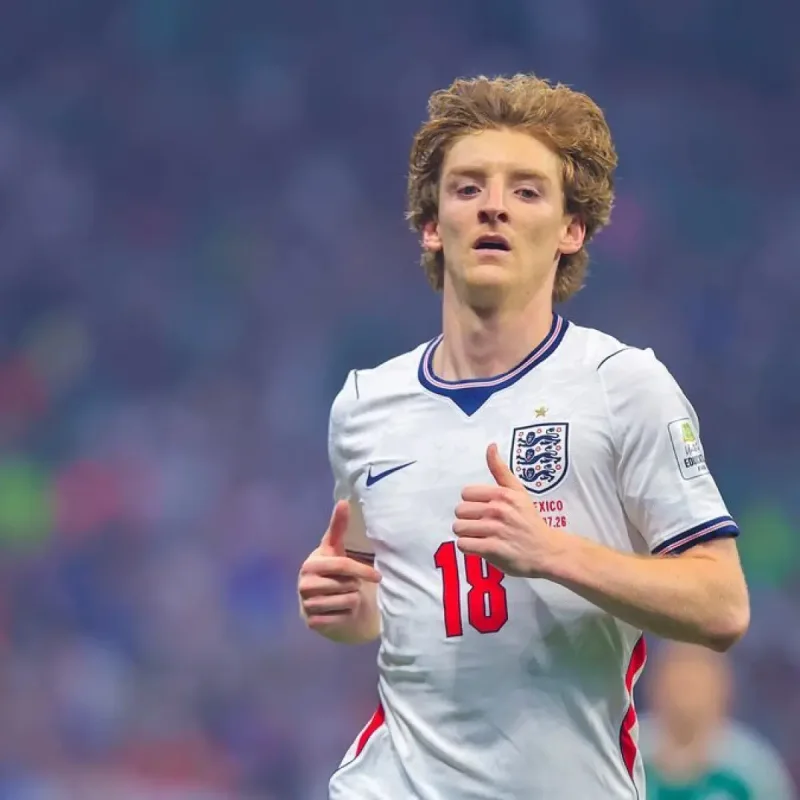
A thrilling game between England and Mexico drew 21.7 million viewers on Fox and an additional 23.2 million on Telemundo.
Ubiquitous Fan Culture and Streaming Access
Data from Ipsos Sports indicates that 40% of American adults actively follow the tournament via social media.
Additionally, a quarter of the population has watched games at local restaurants or bars.
Alex Lawton, a 32-year-old fan tracking the quarter-final match in Brooklyn, noted he had watched dozens of games.
He opted for Spanish broadcasts "because it's one of the more accessible ways to stream it" due to pricing differences.
His friend, 31-year-old Paul Revell, described the football atmosphere in New York City as electric.
He noted that fans could be seen celebrating throughout various neighborhoods and public transit systems.
"It's completely ubiquitous," Revell stated.
"I mean, you can go on any block in New York and there's going to be a vibe, with people cheering."
He recalled commuters watching matches together on smartphones during train rides, describing the shared experience as an "amazing moment" for the community.
The current sporting boom reflects decades of soccer development in the United States.
Following the 1994 World Cup, profits helped establish Major League Soccer to build a sustainable men's domestic division.
The US women's national team further energized the sport by winning the Women's World Cup in 1999 and 2012.
Increased broadcasting rights for the Premier League and La Liga subsequently cultivated millions of dedicated club football fans.
The 2026 tournament benefits from favorable primetime broadcasting schedules, allowing Americans to watch games without disrupting work hours.
The high quality of play has also driven engagement, averaging three goals per game.
Global superstars are delivering exceptional performances.
Kylian Mbappé and Lionel Messi have scored eight goals each, while Erling Haaland has netted seven, and Harry Kane has secured six.
The expanded tournament format featuring 16 additional teams has yielded remarkable underdog stories.
Curaçao, a Caribbean island of 150,000 residents, celebrated its first-ever World Cup goal during a 7-1 defeat against Germany.
Cape Verde, housing half a million residents, advanced to the knockout stages after tying all group opponents.
The tournament has given advertising validity to the claim that football "unites the world" through international connection.
For many citizens, the international gathering serves as a counter-narrative to isolationist political rhetoric.
Lawton characterized the event as a "brilliant reprieve and a unifying force that has just brought people from different walks of life and backgrounds together in a super beautiful way."
Memorable moments occurred off the field as residents in Lawrence, Kansas, embraced the visiting Algerian squad.
The University of Kansas marching band performed the Algerian national anthem, while locals supported the team with enthusiasm.
"One, two, three, viva l'Algérie!" chanted the local residents.
Similar cultural exchanges occurred in Texas, where a Japanese supporter joined Houston musicians on stage.
Meanwhile, Scotland fans traveled to Boston in massive numbers, altering the city's hospitality landscape.
In Los Angeles and Queens, fans crowded streets and neighborhood stores to witness the games.
Ecuadorian American Steven Guevara recalled watching Ecuador face Germany alongside hundreds of passionate spectators at a venue in Astoria.
"It was such a vibe! They made history and gave us hope.
'Si se pudo!' we chanted when the final whistle blew," Guevara stated.
"Beer was thrown in the air in celebration, and complete strangers were hugging and jumping up and down together, and some even crying tears of joy.
It was such a beautiful moment."
These lively celebrations contrasted sharply with official government events held during the same period.
A political gathering at the National Mall drew minimal attendance, despite assertions from officials like Dr Mehmet Oz.
"There's a ton of people here," Oz claimed, though video footage revealed a mostly empty plaza stretching into the distance.