Tate Modern's latest exhibition presents the profound, earth-bound work of Cuban-American artist Ana Mendieta.
It captures her unique ability to leave an indelible imprint on the world using primal elements.
The show is an engrossing, irresistible presentation.
It positions Mendieta as an artist who would be at the absolute forefront of this century's art had she survived.
Exhibition Overview
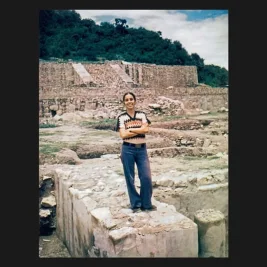
The exhibition opens outside the Blavatnik wing with a massive color photograph of a ruined ancient site. This immediately signals a departure from standard contemporary art presentations.
Born in Havana in 1948 and exiled to the US at age 12, Mendieta channeled her feelings of cultural displacement into excavating the very origins of mythology.
Her medium choices—blood, feathers, flowers, and sand—feel like raw, new inventions rather than ancient materials.
Her performance pieces involve drawing human silhouettes with gunpowder on tree trunks and setting them ablaze. The scorched shadows are reminiscent of Pompeii victims entombed in ash.
Mendieta's narrative frequently merges her own body with the landscape.
Photographs document her covered in mud against a tree bark or decaying as a universal, totemic mud figure in a pool of water.
Despite the solemnity, the exhibition highlights her wit.
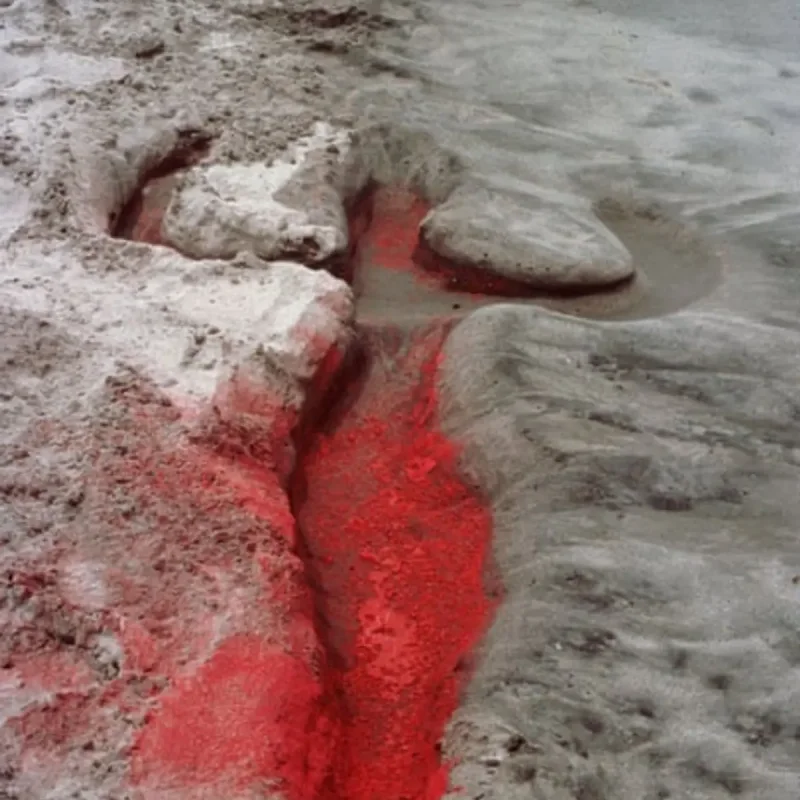
Her early work includes trying on a florid moustache to explore identity, or pouring animal blood on a sidewalk to secretly photograph the puzzled, disturbed reactions of passersby.
A significant portion of the gallery focuses on her 1981 return to Cuba. There, she carved curvaceous, abstract fertility goddesses directly into a nature reserve's limestone.
These Rupestrian Sculptures are captured in haunting black-and-white photographs. They look like enduring masterpieces of a lost civilization.
While contemporary peers like Robert Smithson and James Turrell built massive, abstract monuments, Mendieta's interventions remained highly personal and idiosyncratic.
Her work is deeply rooted in a coherent feminist mythology of ancient, half-forgotten goddesses.
The exhibition features startling, unforgettable imagery that masterfully connects organic matter like leaves, fire, and ash with a brilliant theory of the cosmos.
It displays a diversity of mediums, blending photographs, films, physical objects, and delicate drawings on leaves.
However, the exhibition completely bypasses the biographical context of her highly controversial death in 1985 at age 36.
Despite this omission, it is an absolute must-see for anyone interested in eco-feminism, earthworks, and deeply moving, primal performance art.
This exhibition brilliantly demonstrates how Ana Mendieta was decades ahead of her time.
It brands her handprint permanently into the history of art and cements her status as an enduring master whose work feels incredibly vital for the present moment.