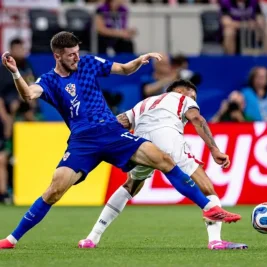
The rivalry between England and Argentina is one of football's most intense, often called the only transcontinental derby.
It is a clash forged in politics, history, and unforgettable World Cup moments.
Simeone's Scar and the 1998 Clash
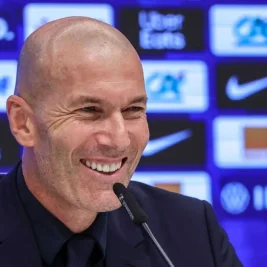
Diego Simeone, now Atlético Madrid coach, still carries a physical reminder of facing England.
He points to a scar on his shin from a challenge by Stuart Pearce at Wembley in 1991.
“I love playing against the English,” Simeone said. He described English football as open, aggressive, and passionate, making every match a proper contest.
The 1998 World Cup last-16 tie in Saint-Étienne remains his favorite international match. “It is the best international match I've played in,” he stated.
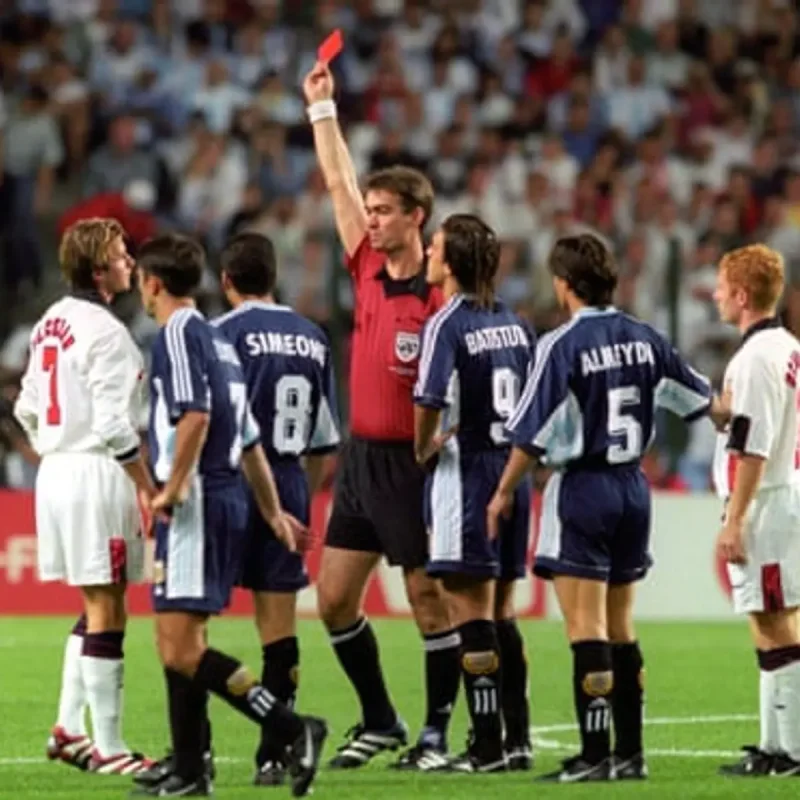
Simeone praised England's resilience, especially after David Beckham's red card. “They were incredible that night.
Alan Shearer and Paul Ince were extraordinary,” he recalled.
Beckham's sending-off came after Simeone nudged him and Beckham reacted with a petulant kick. Simeone admitted to being cunning.
“Sometimes you have to be a bit cunning and sometimes you play the fool,” he said.
He felt the media backlash against Beckham was unfair. “It was not just my fault.
There's a ref involved, too,” Simeone explained.
Owen's Audacious Run and a Disallowed Goal
England's response came from an 18-year-old Michael Owen.
He picked up the ball near the halfway line and sprinted past Argentina's defense to score a stunning goal.
“There was no fear in him whatsoever,” said former England manager Glenn Hoddle. He recalled thinking, “Bloody hell!
He's clean through!” as Owen beat the defenders.
Owen remembered the moment as instinctive.
“As soon as I saw Ayala, it was a case of making the best chance to shoot,” he said.
Simeone admitted they were unprepared for the teenager. “He was a shock to us.
We hadn't seen him play,” he said.
Later, Sol Campbell headed what seemed to be an 81st-minute winner, but it was disallowed for a foul on the goalkeeper.
Hoddle described the moment as a nightmare.
“It scarred me. I'm looking down into the corner flag where Michael's on Sol's back.
Suddenly I saw Ray Clemence and he says: 'What the fuck is going on?'” Hoddle recalled.
England's defense was exposed, but Argentina failed to score. Owen said, “How Argentina didn't score from that was amazing.
It was 11 against four!”
The match went to penalties, and England lost. Argentina celebrated wildly.
“They were jumping up and down like madmen,” said assistant manager John Gorman.
Simeone said, “Knocking out England, with all the history that goes with that, was a huge joy.”
Revenge came in 2002 when England won 1-0 in Sapporo.
Owen won a penalty after contact with Mauricio Pochettino, who later smiled and said, “For sure it was a dive.”
Owen acknowledged he could have stayed on his feet. “I could have stayed up,” he conceded.
The rivalry's roots go back to 1986, when Diego Maradona scored the “Hand of God” goal and then the “Goal of the Century.”
Simeone watched as a boy and told his father the handball was a good goal.
Simeone explained that in Argentina, street football is called “jugar a la pelota” — playing with the ball. “It's prettier than football.
It's about beating players, dribbling, showing off,” he said.
Maradona's second goal against England was the ultimate expression of that philosophy, a moment that still defines the rivalry.