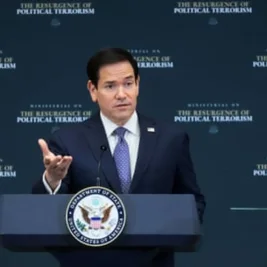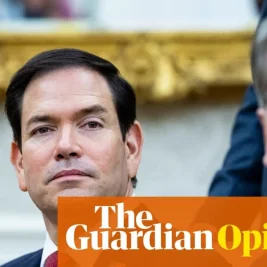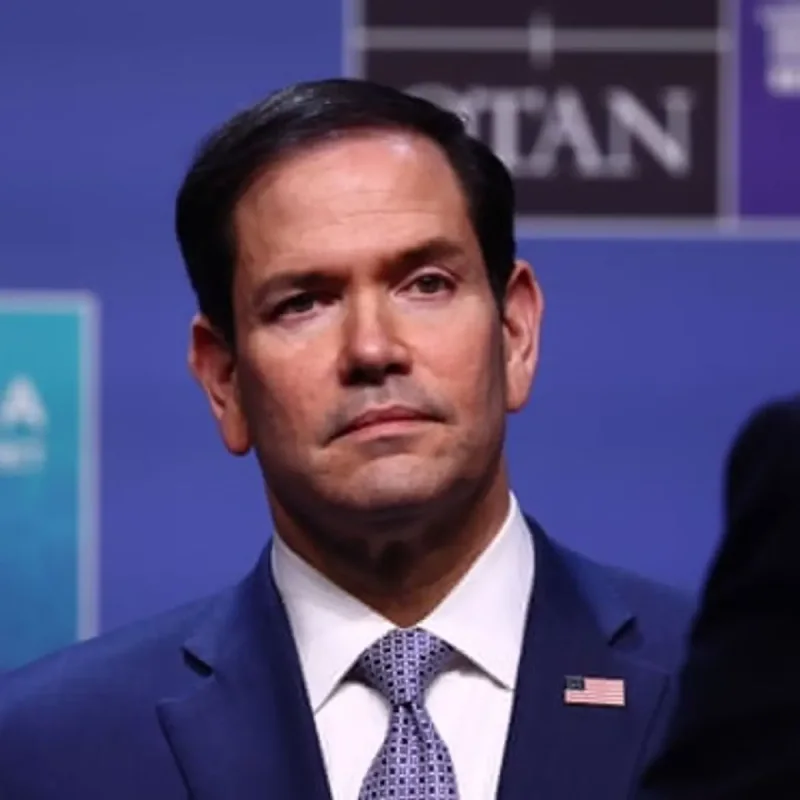
US Secretary of State Marco Rubio launched a campaign on Monday to dismantle the International Criminal Court (ICC), as reported by The Guardian.
Rubio claimed the global tribunal interferes with US military and law enforcement operations, risking American sovereignty.
In a Wall Street Journal op-ed published Monday, Rubio depicted US Border Patrol agents and elected leaders facing trial by international judges.
The State Department intends to pressure other nations to abandon the court, according to a CNN report.
An official stated that nations refusing to reject the ICC while relying on US assistance could face sanctions, travel bans, and visa revocations.
"If we stand idle, all of them will be at the mercy of foreign judges, thousands of miles away – facing the constant risk of prosecution and even imprisonment for the so-called ‘crime’ of defending their own country," warned Rubio in a companion video on X.
International legal experts challenged Rubio's assertions, stating that the tribunal does not claim jurisdiction over conduct inside the United States.
The court, located in The Hague, only investigates crimes within states that ratified the 2002 Rome Statute, which the US has not done.
"The ICC is not claiming jurisdiction over conduct in the United States," said Kenneth Roth, former executive director of Human Rights Watch.
Roth noted that the Trump administration previously welcomed an ICC probe into Russian actions in Ukraine, which is a signatory.
"Trump wants to be able to commit war crimes on the territory of countries that have accepted the court’s jurisdiction – that’s what this is about," Roth said.
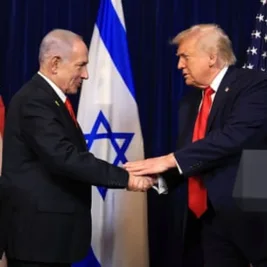
The ICC prosecutor's office has also issued arrest warrants for Israeli Prime Minister Benjamin Netanyahu and Yoav Gallant regarding conduct in Palestine.
Donald Trump previously issued an executive order declaring a national emergency over the ICC's actions and imposed sanctions on its officials, including chief prosecutor Karim Khan.
The administration expanded these measures throughout 2025 by sanctioning a UN special rapporteur and three Palestinian human rights groups.
"Presumably, we will start to hear from foreign counterparts who are pressured to take action against the ICC," said an anonymous former senior US government sanctions official.
The former official mentioned rumors that the administration might sanction the tribunal as a whole to preempt actions elsewhere, such as in Venezuela.
"When sanctions work well, you use sanctions to reinforce what you’ve achieved through diplomacy," the official said.
Advocacy groups warned that blocking Americans from working with the court or penalizing financial entities harms global legal access.
"Rubio’s attack doesn’t just underscore US hypocrisy, but undermines access to justice across the globe, from Ukraine to Sudan and could amount to obstruction of justice, a crime under the Rome Statute in and of itself," said Raed Jarrar, Dawn’s advocacy director.
Jarrar added that the actions undermine the international order established after World War II.
"It is not the ICC that Rubio is dismantling brick by brick - but the rules-based international order that grew out of the ashes of world war two," Jarrar said.