The United States military conducted its third round of airstrikes in a week against approximately 140 military targets in Iran on Saturday, July 12, 2026.
The operation followed the Iranian regime's official closure of the strategic Strait of Hormuz shipping lane.
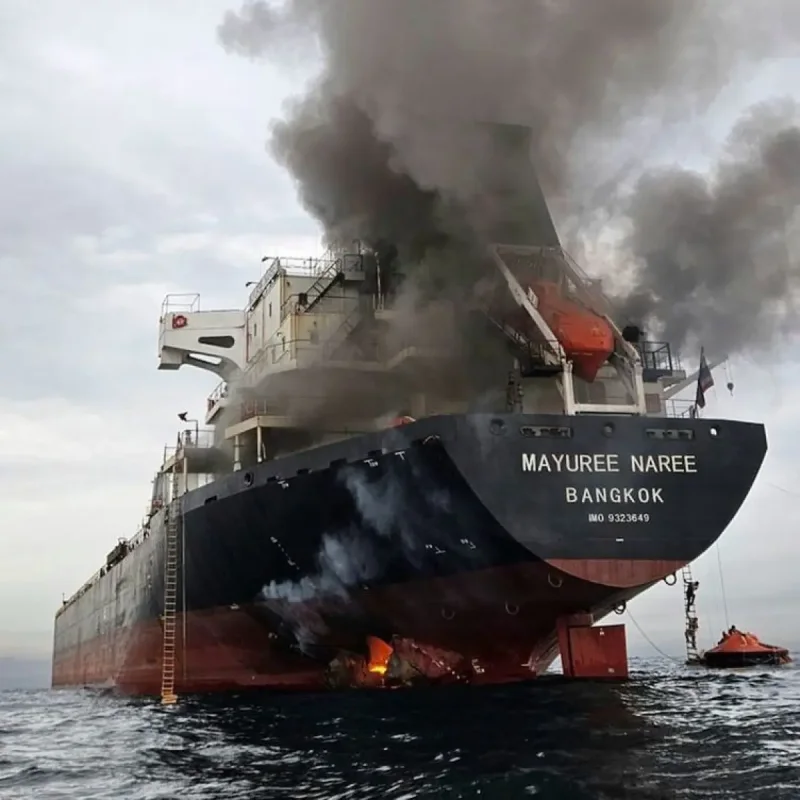
US Central Command stated that the operation began hours after an Iranian naval assault severely damaged the Cyprus-flagged container ship M/V GFS Galaxy.
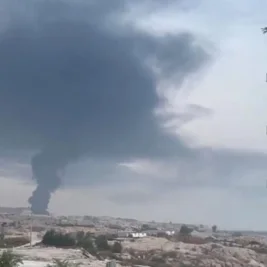
The targeted infrastructure included missile locations, drone sites, naval capabilities, ammunition storage facilities, communication networks, and coastal surveillance hubs.
"Iran was provided yet another opportunity to demonstrate adherence to the Memorandum of Understanding after being held accountable for earlier attacks on commercial vessels but has again failed," US Central Command announced on X.
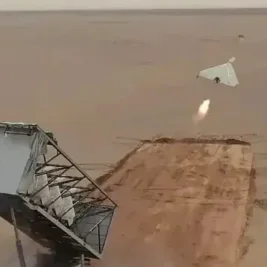
The military command confirmed that the retaliatory operation used a combination of sea-based and land-based fighter aircraft, unmanned aerial vehicles, and naval surface vessels.
The goal was to degrade the regime's capability to disrupt international maritime transit.
"In response, the United States is imposing a heavy cost by continuing to degrade Iran's ability to attack civilian mariners and commercial ships freely transiting the strait," US Central Command added.
The maritime conflict escalated earlier when the Islamic Revolutionary Guard Corps targeted the commercial shipping vessel.
The UK Maritime Trade Operations Centre reported that the civilian crew was forced to abandon the burning ship for lifeboats.
"If the enemy uses this incident as a pretext and makes any misstep, it will be met with a severe response," the Iranian navy announced via state media.
Following the American bombardment of coastal and inland military infrastructure, US authorities warned of potential regional counter-strikes targeting international facilities.
"Iran made a poor choice. Now they pay," stated US Defence Secretary Pete Hegseth on X.
Prior to the bombardment, internal political friction intensified after a public declaration regarding potential military actions against American leadership.
"We pledge to avenge the blood of the martyred leader and all the martyrs of these two wars from the criminal and disgraced killers," stated Mojtaba Khamenei, the Supreme Leader of Iran, in a message broadcast after the funeral of Ali Khamenei.
The state message highlighted the breakdown of regional armistice discussions following previous operations that killed 17 individuals and injured 115 others, according to the Iranian health ministry.
"Revenge is the desire of our nation and it must certainly take place," Mojtaba Khamenei added.
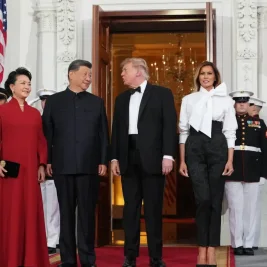
In response to threats from the newly appointed Iranian leader, American authorities detailed the readiness of strategic defense assets.
"1000 Missiles are Locked and Loaded and aimed at the Islamic Republic of Iran, with thousands more to immediately follow, should the Iranian Government act on its threat ...
to assassinate, or attempt to assassinate, the sitting President of the United States of America," stated Donald Trump on Truth Social.
Diplomatic intermediaries from Oman and Qatar continue to review a corridor proposal to establish separate shipping routes within Omani and Iranian waters despite the ongoing military exchanges.