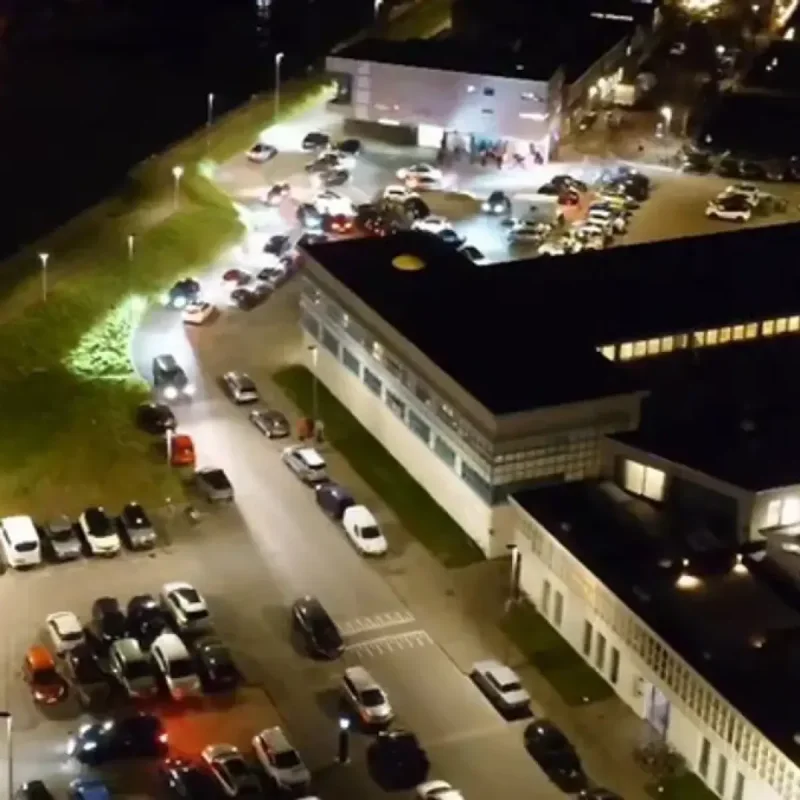
Municipal authorities in Rotterdam have introduced a unique nighttime area ban in large parts of the De Esch neighborhood, effective July 23, 2026, to halt years of severe public nuisance caused primarily by non-resident visitors.
The emergency order is active daily from 11:00 p. m.
to 5:00 a. m.
for three months. Unauthorized individuals found in designated zones face criminal fines, as reported by local media.
Background of the Nuisance
Years of escalating disruption involving street racing, drug use, nitrous oxide consumption, and prostitution began shortly after the pandemic crisis, according to local residents and neighborhood representatives.
Earlier interventions—including concrete barriers, mosquito anti-youth sound devices, intensified municipal supervision, and weekly police dispersals—failed to restore order on De Esch and the Kralingse quays.
Exemptions apply to local residents, their guests, commuters, emergency personnel, municipal inspectors, and visitors attending local events, business establishments, or sports facilities, according to a letter sent to the city council by Mayor Carola Schouten.
"The quality of life in the neighborhood is under pressure. Peace must return to De Esch, and residents must feel pleasant and safe," says Schouten.
"That is why I am using this power."
Residents' Relief and Concerns
Neighborhood officials acknowledged the severity of the intervention while confirming unanimous support after exhaustive consultations regarding the influx of dozens to hundreds of weekend visitors.
"It is a very firm measure, but a very careful process preceded it.
As a neighborhood council, we unanimously came to the decision that this is best," says Christiaan de Jong, chairman of the neighborhood council covering De Esch.
Residents expressed cautious optimism after living under prolonged stress.
Women and children previously avoided going outside at night due to hostile behaviors from groups staying until 5:00 a.
m.
"We were quite desperate," says one resident. "Something really had to change, but it just didn't happen.
Then you become very despondent. Now something is finally happening."
Another resident recounted facing intimidation when attempting to address offenders directly. "I tried that once last year.
After that, I had six eggs thrown against my window," says a resident.
Sleep deprivation and anxiety have reportedly affected several household members throughout the district.
"I have become fairly depressed from it, I also know people in the neighborhood who simply can't cope anymore," says another resident.
Legal and Enforcement Perspectives
Legal scholars questioned the broad scope of the ban, highlighting that area bans in the Netherlands are traditionally issued to specific individuals rather than applied generically to entire public areas.
"I know of no other Dutch municipalities where this happens," says Michel Vols, professor of public order law at the University of Groningen.
"So it is an unprecedented action by the mayor."
Vols pointed out potential constitutional and freedom-of-movement concerns regarding neighboring residents walking pets near the perimeter.
"It's quite a bizarre ban, because you create a kind of no-go area," says Vols.
"Getting rid of nuisance is a legitimate interest, but this is taking a sledgehammer to crack a nut."
Police representatives explained that traditional enforcement against active disturbance was logistically difficult because gatherings stopped whenever patrol vehicles arrived on scene.
"The moment residents experience nuisance, they report it. When the police car later arrives, the disturbers stop.
And officers must see the nuisance themselves to be able to do something," says a police spokesperson.
Law enforcement confirmed that the order provides necessary legal tools to question presence and clear non-residents without penalizing legitimate traffic.
"Making presence punishable provides us with the tools to be able to enforce against the nuisance," says a spokesperson.