U. S.
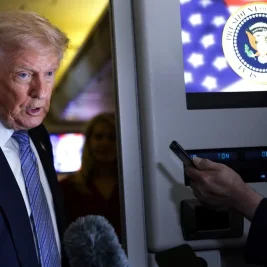
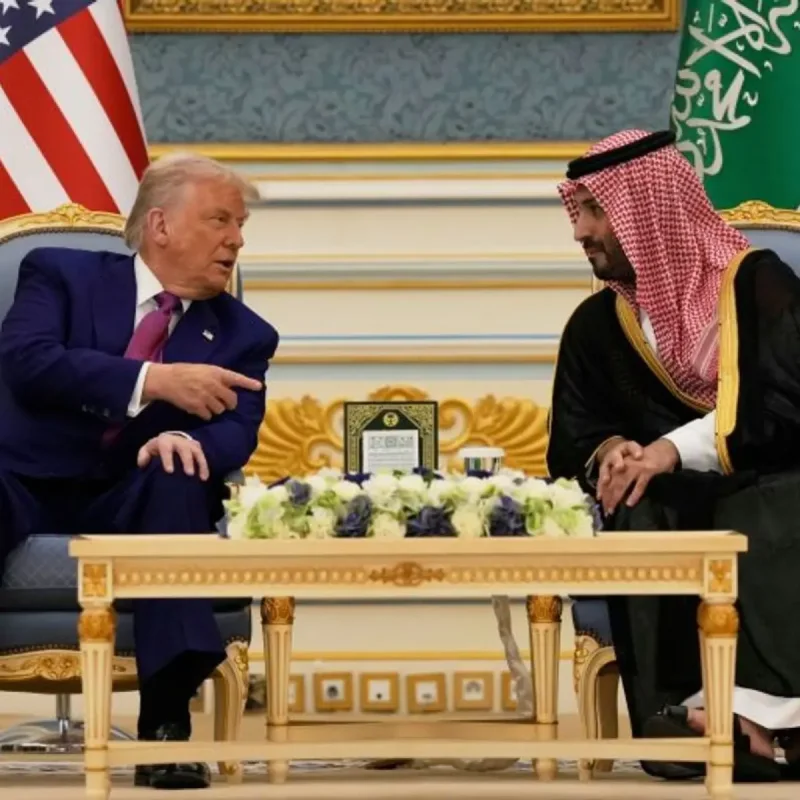
President Donald Trump declared on July 23, 2026, that a newly signed civilian nuclear agreement with Saudi Arabia is strictly conditional on the kingdom normalizing diplomatic relations with Israel under the Abraham Accords.
The announcement followed a multibillion-dollar, 30-year peaceful nuclear cooperation agreement signed between Washington and Riyadh.
The pact aims to establish Saudi Arabia's civilian nuclear infrastructure using American technology while bypassing foreign market competitors.
Condition Set After Signing
Addressing the newly established condition via social media, the administration outlined the specific requirement for finalizing the international nuclear partnership.
"Will be approved, but is totally subject to Saudi Arabia joining the very respected and successful Abraham Accords," wrote Donald Trump, President of the United States.
White House officials stated the arrangement provides significant momentum to domestic manufacturing and supply chains, though Trump warned the agreement would be void if Saudi Arabia refuses diplomatic ties with Israel.
"The deal is off," stated Karoline Leavitt, White House Press Secretary.
The agreement has drawn criticism over non-proliferation concerns, particularly regarding reports that Saudi Arabia might gain domestic uranium enrichment capabilities.
Addressing these concerns, administration statements sought to clarify the operational scope of the planned facilities.
"There will be no enrichment of material!" wrote Donald Trump.
Trump further clarified the position on non-weapons nuclear technology.
"The United States is not opposed to Civil (Non-Enriched) Nuclear Facilities," wrote Donald Trump.
Policy analysts noted that the sudden inclusion of the Abraham Accords requirement reflects ongoing political shifts following pushback from lawmakers in Washington and officials in Israel.
"Leave it to this administration to negotiate after the signatures are barely dry," said Elisa Ewers, Senior Fellow for Middle East Studies at the Council on Foreign Relations.
Experts highlighted that political dynamics surrounding Middle East strategy remain fluid in response to congressional pressure.
"The president wakes up every day, and every day, at least on Middle East policy, is an improvisation," said F.
Gregory Gause, Professor Emeritus at Texas A&M University.
Gause added that the new stipulation serves as an incentive for domestic political approval.
"He was getting some pushback on the Saudi deal, and so he added this sweetener to it for people in Congress who might feel that if the Saudis had a regular diplomatic relationship with Israel, they would be less concerned," said F.
Gregory Gause.
Reflecting on political shifts, Gause observed that rapid changes in decision-making are not uncommon for the executive branch.
"So it could be that by tomorrow, this goes away from the president's mind," said F. Gregory Gause.
Prior attempts to secure nuclear cooperation and diplomatic normalization stalled after regional conflicts disrupted earlier talks.
Former national security officials noted that American engagement was deemed necessary to prevent competing powers from filling the void.
"If the U. S.
didn't get in the game, particularly as a nuclear provider, one of America's adversaries might, and that is much worse for U.
S. national security," said Jon Wolfsthal, Former Adviser on U.
S. -Saudi Nuclear Cooperation.
Media representatives noted that the post-signature requirement introduces fresh political questions for lawmakers.
"This…does not appear to be part of the original agreement either," said Mike Hanna, Reporter for Al Jazeera.
Hanna emphasized the upcoming legislative scrutiny expected in Washington.
"So there are many questions that arise, and no doubt there will be many questions in Congress," said Mike Hanna.
The nuclear cooperation agreement and bilateral safeguards framework currently await formal review and approval from the U. S.
Congress and international oversight bodies.