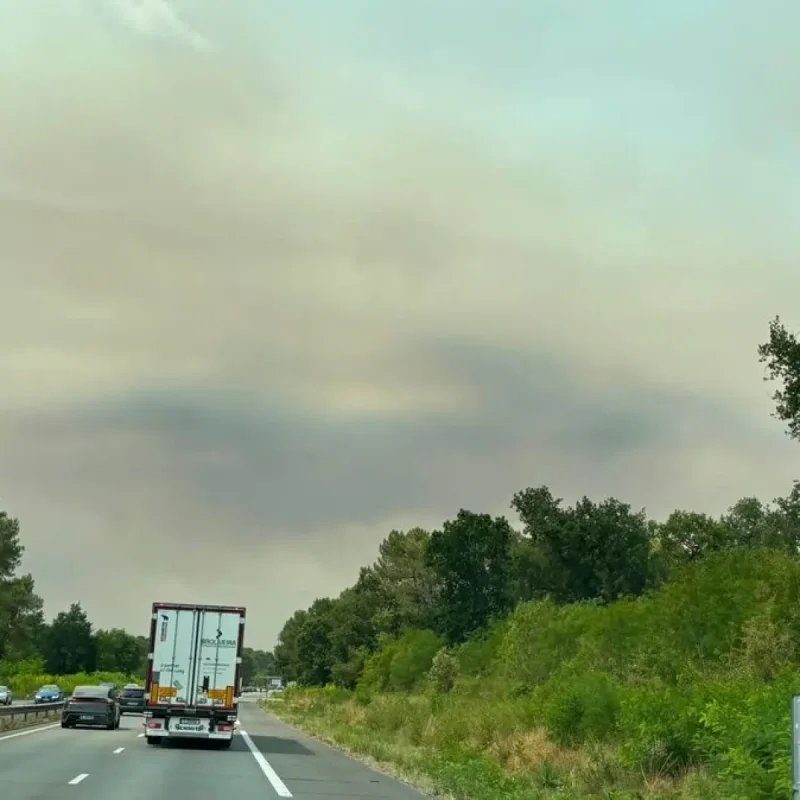
Firefighters are still fighting what officials describe as the largest and most complex wildfire in Spain's history. The blaze has already burned approximately 50,000 hectares.
The fire remains highly active in the southern Ávila region. Sudden flares continue to erupt despite ongoing containment efforts.
Unpredictable winds and dry forests have overwhelmed human capacity to extinguish the flames, according to several brigadistas involved in the operation.
Reinforcements from Ávila, Soria, Cuenca, Madrid, and La Palma have joined local teams.
Coordination challenges have occurred on the ground, creating difficult situations. One firefighter who endured previous devastating fires in Zamora and León described the situation as "total chaos."
His team had to retreat multiple times due to advancing flames near a national highway between Mijares and Casavieja.
Another firefighter recalled an intense night battling flames and wind. "Incredible, everything burning, wind, but satisfied, we put out the fire and saved several points," he said.
He expressed eagerness to return to the front lines after a brief rest.
As the fire seems to slow, one firefighter explained that the "monster" is running out of fuel.
It is now surrounded by hoses and cooled by helicopter water drops. However, no relief from weather is expected, only more heat.
A firefighter from Segovia called this the worst fire of his career.
He highlighted the intense power of the flames and the mental strain from frustration and feelings of inefficacy.
Concerns were raised about high turnover and lack of training among some personnel.
Reports indicate workers lacking proper protective gear and insufficient knowledge of fire dangers during direct attacks.
Despite the hardship, humor and camaraderie persist. Firefighters share light moments, such as jokingly renaming the northwestern wind as "norwhisky" during breaks.
Volunteers have contributed significantly, with around 50 locals aiding in challenging areas.
Firefighters stress the need for better training and organization to ensure safety and effectiveness in future responses.
After long shifts, the firefighters gather for dinner, appearing more like young friends than warriors, sharing food and moments of respite amid the ongoing crisis.