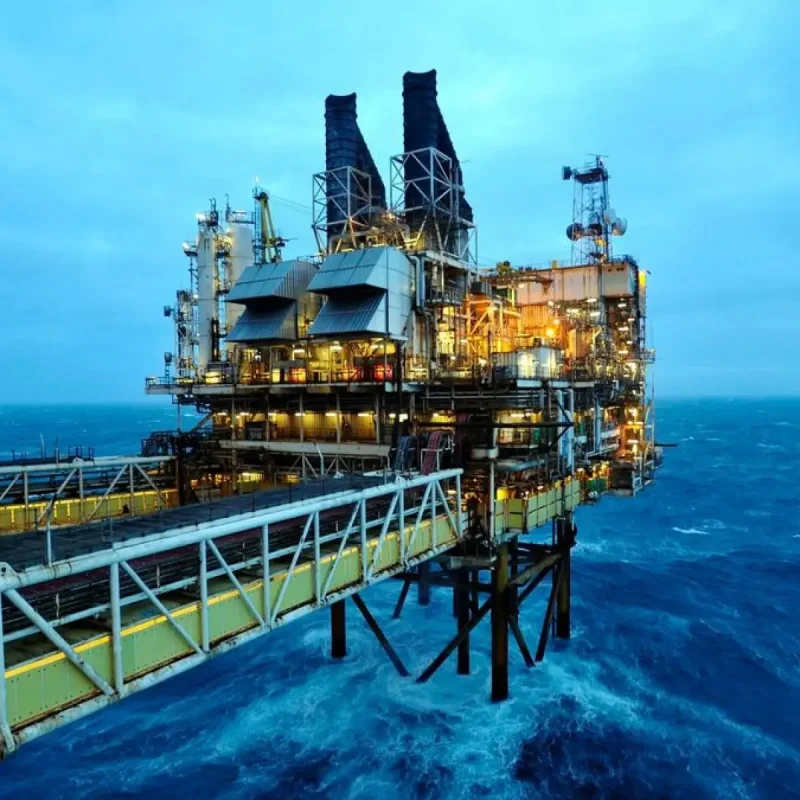
British energy giant BP has placed its UK North Sea business up for sale, marking a potential end to more than six decades of production in the region.
The announcement came on July 31, 2026, as part of a broader strategy to divest assets and focus on higher-value opportunities.
BP's North Sea infrastructure includes five key production hubs: two in the central North Sea and three west of Shetland.
In 2025, these assets produced 117,000 barrels of oil equivalent per day.
Around 1,100 employees work directly for this division, out of BP's total UK workforce of approximately 13,960.
The portfolio up for sale includes the Jackdaw gasfield east of Aberdeen and the Rosebank oilfield west of Shetland.
Consultations on these fields are scheduled to conclude on August 10 and August 17, respectively.
CEO Cites Strategic Focus
Chief Executive Meg O'Neill explained the corporate restructuring and financial motivations behind the divestment.
"The North Sea remains integral to the UK's energy system," O'Neill said.
She noted that capital would be redirected to projects with higher returns.
"However, as we focus our portfolio and direct capital to our highest-value opportunities, we believe our North Sea business will be better positioned as part of another company," O'Neill said.
She expressed confidence in the assets and workforce.
"It has world-class people, resilient assets and a proud heritage, and it is precisely these qualities that can attract an owner ready to back its next chapter," she said.
BP aims to secure a deal that reflects the value of these long-standing operations.
"We are seeking an outcome that recognises that value," O'Neill said.
Political Reactions
The announcement drew swift responses from political figures, linking the exit to national climate policies and drilling permits.
Shadow Energy Minister Andrew Bowie criticized the government's stance.
"BP has been drilling in British waters for six decades, but because of Labour's disastrous net zero dogma it faces extinction," Bowie said.
He urged approval for the Jackdaw and Rosebank sites and a reversal of the ban on new licences.
"Andy Burnham should break with the past do what the Conservatives have called for and immediately approve the Jackdaw and Rosebank sites and cancel their plans to ban on new licences in the North Sea," Bowie said.
British politician Andy Burnham noted a pragmatic approach.
"There is a resource there. When people are struggling, we can't ignore that," Burnham said.
Reform UK's Richard Tice offered sharp criticism.
"Years of punitive windfall taxes and ideological net stupid policies by both Labour and the Conservatives have made the UK one of the least attractive places to invest in oil and gas," Tice said.
He questioned reliance on foreign energy when domestic reserves remain.
"The North Sea still has billions of barrels of oil and gas left to produce but for some bizarre reason this government prefers to import our energy from abroad," Tice said.
Market analysts weighed in on the significance of BP's exit.
"It says a lot when BP isn't prepared to stick around to see if the new government can re-energise the UK's energy policy," said Chris Beauchamp, Chief Market Analyst for IG.
Beauchamp suggested bureaucratic delays influenced the timing.
"Clearly BP thinks it will take too long at a time when the need to exploit new energy fields is pressing, and waiting around for Whitehall to move is not a prudent use of resources," he said.
In a separate move, BP revealed a global downsizing plan affecting its production and operations segments.
"We are building a simpler, stronger, more valuable BP," a spokeswoman said.
The cuts would impact about 8 percent of non-frontline workforce globally.
"As part of this process, we are proposing changes that would result in a reduction in roles, intended to reduce complexity, improve accountability and support long-term performance in a changing market environment," she said.