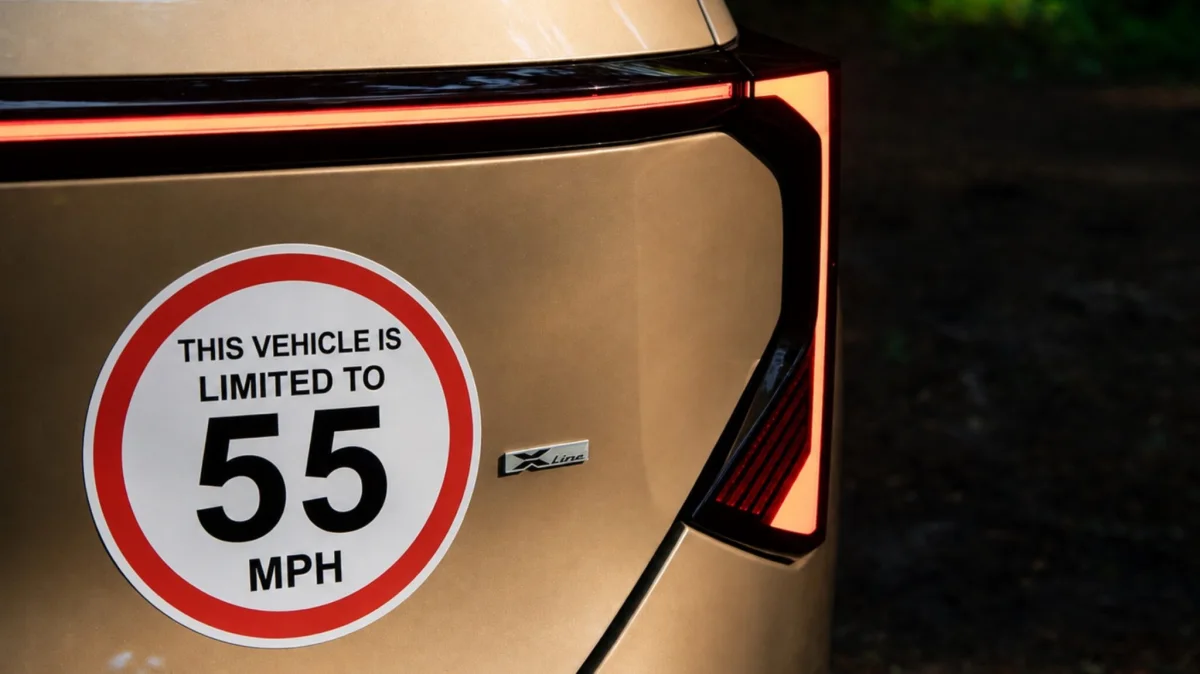
Modern cars already contain the hardware needed for future geofenced speed limiter systems. Some automakers already use geofencing to change vehicle behavior in specific locations.
An academic thinks we'll one day look at the freedom to speed like we view smoking in airplanes.
Here's the good news: you might never have to worry about speeding tickets in the future. The bad news?
That's because your car won't let you speed.
The tech to make it happen could already be hiding behind your dashboard.
Technology Already Here
GPS, onboard cameras, electronic throttle control, and over-the-air software updates are now common features on many new cars.
That means the biggest hurdle to electronically enforced speed limits probably isn't the technology—it's getting drivers to accept it.
That's the future envisioned by Professor Marco te Brömmelstroet, who holds the Chair on Urban Mobility Futures at the University of Amsterdam.
Speaking during a visit to New Zealand, he suggested geofencing could eventually stop drivers from exceeding speed limits in urban areas altogether.
"My dream is that in 20 years, we will look back and find it unbelievable that we once allowed humans to drive 2,000 kg (4,400 lbs) vehicles as fast as they wanted in our cities," he said, suggesting we'll view it like we now view the banned practice of smoking on airplanes.
"The technology is already here, we can geofence cars so we can help [drivers] not be a danger to other people in the streets."
It sounds futuristic, but plenty of the building blocks are already here.
Mercedes-Benz, BMW, Toyota, and Ford use geofencing in some plug-in hybrids to automatically switch into electric mode when entering low-emission zones.
Volvo has also used the technology to limit speeds in commercial vehicles operating inside designated areas.
Europe's Speed-Limiter Baby Steps
Europe has taken a step in that direction with Intelligent Speed Assist (ISA).
Unlike geofencing, ISA doesn't stop drivers from speeding, but it can recognize changing speed limits using cameras and GPS data before warning drivers they've gone too fast.
A fully geofenced system would take things much further.
Instead of simply warning you, the vehicle could refuse to accelerate beyond the local speed limit while driving through predefined zones, then return to normal operation elsewhere.
Supporters argue that could reduce crashes, improve pedestrian safety, and enforce speed limits far more consistently than roadside cameras ever could.
Critics see something very different, questioning whether governments or manufacturers should have the ability to electronically dictate how privately owned vehicles are driven.
The technology, then, may be the easy part.
The real challenge will be convincing motorists that the car they've paid for should sometimes have the final say over their right foot.