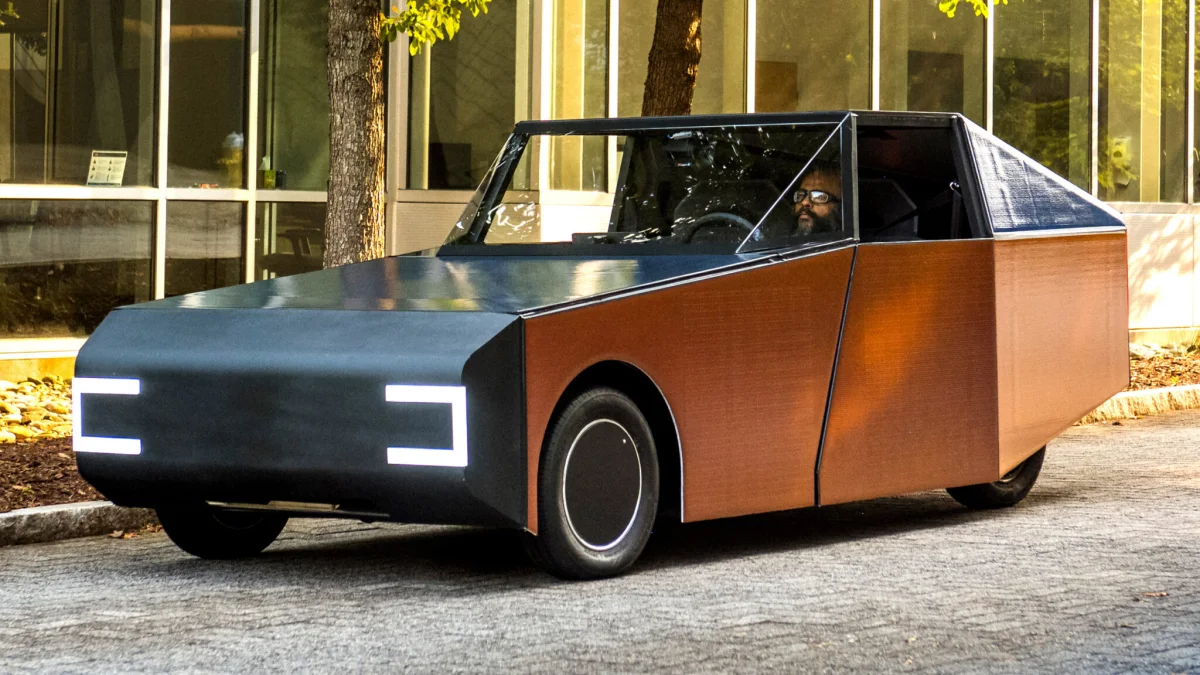
Solar panels on electric vehicles often seem more promising in theory than in practice. But Clemson University's Deep Orange 17 might change that perception.
Developed with BMW, the prototype wraps more than 1,700 photovoltaic cells around its ultra-light body.
The result, according to the team, is a car that gains more energy than it consumes during a typical urban day.
A Solar-Powered Experiment
The vehicle, named Luminetta, was built by 16 graduate students alongside BMW's research and development team. It is designed around a 12-mile (20 km) daily commute.
While that distance may not suit everyone, the car is engineered to absorb sunlight both while parked and while driving.
Weighing just 1,212 pounds (550 kg), the coupe is about a quarter the mass of similarly sized production cars.
Its structure combines steel, aluminum, carbon fiber, and 3D-printed metal joints.
Regenerative braking, torque distribution, and optimized drivetrain controls all aim to minimize energy use.
Clemson, along with the Fraunhofer Institute for Solar Energy Systems ISE, modeled conditions in Greenville, South Carolina; Frankfurt, Germany; Madrid, Spain; and Mumbai, India.
Across these locations, the solar system could generate enough surplus electricity to add an average of 31 miles (50 km) of driving range per day.
That's a significant achievement, even with the caveats.
While applying this technology to modern production vehicles would require many other innovations, the Luminetta proves that gaining more energy than used on a short commute is technically possible.