Argentina's national team is preparing a new leadership structure after Lionel Messi's departure from international football.
Coach Lionel Scaloni is establishing a group of senior figures to guide the squad toward the 2030 World Cup.
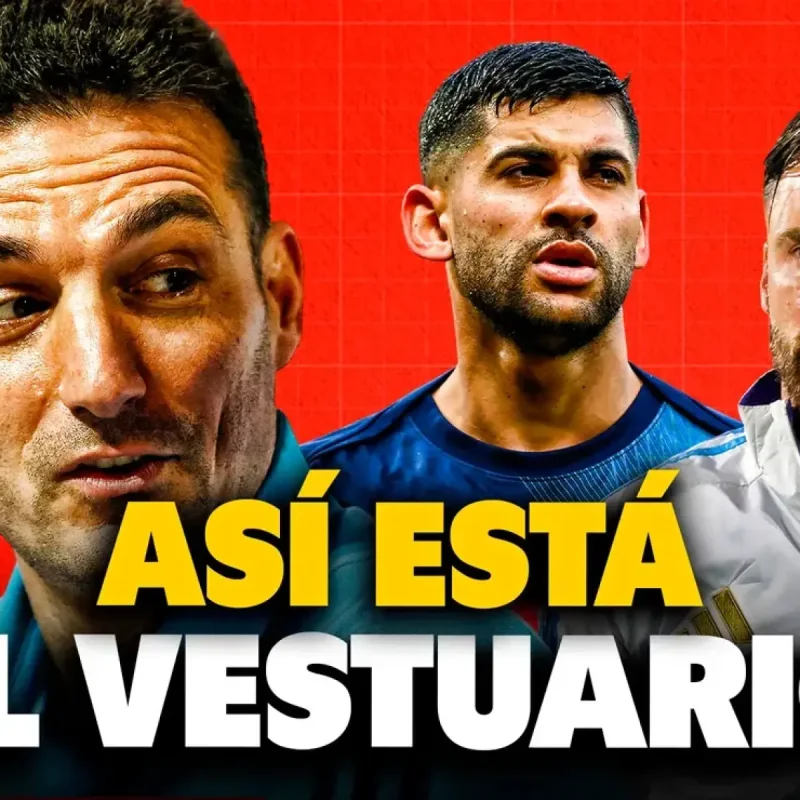
According to Bolavip, Cristian Romero, Emiliano Martinez and Lautaro Martinez will form the team's central leadership group.
The move signals a shift away from relying on a single dominant voice in the locker room.
The proposed structure places three captains at the center of the team.
They will be supported by experienced players who have won the Copa America and World Cup, as well as younger stars expected to take on greater responsibilities.
The changes also reflect the need to maintain the team's established winning culture while preparing a new generation to lead.
The three central captains
Cristian Romero is identified as a key defensive leader.
He has demonstrated his authority at Tottenham through his decisions and public statements during difficult periods for the English club.
Emiliano Martinez is also expected to remain an influential figure.
His commanding presence in goal makes him one of Argentina's most prominent voices.
Lautaro Martinez completes the proposed trio.
The Inter Milan captain is described by Bolavip as a natural leader and a major attacking reference for the national team.
The report also identifies him as the wearer of Argentina's historic No. 10 shirt following the leadership transition.
Nicolas Tagliafico is notably absent from the three-player leadership group.
Bolavip suggests that his expected age of 37 at the next World Cup may have influenced the decision, although the report does not establish this as an officially confirmed reason.
Tagliafico is nevertheless expected to remain part of the squad's experienced core.
Leandro Paredes is also in that group, with Scaloni indicating that the midfielder will again be considered once he has completed his suspension and recovered his fitness.
Rodrigo De Paul, Giovani Lo Celso and Exequiel Palacios are also expected to contribute their experience.
Their roles will include supporting younger teammates and helping preserve the standards established during Argentina's recent international successes.
Among the players expected to assume greater leadership responsibilities is Julian Alvarez, who has developed beyond the emerging talent he was during the 2022 World Cup.
His growing experience is expected to make him a more prominent figure within the squad.
Lisandro Martinez is another important part of the transition.
With Nicolas Otamendi's departure from the team described as definitive, Lisandro is expected to secure a starting role while bringing a strong personality to the defensive unit.
Enzo Fernandez and Alexis Mac Allister are also positioned to become increasingly influential.
Bolavip identifies the midfielders as central figures whose accumulated experience with Argentina should place them among the team's established leaders by the next World Cup.
Thiago Almada could also return to a key role after completing his suspension.
His expected involvement would add another option to the generational transition outlined in the report.
Scaloni's challenge will be to coordinate these different leadership levels as Argentina prepares for the road to the 2030 World Cup.
The planned structure combines three central captains, established tournament winners and younger players expected to take on greater responsibility within the national team.