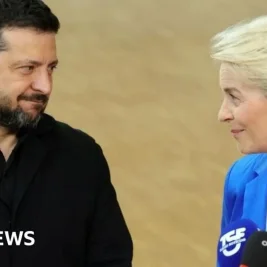
European Union leaders restated their backing for Ukraine while working through disagreements over the bloc's long-term budget and industrial policy at a Brussels summit.
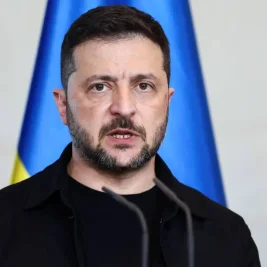
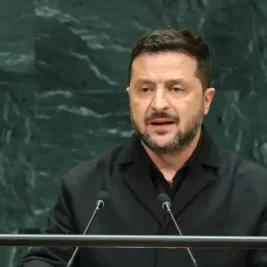
Ukrainian President Volodymyr Zelenskyy requested €70 billion in additional funding for Ukraine's defense next year.
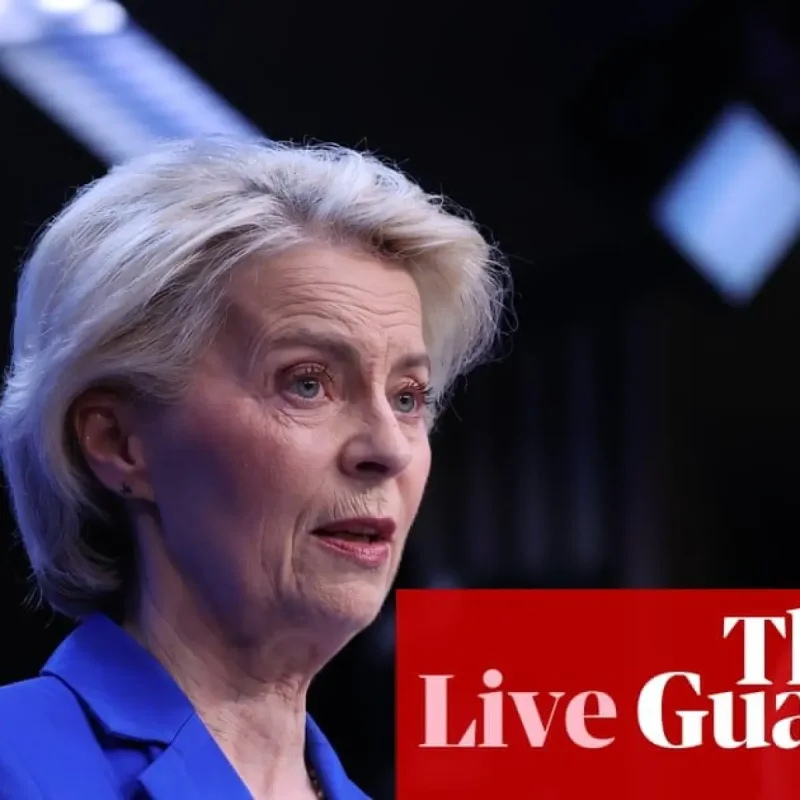
European Commission President Ursula von der Leyen and European Council President António Costa said the request would be examined.
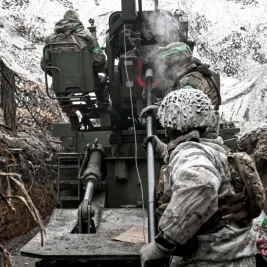
Both leaders stressed that European assistance remains essential as Russia's war continues and relations between Washington and European capitals face growing strain.
EU leaders also maintained that sanctions against Russia would stay in place until Moscow ends the war.
Budget divisions and competitiveness agenda
German Chancellor Friedrich Merz reported broad support for continuing assistance to Ukraine through the coming winter.
He also highlighted disagreements over the EU's next long-term budget, with negotiations expected to continue through the end of the year.
Merz described the summit discussions as still ongoing when he briefed reporters.
He said leaders had addressed European competitiveness and the bloc's economic independence.
Merz said EU leaders would return to the competitiveness agenda in early February.
He also reported unanimous, unequivocal support for a trade policy proposal developed with French President Emmanuel Macron, intended to allow for rapid responses to trade imbalances.
The German chancellor said member states remained divided over the size of the EU budget.
A smaller group of countries favors reducing spending, while a larger group supports expanding the available funds.
Merz said an additional European Council meeting could take place in November, followed by a multi-day session in December.
He expressed hope that member states would reach an agreement before the end of the year but acknowledged that the outcome remained uncertain.
Von der Leyen argued that the bloc needed a larger budget with sufficient flexibility to respond to multiple crises.
Costa insisted that the new budget should be agreed by the end of the year despite calls to postpone adoption because of major elections across the EU.
Automotive policy also featured prominently in Merz's account of the summit.
He welcomed a new German-French agreement on the industry's future, covering technology choices and climate targets.
Merz said the proposals emphasized technology neutrality and that Italy largely agreed with the approach.
He added that the changes still needed to enter the formal legislative process and would require the European Parliament's support before a final European-level decision could be reached.
The chancellor also defended the EU's record of maintaining unity in support of Ukraine, arguing that European cooperation had helped prevent Russia from advancing further.
Merz also addressed tensions between Europe and the United States under President Donald Trump.
He appealed to those seeking to preserve transatlantic cooperation and said many Americans continued to support Ukraine and European security.