Russia launched its largest coordinated attack on Ukraine's energy infrastructure since spring on Sept. 30, 2026, targeting Kyiv and 10 other regions.
The overnight strikes killed at least five people and disabled critical power plants, according to officials.
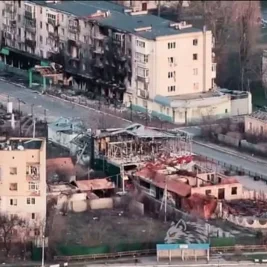
The attack damaged residential buildings, social infrastructure, civilian enterprises, and railway lines across the country.
Kyiv regional head Timur Tkachenko confirmed that a child was among the dead after rescuers found the body beneath residential rubble.
Kyiv Mayor Vitaly Klitschko reported three deaths in the capital, including a utility worker killed at a warehouse.
Additional fatalities were reported in the Mykolaiv and Sumy regions.
Ukrainian Prime Minister Serhiy Koretskyi noted that Moscow has systematically targeted energy infrastructure daily since summer.
He described this attack as the first combined strike of such scale since the last heating season ended.
"Since the summer, there has effectively not been a single day without enemy attacks on our energy infrastructure," Koretskyi said.
"However, a mass and combined attack of this scale has occurred for the first time since the end of the last heating season."
State-owned operator Ukrenergo urged residents to limit power use during peak hours.
Private firm DTEK worked through the night to restore power to 8,000 homes in the capital.
Damage and Response
The Russian Defence Ministry stated its forces struck key energy assets, including the Trypilska thermal power plant near Kyiv.
Operator Centrenergo confirmed the plant sustained damage.
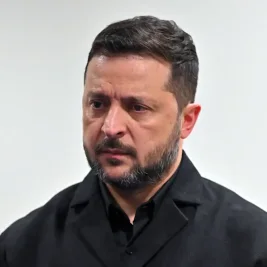
Ukrainian President Volodymyr Zelenskyy reported additional strikes on critical infrastructure in Zhytomyr, Mykolaiv, Kirovohrad, and Rivne.
Military analysts warn that Russia has been stockpiling advanced weapons, including jet-powered Geran-4 and Geran-5 drones, to launch intensified winter barrages against electrical and heating infrastructure.
Ukrainian military nonprofit Come Back Alive estimates Russian missile production has exceeded targets by up to 120 percent.
This positions Moscow to execute raids exceeding 1,500 aerial units as winter approaches.
"Despite the capacity to launch 600-1,000 units in a single massive attack, only about 150-300 drones were actually used," said Viktoriia Chekalina, Analyst at the Come Back Alive Initiatives Center.
Chekalina warned that the upcoming winter campaign will aggressively target civilian heating and electrical supplies alongside commercial sites.
"Russia's goal during winter campaign will be complex: they will focus on attacking electrical and heating infrastructure as they are critical for civilians," Chekalina said.
"At the same time, they will use turbojet drones along with missiles on local businesses, warehouses, and other targets."
In response to recurring daylight strikes and thermal power outages, Kyiv residents have faced worsening living conditions, air quality alerts, and transport disruptions.
Non-governmental organizations in the capital have secured emergency spaces in western Ukraine to relocate staff as local defenses struggle with a reduced 57 percent interception rate against faster jet-powered drones.
"It is not only a question about winter in Kyiv, but about drones," said Anastasiya Dzyakava, Chief Executive of an online safety charity.
"It’s become really emotionally challenging to stay in Kyiv, and we understood that it’s difficult for our team to work or to focus because they really worry about their safety.
So this option in the Carpathians is available for the next six months, until the end of winter."
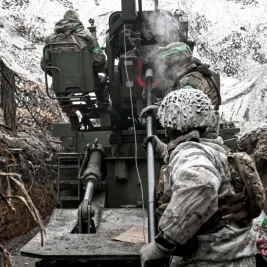
On the front lines, Ukraine's Third Army Corps reported recapturing several settlements near Lyman in the Donetsk region under Operation Vivaldi.
Russian forces maintain control over approximately 20 percent of Ukrainian territory.