
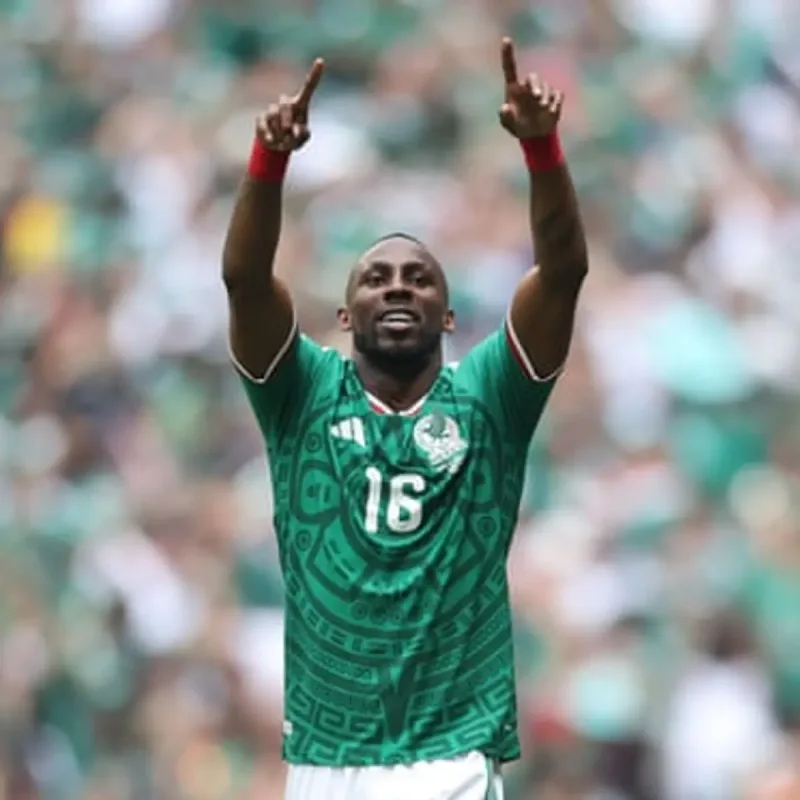
On a March night in Guadalajara in 2024, Club América were winning El Clásico Nacional. Julián Quiñones, their star player, had scored and headed toward the sideline.
Then a shout at Quiñones, who is Black, rang out from the stands: ¡Puto negro! A racial slur.
>>> Dan Evans Enters Wimbledon Qualifying After Wildcard Snub
Moments later, monkey noises were heard. Cell phone videos captured the scene.
Commentators analyzed it the next day. Officials condemned it.
Investigations were announced.
For a few days, the Mexican game went through its ritual of shock. Then the season continued.
That June, Quiñones moved to Al-Qadsiah in Saudi Arabia, where he would become the league's top scorer.
Less than two years later, another Mexican stadium produced another uproar. This time it was a celebration.
On 11 June, Quiñones scored Mexico's first goal in the 2026 World Cup, the opening triumph in a tournament played on home soil for the first time in two decades.
Tens of thousands rose to their feet. Television commentators chanted his name.
Images of the striker draped in the Mexican flag flooded social media. The same culture that had publicly denigrated him hailed him as a national hero.
This week, Quiñones returned to the same stadium in Guadalajara where the racist chant had been heard in 2024.
Before Mexico's second group-stage game against South Korea, crowds gathered outside the hotel housing the national team.
When Quiñones appeared they shouted in unison: ¡Quiñones, hermano, ya eres Mexicano! — “Quiñones, brother, now you are Mexican.”