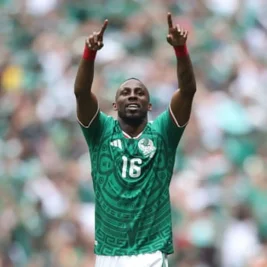
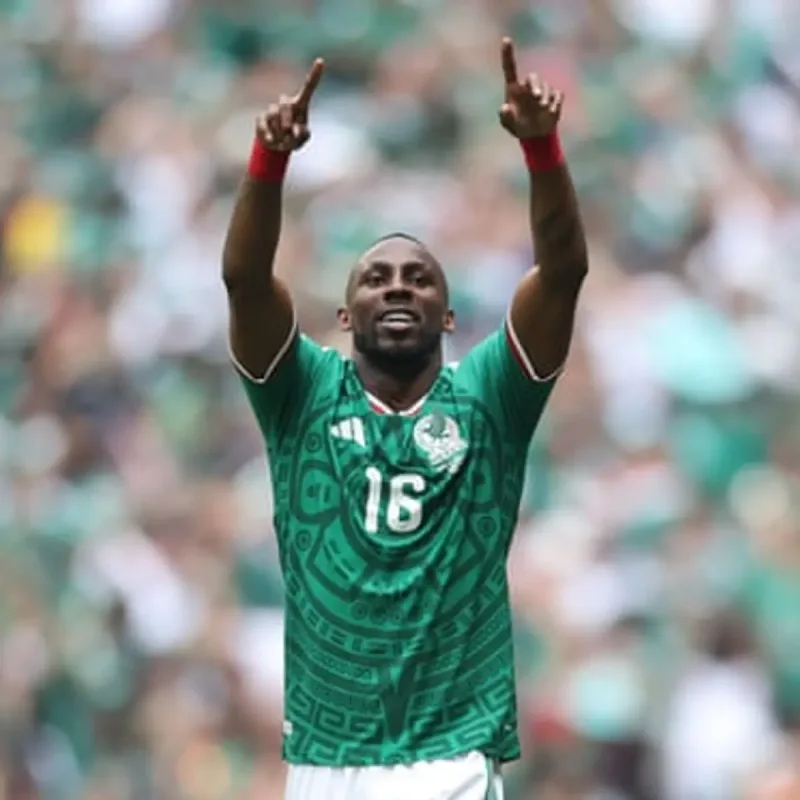
Today, however, the pool of Mexican talent extends across a transnational landscape shaped by migration and family networks.
It is possible that the most important soccer recruiting ground for the Mexican federation is no longer a state within Mexico, but rather in California or Texas.
A new generation of Mexican-American players is emerging north of the border, including more Black players.
Two of the most promising young prospects for Mexico's program were born in the United States to Mexican mothers and African American fathers: Antonio Leone and Da'vian Kimbrough, both born in California, have represented Mexico's youth teams.
Other recent stars have come from farther south. In recent years, Giovani and Jonathan dos Santos played on the national team.
Their father was the Afro-Brazilian footballer Zizinho; their mother is Mexican.
Melvin Brown, who was of Jamaican descent through his paternal grandfather, represented Mexico at the 2002 World Cup.
None of these players fit neatly into the visual stereotype often associated with Mexican nationality.
The Complex Reality of Race on the Pitch
"Historically, Mexican society doesn't talk about race," said Frierson. "The promise of mestizaje was that there is no race because we are all one race."
The concept of mestizaje – the idea that Mexico emerged from the fusion of Indigenous and European peoples – became one of the founding myths of the modern Mexican state.
After the Mexican revolution, it offered an appealing narrative for a fragmented nation. Instead of emphasizing difference, it emphasized mixing.