Whenever major reform is proposed in the UK, the media, big business, and Westminster quickly conclude it is too expensive and disruptive.
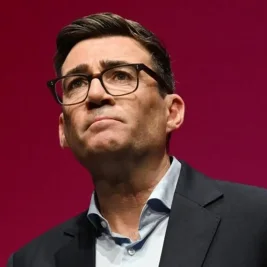
This pattern does not bode well for potential reformers like Andy Burnham.
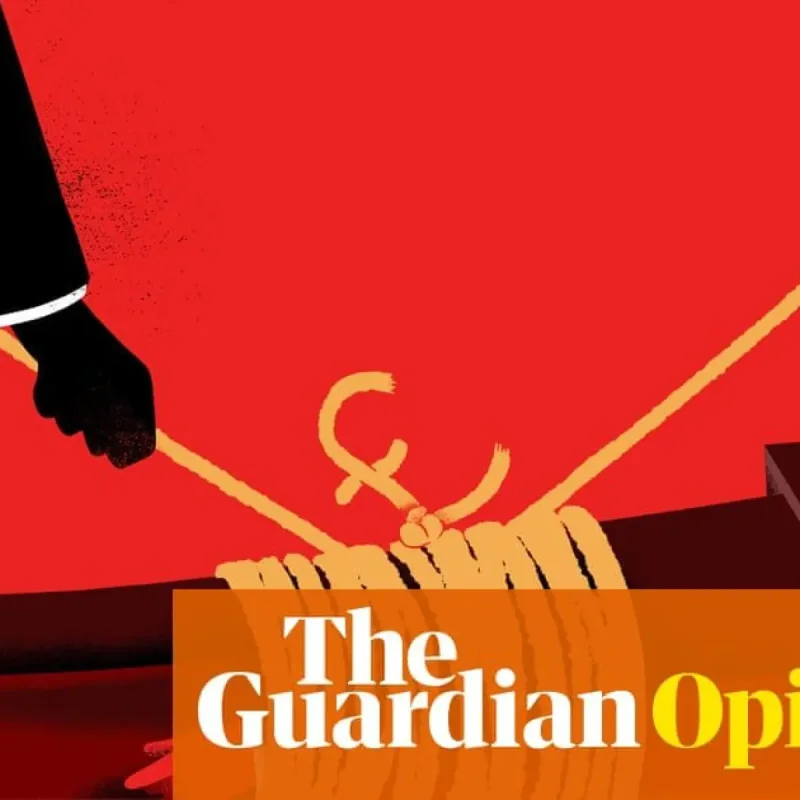
In an old, often anxious and conservative country, the perception of risk is a potent political weapon.
If a policy or project seems too risky—or can be made to seem so by opponents—it can be swiftly killed off, joining the pile of possible futures that never occurred.
Riskiness is sometimes real.
Foreseeing that Brexit or the 2003 invasion of Iraq might not end well did not require huge foresight.
Yet often, the perception of risk is politically constructed, reflecting powerful forces, their self-interest, and what they want or don't want to happen.
The possibility of war with Russia within a few years dominates discussions about British defence spending, despite Russia being bogged down in Ukraine.
The argument that spending should be funded by benefits cuts is also prominent.
The arms industry and military-media complex now form a stronger lobby than that for the poor and jobless.
The risk to the most vulnerable from more austerity—supported by much of the media for ideological reasons—is presented as less real than the risk of conflict with a country the UK hasn't fought for a century.
A Nation in Crisis, Yet Afraid of Change
Across the party spectrum, the idea that Britain is in deep trouble has become commonplace.
The cost of living, public services funding, productivity, inequality, high streets, housing, the electoral system, and the climate are all agreed to be in crisis.
Continuing with the status quo is an enormous risk.
Yet over the past decade, whenever a government or potential government has proposed major change, a consensus quickly forms that the proposals are reckless and impractical: too vague, too expensive, too disruptive.
John McDonnell and Jeremy Corbyn's plans for a more equal economy, Theresa May's 2017 social care reform, Boris Johnson's levelling up promise, Liz Truss's tax-cut growth plan, and Ed Miliband's clean energy jobs plan—all have been dismissed as fantasies or warned against as profoundly dangerous.
Some plans were less thought out than others, but the breadth of hostility to reform has been revealing.
The speed with which recent prime ministers have become derided figures is striking.
Much of the country is desperate to be rescued but can't stand anyone who tries to do it.
For Andy Burnham, this is an ominous dynamic.
After a decade and a half during which living standards have languished, many voters are so angry that their outlook verges on nihilism: rejecting government proposals, demanding a different government, and then turning against that government within months.
Alongside this restlessness is a slower, older, conservative impulse, particularly strong in the rightwing press, that says the country is in decline and little can be done.
The empire is gone, Europe is losing ground, and traditional values are retreating. If history is against us, why risk further disruption?
Conservative philosopher Michael Oakeshott wrote in 1956 that to be conservative is to prefer the familiar to the unknown, the actual to the possible.
In a time of national crisis, many withdraw into private spaces and family lives.
Even in a troubled society, there are winners: prosperous property owners, retirees with good pensions, well-paid workers, successful entrepreneurs, and the super-rich.
They are over-represented in public conversations about the risks of reshaping Britain. Many are not convinced that a more functional, equal country would be better for them.
Other interests profit from instability, such as private equity firms, hedge funds, and bankruptcy specialists.
In their 1987 book Blood in the Streets, William Rees-Mogg and James Dale Davidson approvingly quoted Nathan Rothschild: “The best time to buy is when blood is running in the streets.”
Overcoming Britain's aversion to fundamental reform is not impossible. David Lloyd George, Clement Attlee, and Margaret Thatcher managed it in the last century.
Each was not afraid to make enemies, arguing that vested interests needed to be overcome.
Politics is even more divided now, with more parties and more ways for opponents to make their views known.
If Burnham wants to change Britain, his government is likely to be unpopular for long stretches.
He will need all his famed abilities to connect with people and explain problems in everyday language.
Many voters do want change—that's why they've revolted so often over the past decade.
But they will need regular reminders about why the overheated, unhappy, unequal Britain of 2026 had to be left behind.