Wedding season has a new disruptor: semaglutide, the active ingredient in weight loss drugs like Ozempic and Wegovy.
According to a survey by wedding planning platform Zola, 10% of engaged couples now use GLP-1 medications, and 42% feel pressured to “look a certain way” for their big day.
Bridal designers are feeling the impact most keenly.
Traditional wedding gowns are complex and expensive, and dramatic weight loss in the months before the wedding is creating logistical nightmares.
Designers Adapt to Changing Bodies
Rebecca Schoneveld, a bridal designer who runs a size-inclusive business, says that in the past, brides often hoped to lose weight but rarely did.
Now, with GLP-1s, weight loss has become dramatic and unpredictable.
Kelly Cook, CEO of David’s Bridal, noticed a “significant shift” late last year.
Brides were coming in earlier, asking anxious questions about weight loss and alterations, but delaying purchases.
In response, David’s Bridal launched a fit guarantee, promising the dress will fit up to the wedding day, even if it means swapping for another gown.
For smaller designers, such guarantees are financially impossible. Many are instead updating contracts to require brides to pay for the dress regardless of fit.
Jarithza Carlson, production director at Anne Barge, says new contracts warn brides that if they lose more than three dress sizes, they may need to purchase another gown.
The Costly Art of Re-tailoring
Alterations specialist Melissa Lynn Oddo says taking in a dress several sizes too big can cost up to $1,500, essentially creating a custom piece.
Susan Ruddie, owner of The Wedding Dresser, recalls a bride who needed her dress taken in more than 20 inches after significant weight loss.
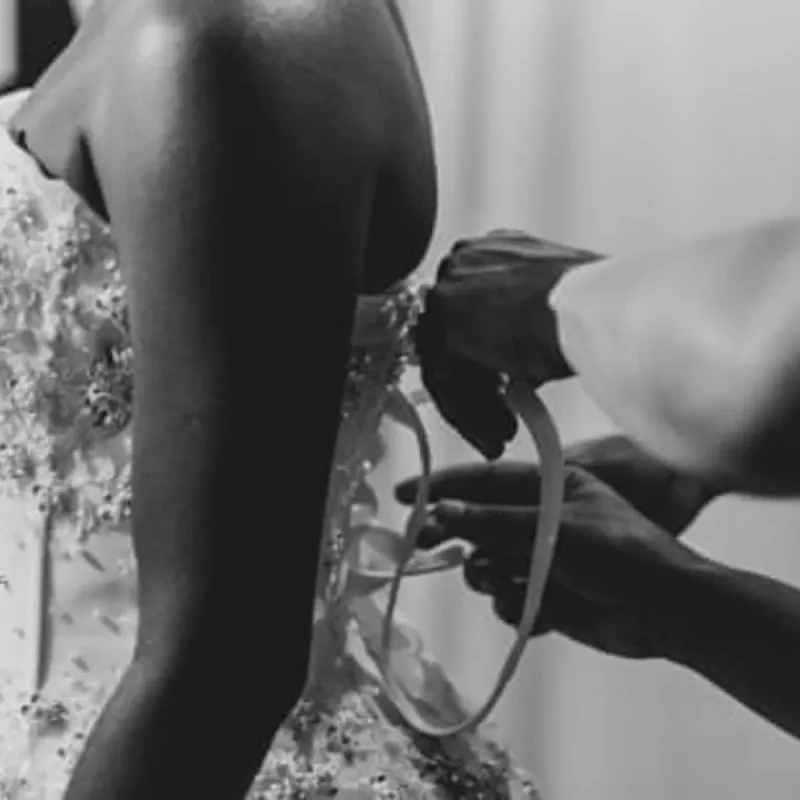
Designers are also seeing requests for design tweaks to accommodate loose skin. Ruddie says they lower backs into V-shapes or add drapes and sleeves to hide extra skin.
Corsets with lace-up backs, popular in the late 90s, are making a comeback for their adjustability.
Schoneveld notes that many brides struggle with body image, but larger clients tend to have healthier mindsets.
“My smaller clients struggle with: do I look perfect from every angle?” she says.
One bride, Laura, was prescribed semaglutide for health reasons before her engagement. She lost 50 pounds between dress shopping and her wedding, requiring a smaller size.
She used ChatGPT to track her measurements and predict her final size, which worked perfectly. However, she continued losing weight and her seamstress begged her to stop.
Laura says she is happier with her wedding photos now, but acknowledges the pressure to look a certain way.
“I don’t think I would have tried it had it not been for all of the medical reasons,” she adds.
Plastic surgeon Dr. Darren Smith says he sees many slim brides using semaglutide to lose just 5-10 pounds.
Skin laxity procedures and small-volume breast augmentations are booming as brides lose volume in unexpected places.
He warns last-minute brides that they may look like they are wearing an “aggressive push up bra.”
Despite some voices promoting body positivity, GLP-1s are being heavily marketed to brides. Spas and clinics offer packages like “Semaglutide for Brides” and “Mounjaro bride.”
Schoneveld says some plus-sized brides now feel they must explain why they are not using the drugs.