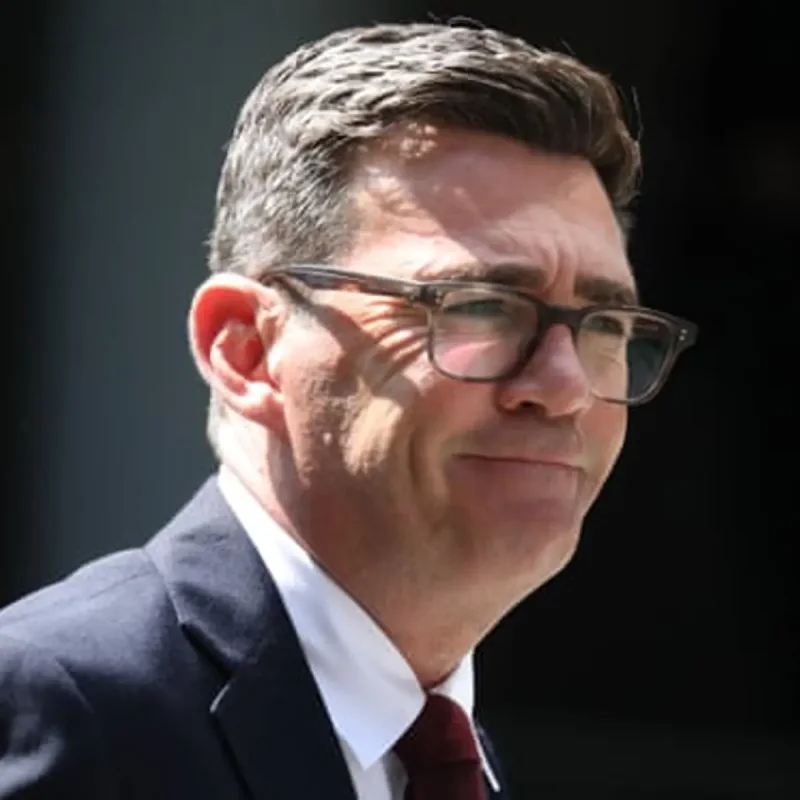
Tacitly contrasting himself with the outgoing prime minister, Burnham was adamant today: “I know what I believe … I know what I want to do … I have a plan.”
That's essential for multiple reasons, but here's two.
First, it ensures that you are not derailed by events or crises that come out of a clear blue sky.
Burnham is plainly animated more by domestic than international affairs, and his speech today, in which neither foreign policy nor Europe was mentioned, confirmed it.
But the world will have other ideas. Something, somewhere, will happen and it will threaten to devour his premiership.
That's what happened to Tony Blair, with 9/11 and the invasion of Iraq. A clear plan, a policy to-do list, can help a government stay on track.
But it has a second benefit.
A clear direction set from the top lets everyone else in government – ministers and, especially, civil servants – know what they're meant to do.
The unlikely model here is Margaret Thatcher.
In the Thatcher era, even the most junior official, when confronted with a policy choice, knew what the boss wanted: they knew to pick the option that was, crudely, less state, more market.
Today Burnham lamented the Thatcherite settlement by which “Political power was centralised and economic power was privatised.”
That sentence effectively tells Whitehall what the PM wants: namely, the opposite.
He wants to see political power devolved, and a more active economic state, unafraid of public ownership.