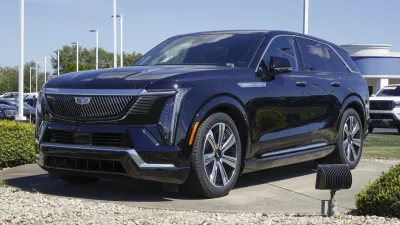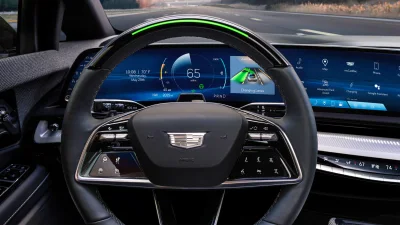
General Motors is reportedly evaluating a platform developed in China for the next-generation Cadillac Optiq, according to a Reuters report.
The architecture, known as Xiao Yao, was created by engineers at GM's Pan Asia Technical Automotive Centre in Shanghai, a joint venture with Chinese partner SAIC.
It is already used in the Buick Electra E7 plug-in hybrid, which has proven popular with Chinese buyers, and the L7 sedan available as a hybrid or EV.
The current Optiq is built on GM's Ultium platform and launched in China in 2023 before arriving in the U.
S. two years later.
American buyers only get a dual-motor, all-wheel-drive version, while Chinese customers can choose front-wheel-drive models with a single motor and smaller battery.
When asked by InsideEVs, GM North America initially said the Xiao Yao platform would not come to the U.
S. , later calling the Reuters report “speculative.”
China's Growing Role in Global Car Development
For decades, China served mainly as a manufacturing hub, but automakers are increasingly turning to Chinese engineering for vehicles and technologies that can be exported worldwide.
The Xiao Yao architecture supports a 900-volt electrical system and ultra-fast charging, features not currently available on GM's American-developed electric platforms.
This trend extends beyond GM.
Volkswagen, Renault, and Hyundai are giving Chinese engineering centers more autonomy to accelerate development cycles and improve EV technology.
Renault, for instance, developed the new Twingo in under two years thanks to Chinese know-how, half the usual time for a European brand.
If GM proceeds, the next Optiq could owe more to Shanghai than Detroit, marking a shift in how the automaker approaches its electric lineup.