The World Cup final is a time to pick a side, even if you have no connection to either team.
For the 98.9% of humanity that is neither Spanish nor Argentinian, any reason will do: a favorite kit, admiration for Lionel Messi, or a grudge over the Falklands.
At MetLife Stadium on Sunday night, the crowd was a mix of incongruous loyalties. Mike Tyson wore an Argentina shirt; Trevor Noah wore Spain's.
Ticket sales showed most attendees were Americans, treating the match as a grand cosplay for the New Jersey leisure market.
This tournament has highlighted a hidden trend: national allegiance as a single-use consumer brand.
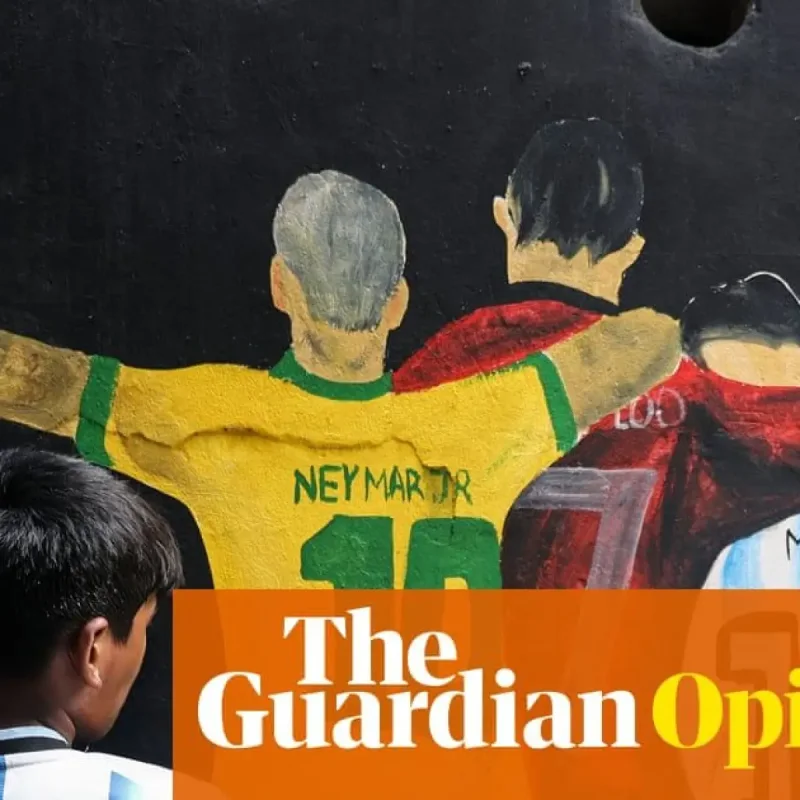
Bangladesh went wild for Argentina; Central Asian friends in London cheered for Uzbekistan; the Arab diaspora backed Morocco and Egypt.
Even leftwing progressives who usually shun the St George's Cross painted it on their cheeks.
Such behavior upends the traditional view of the World Cup as a playground for nationalism. Instead, it demonstrates the fragility of nationhood.
Social psychologist Michael Billig's concept of 'banal nationalism' has become so disposable that national identity can be slipped on and off like a football shirt.
The Modern World Cup's Dual Functions
The tournament forces us to confront multiple identities that cut across national boundaries.
It also interrogates how we pledge allegiance, a process that usually lies latent until the urgent question arises: 'Who do I support for this game?'
Historian Eric Hobsbawm's idea of football gestating an 'imagined community of millions' now resonates differently.
This community often has no defined borders, drawing its members from every corner of the planet for 90 minutes.
This phenomenon is neither left- nor right-coded.
Today's rightwing agitators may pledge allegiance to Donald Trump or wave an Israeli flag rather than champion their own country.
The Trump administration shows more solidarity with white South Africans than Black Americans. Conservative outlets make alliances across borders, appealing to abstract concepts while denouncing fellow citizens.
Football's role as a nation builder is often overstated.
France's 1998 World Cup win was hailed as a vindication of multiethnic identity, but four years later Jean-Marie Le Pen reached the presidential runoff.
Argentina's 1978 victory boosted the military dictatorship's popularity, yet it collapsed by 1983. England's Euro 2021 run did not halt the descent into gutter politics.
But occasionally, the World Cup holds up a mirror.
It reflects a messy hope: that a world of hardening physical borders is doomed to disintegrate on contact with reality.
For all the flags and pageantry, nationality is ultimately a brand, a consumer choice, a mask anyone can wear for six weeks and shed just as easily.