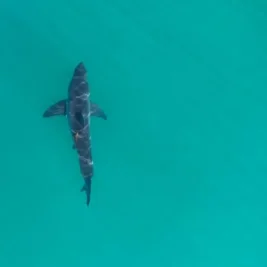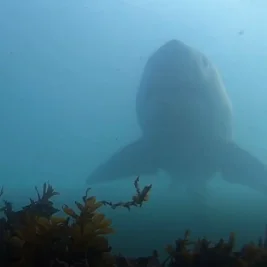
Marine researchers in northern Nova Scotia are investigating the death of a 1,280-pound male great white shark discovered on an isolated beach on Munroes Island near Pictou in late July 2026.
The 13-foot predator, weighing as much as an adult polar bear, was examined by experts after four kayakers found the fresh carcass.
Aside from a side wound, the shark showed no obvious signs of fatal injury.
Dr. Laura Bourque of the Canadian Wildlife Health Cooperative in Prince Edward Island said no obvious cause of death has been identified.
Further diagnostic testing is needed to determine what killed the animal.
The Marine Animal Response Society stressed the importance of timely reporting for scientific study on rare species.
"The faster an animal is reported, the more we can learn," the society said.
Fresh carcasses allow researchers to collect higher quality samples and record data more accurately on species rarely accessible for scientific study.
The discovery coincides with a surge of white shark sightings across Atlantic Canada.
Data from research group OSEARCH showed nine tagged white sharks in the Gulf of St. Lawrence between July 18 and July 27, ranging from 7 to 12 feet long.
Scientists attribute the increased presence to recovering shark populations following conservation protections in Canada (2011) and the U.
S. (1994), along with climate-driven ocean warming and abundant prey like grey seals.
Jeffrey Hay Gallant, scientific director at the St. Lawrence Shark Observatory, said observing a white shark in these waters was exceptional two decades ago but now reflects a growing ecological reality.
According to OSEARCH, warming ocean temperatures cause sharks to delay departure from northern summer habitats by an average of 12 days.
Despite increased sightings, human-shark interactions remain extremely rare, with only 30 recorded attacks in Canadian waters since 1691.