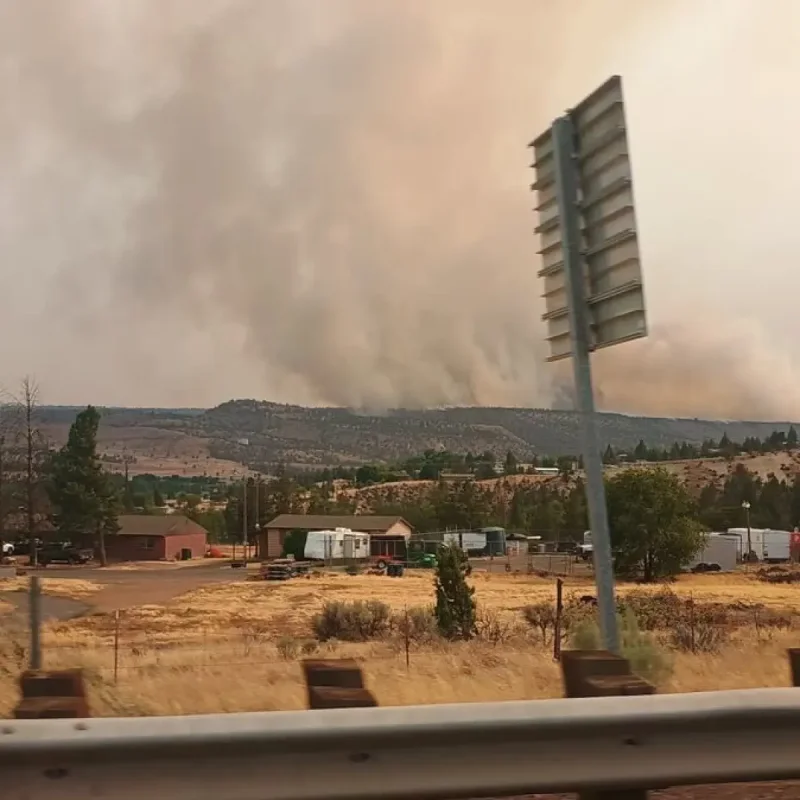
Wildfires sweeping across southwestern France and central Spain have forced hundreds of thousands of residents to evacuate and destroyed hundreds of homes.
The blazes occurred during unprecedented heat waves and severe drought conditions in July 2026.
Spain's Largest Wildfire on Record
In Spain, a massive blaze in Avila province burned approximately 50,000 hectares before merging with fires in neighboring provinces.
The merged inferno expanded to 77,000 hectares, making it the largest recorded wildfire in the nation's history.
NASA satellite imagery first detected the Avila blaze near Burgohondo on July 22.
The imagery revealed severe destruction around local reservoirs, homes, and public infrastructure.
The scorched area matches the total surface area of New York City.
France's Destructive Fire Season
In southwestern France, a massive fire in the Gironde Department west of Bordeaux destroyed the village of Le Porge.
The fire consumed over 42,000 hectares.
Data from the European Forest Fire Information System indicates total burned land across France topped 90,000 hectares by late July.
This marks the country's most destructive fire season in decades.
Conditions Fueling the Flames
An analysis by The State of Wildfires Project revealed that abnormally wet winter weather initially boosted vegetation growth across both countries.
Subsequent heatwaves, drought, and wind gusts reaching 65 kilometers per hour created ideal conditions for the rapid spread of flames.
On July 25, French firefighters observed the formation of a rare pyrocumulonimbus "fire cloud" over the Gironde blaze.
This marks the first documented instance of a wildfire generating this atmospheric phenomenon in France.
Thousands of firefighters and military personnel utilizing aircraft and heavy equipment gained ground by late July.
Authorities began lifting evacuation orders while forecasters continue to warn of persistent high fire risks.