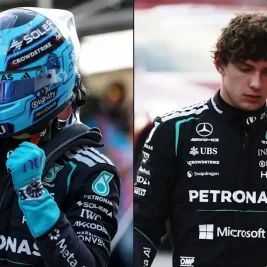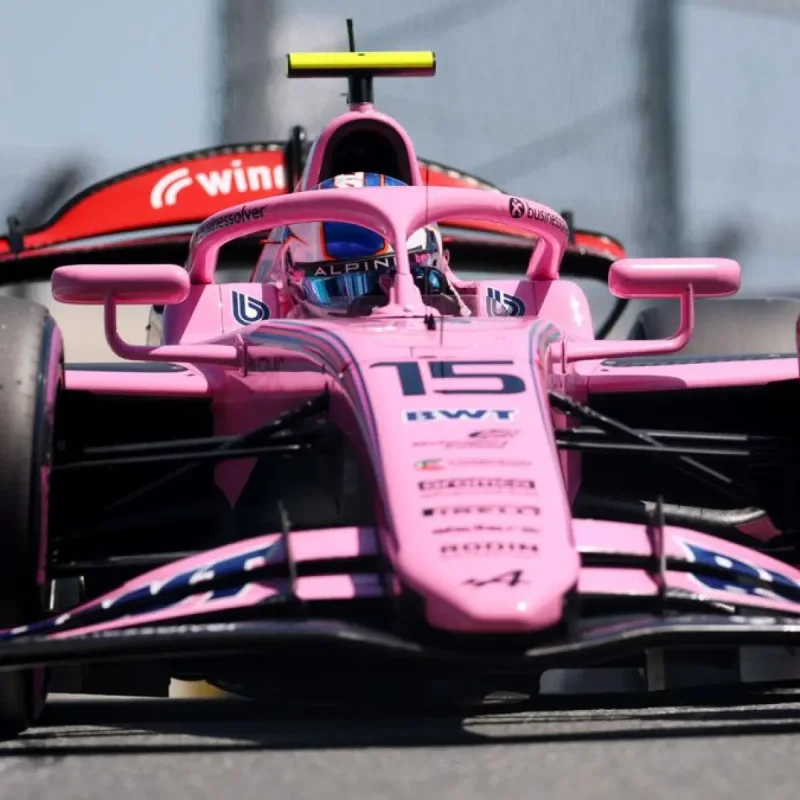
Lewis Hamilton secured the fifth position on the starting grid for the Canadian Grand Prix Sprint race during qualifying in Montreal on Friday, May 22, 2026.
The Ferrari driver outperformed teammate Charles Leclerc for the first time since the second round in China after deciding to skip simulator preparation ahead of the weekend.
Hamilton opted to analyze historical race data rather than using the factory simulator to configure a unique car setup that enhanced stability and corner balance.
“It’s probably the best Qualifying session we’ve had for some time,” said Hamilton, as reported by formula1. com.
The British driver expressed satisfaction with the mechanical adjustments made to his car alongside his engineering team.
“Great work with the engineers on the set-up changes – the car felt really fantastic from FP1. We made subtle changes going into Quali,” said Hamilton.
Despite his early pace, Hamilton fell behind the Mercedes and McLaren drivers during the final moments of the knockout session.
“SQ1 and SQ2 were looking good and then I don’t know why the others are able to turn up a little bit more, I don’t know.
I’m just happy to be there in the fight,” said Hamilton.
Hamilton noted that the adjusted preparation routine allowed him to maintain better focus heading into the competitive sessions.
“I was having so much fun out there.
Also, the fact that I didn’t do the sim and this is the best I’ve felt all year so I think that’s the way forward for me,” said Hamilton.
Data-Driven Approach
The performance followed consecutive races in Japan and Miami where Leclerc had outpaced Hamilton.
“Yeah, we worked really hard sifting through the data in the last couple of weeks,” said Hamilton.
The driver detailed how the analytical approach helped him customize the vehicle's dynamics without external distractions.
“I found that so much more beneficial in terms of one, I was able to just focus on training and not be distracted, and then the second part is just really going through with a fine comb with ride stability, through corner balances and mechanical balance,” said Hamilton.
The technical shift provided Hamilton with a completely new baseline feeling for the Circuit Gilles Villeneuve.
“I chose a set-up that we’ve never used before and it’s transformed the car for me, so I hope that bodes well for the rest of the weekend,” said Hamilton.
Hamilton added that his experience with simulation tools spans nearly three decades across multiple championship-winning teams.
“The sim is amazing,” said Hamilton, according to racefans. net.
He praised the engineering infrastructure currently established at the Maranello-based squad.
“It’s an amazing space to work in.
It’s the best sim I’ve ever seen and best group of people that I’ve known, a large team of people that I get to work with there.
So, a day at the sim is actually pretty incredible.
It is a very powerful tool and something that as a team we continue to evolve,” said Hamilton.
Hamilton noted that he has actively contributed to the development of Ferrari's virtual racing systems.
“Since I’ve been there, I’ve had a lot of input in some of this evolution and they’ve been really [responsive] and made loads and loads of changes and we’ve just been improving it,” said Hamilton.
However, the seven-time champion emphasized that simulator variables do not always correlate perfectly with real asphalt conditions.
“[But] with simulation, I feel that the goalposts are always moving. I started driving the simulator in 1997, the first simulator, I would say, at McLaren.
The cockpit didn’t move but we had force feedback in the steering, and I remember it was at Woking, at McLaren’s old factory,” said Hamilton.
He recalled his progression through junior categories and early Formula 1 seasons regarding virtual training.
“Then when it moved to the first ‘real’ gen, they let me sometimes use it when I was in GP2 [in 2006].
Then at McLaren, we used it relatively often. I didn’t particularly enjoy it, because they were long days and a lot of laps.
There’s a point at which you stop learning when you’re doing so many laps, for me personally,” said Hamilton.
Hamilton revealed that his dominant years with Mercedes featured very little simulator intervention.
“Then when I joined Mercedes, they were quite far off with the sim at the time.
I didn’t use it in all the championships that we won, barely used the simulator, very rarely.
Then in 2020, maybe 2021, I started to use it a little bit more,” said Hamilton.
He referenced a rare historical instance where his simulator setup translated perfectly to a race weekend.
“I think there’s only ever been really one time through all the years that I’ve used the sim in these 20 years that the set-up that I had on the sim was the exact set-up I used in qualifying and qualified pole, and that was Singapore 2012, maybe, I think, something like that.
So, then all the other times it’s not quite perfect. But as I said, it is a powerful tool,” said Hamilton.
The driver stated that virtual models often required immediate adjustments upon arriving at physical venues.
“Since last year I used it every week, and more often than not I felt you do all the work on the sim, you find a set-up that you’re comfortable with, you get to the track and everything is opposite.
So then you’re undoing the things you’ve learned,” said Hamilton.
This discrepancy required drivers to frequently alter their corner approaches and braking profiles on short notice.
“Some of the ways you’ve approached the corners you have to shift and adjust.
A set-up that you felt was good on the simulator is not the same at the track.
Sometimes it is, and so it’s kind of hit and miss,” said Hamilton.
Hamilton explained that he reallocated his simulator time toward analyzing internal mechanical hardware problems.
“So I just decided for this one, I’m just going to sit it out and focus more on the data.
[We did] a lot of deep diving on through-corner balance, mechanical balance, corner approaches, brake balance, optimising the brakes, which have been a problem for me for some time.
That’s led to really good integration with my engineers,” said Hamilton.
He left open the possibility of using virtual tools for power management configurations in the future.
“I’m not saying I’m never going to use it again,” said Hamilton.
The driver pointed out that post-race correlation work remains part of his regular workload.
“I think it’s something that, for sure, we’ll continue to utilise, particularly on power deployment,” said Hamilton.
Hamilton concluded that tracking data directly yielded his most successful performances of 2026.
“But often what I’ve done for the last six months, you’d go in after the weekend and you’d work on correlation, but then you go to the next track and it’s slightly off sometimes.
So, we’ll see how the weekend goes.
But in China, for example, I didn’t do the sim for China and it was my best weekend,” said Hamilton.
Leclerc Struggles with Brakes
Meanwhile, Charles Leclerc qualified sixth after experiencing ongoing handling difficulties under braking throughout Friday's sessions.
“Honestly on my side, I kind of expected it – I haven’t been at ease with the car,” said Leclerc.
Leclerc expressed concern over vehicle stability when entering corners at the Montreal circuit.
“I’m really struggling with the brakes on my side of the garage for some reason so we need to look into it, try to find something for tomorrow, otherwise it’s going to be a very long weekend because on the brakes, I get into the corners hoping that I don’t end up going straight,” said Leclerc.
The Monégasque driver noted that the rest of the car's aerodynamics felt competitive relative to the field.
“That’s the main issue at the moment. Other than that, the car feels actually quite okay.
Lewis has been incredibly quick this weekend but on my side, I just need to work on the feelings with the brakes and hopefully we can turn the situation around tomorrow,” said Leclerc.
Ferrari engineers continue to analyze the braking system data ahead of Saturday's competitive events.
“I think we have quite a good idea of what’s going on. Whether we have a fix for tomorrow is another story.
We’ll try and deal with it in the best possible way and see,” said Leclerc.
George Russell claimed pole position for Mercedes, while McLaren secured the second row with Lando Norris and Oscar Piastri finishing third and fourth.
“Our starts have been better than the Ferraris all year,” said Piastri.
The McLaren driver aimed to maximize launch performance to challenge the leading Mercedes cars immediately.
“I am sure it is only a matter of time before Mercedes get theirs competitive as well but until that time comes we will try our best to take advantage,” said Piastri.
Norris revealed that initial practice left McLaren uncertain regarding their true pace on the bumpy Canadian track.
“The car feels decent. Some things are maybe more questionable but it is such a weird track this, so low grip.
You are bouncing off kerbs,” said Norris.
The British driver explained that the team opted to defer using a new front wing upgrade due to correlation challenges.
“You are not getting a true representation of everything and it is hard to back up what we are getting from the wind tunnel,” said Norris.
McLaren plans to re-evaluate the component during subsequent European race weekends.
“We need a bit more time with some bits and will probably reintroduce them next week or in Barcelona.
But the rest of the car was working well. It's a good step forward,” said Norris.
Red Bull's Max Verstappen qualified seventh, finishing over half a second behind the pole-position time while dealing with pedal and steering vibration issues.
“My feeling in the car was not very good,” said Verstappen.
The championship leader stated that severe ride stiffness heavily impacted his driving consistency during qualifying laps.
“I was struggling a lot with the ride of the car. I couldn't put my foot down, my feet were flying off the pedals.
It made it very difficult to be consistent,” said Verstappen.
Red Bull will run the same setup configurations through the Sprint due to parc fermé regulations.
“That is something we need to investigate. We are stuck with that for the Sprint.
Hopefully it will be better for [race] Qualifying,” said Verstappen.
The 100km Sprint race is scheduled to take place at 5:00 PM local time on Saturday, followed by Grand Prix Qualifying at 9:00 PM.