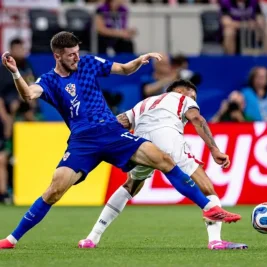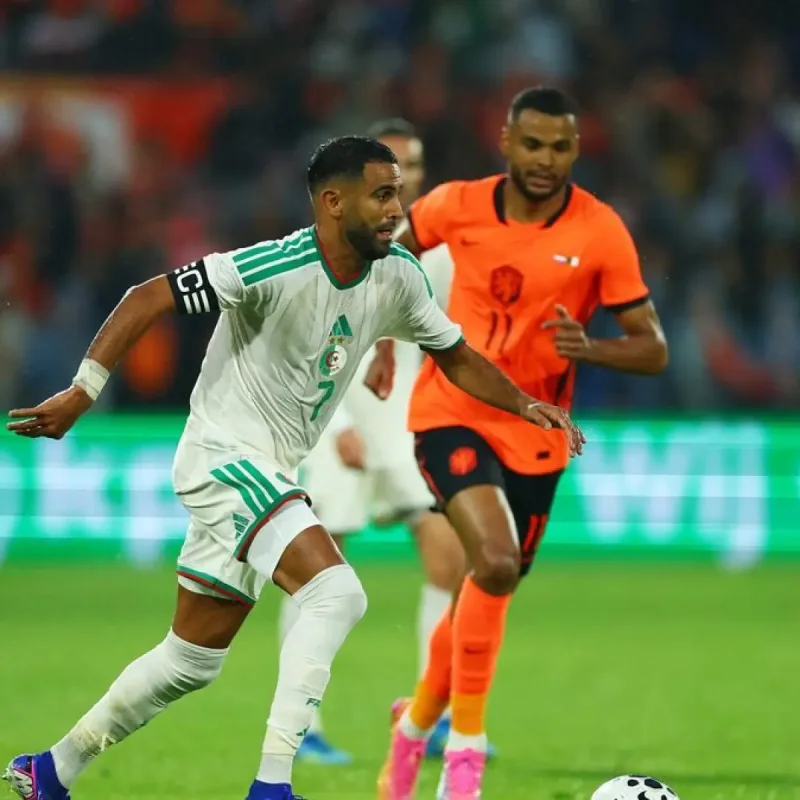
The Algeria national football team arrived in Lawrence, Kansas, at 12:20 a. m.
on Monday, June 8, 2026, to begin final training at Rock Chalk Park ahead of their opening World Cup matches.
Approximately 2,000 supporters gathered in steady rain at the DoubleTree Hotel by Hilton to welcome the delegation following a 10.5-hour flight from Algiers.
As reported by The Kansas City Star, fans held flags, beat drums, and chanted to greet the players after stormy weather delayed the scheduled 9:30 p.
m. Sunday arrival.
The squad returns to the tournament for the first time since 2014, placed in Group J alongside Argentina, Austria, and Jordan.
Fan Enthusiasm and Diaspora Support
"American people should be proud because they are receiving a big team like Algeria in Lawrence," said Djahid Hocine, an Algerian-born ride-share driver living in Overland Park.
Hocine noted that local supporters tracked government news updates to coordinate the welcoming gathering at the hotel.
"All these people are from Algeria, but there are a few Americans here that are excited because they're following our team.
There are some (from Algeria) who got married to American people, and they all are fans," said Hocine.
Supporters expressed high optimism for the upcoming Group J fixtures scheduled at GEHA Field at Arrowhead Stadium and in California.
"This is the first time we're playing here in America.
We're excited for our team to come here to America, and we are excited to see them here playing against big teams like Argentina, Jordan, all that," said Hocine.
The fan base remains highly focused on advancing deep into the tournament brackets.
"So our team, they come in here, and we think we're going to beat Argentina for the first time, really, and we're going to make it to the second round, and hopefully our players are going to be in the finals," said Hocine.
According to The Athletic, the historic rallying cry chanted by the fans originates from the nation's independence movement against French occupation before 1962.
"They were in (capital city) Algiers' port, and a USA ship was passing," said Ihab Fridj, a 29-year-old graphic designer and Algeria supporter.
Fridj explained that the phrase evolved into its current form from an initial message directed at the passing American vessel.
"The people wanted to tell the ship, '1, 2, 3, free Algerie' because this was during the French occupation, but the USA ship thought it was '1, 2, 3, viva l'Algerie'.
Since then, and after independence, it has become '1, 2, 3, viva l'Algerie'," said Fridj.
The deep connection between national identity and football continues to drive the diaspora's intense support across generations.
"Supporting the national team is related to the history of Algeria," said Amine Kabbes, a 38-year-old film director.
Kabbes emphasized that football serves as a vital platform for global recognition and validation.
"We have a desire to be in the world because, before 1962, we didn't exist. With football, we can exist and prove we are here.
For me, every victory is an opportunity for the world to write about Algeria," said Kabbes.
Supporters frequently bring national flags to neutral international sporting events worldwide to showcase their presence.
"The thing that we are known for is that whatever match you watch, you'll find an Algerian flag," said Fridj.
Media observers and fans alike note the frequent visibility of these symbols on global television broadcasts.
"When you see a match in Copa America or the Champions League, you can spot a supporter with an Algerian flag — it's weird," said Kabbes.
Community members describe football as an essential emotional outlet for the North African population.
"Algerian fans will push the limit to show they are here and ready to support their team," said Mohamed Benhassir.
Benhassir added that both domestic leagues and the national squad dictate the collective mood of the country.
"It's their oxygen. It'll always be their oxygen, either the national team or domestic football.
The majority of the population's source of happiness is football," said Benhassir.
Compensating for the geographic distance, young diaspora followers maintain a rigorous commitment to tracking international players.
"It's an obsession. It consumes your whole life," said Yassine Tebib, who was born and raised in London.
Tebib emphasized that family roots maintain the strong cultural link regardless of birth location.
"Even though I have lived my whole life in London, I have always had that strong connection with Algeria," said Tebib.
Fans frequently monitor secondary European leagues to evaluate the form of national team forwards.
"Following the national team will make you follow really niche leagues — for example, Mohamed Amoura (a striker now with Germany's Wolfsburg) used to play in the Swiss league with Lugano and in Belgium for Union Saint-Gilloise," said Tebib.
Devoted tracking extends to watching obscure regional qualification matches involving group opponents.
"I was watching really random games, just to follow the players," said Tebib.
The continuous passion for the national team solidified during historic qualification campaigns for older tournaments.
"I watched some matches before, but at that moment I started following everything — even Rwanda's and Lesotho's matches if they were in our group," said Fridj.
Fridj noted that regional rivals respect the deep football culture embedded within the Algerian community.
"I will watch it because I care about the points, how they play, if we can beat them… etc.
We aren't known because our local football isn't as great as, for example, (North African neighbours and seven-time African champions) Egypt.
But the national teams that we have played against know that we love football," said Fridj.
Team Preparations and Opening Matches
According to the BBC, head coach Vladimir Petkovic has built a high-scoring record of 21 wins, four draws, and three defeats, but faces scrutiny regarding defensive stability and a goalkeeping shortage.
Anthony Mandrea is sidelined, while Luca Zidane and Melvin Mastil carry injury concerns, forcing the recall of USM Alger goalkeeper Oussama Benbot out of international retirement.
The team is scheduled to open its World Cup campaign against defending champions Argentina on June 16 in Kansas City, followed by Jordan on June 22 in San Francisco, and a final group stage rematch against Austria on June 27 back in Kansas City.
"We will give everything to avoid returning home after three matches," said Petkovic.