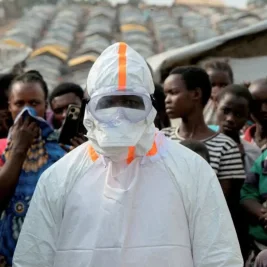
A ward at Glasgow's Queen Elizabeth University Hospital was partially closed on Tuesday after a patient was admitted with symptoms consistent with the Ebola virus during the early hours of the morning.
Public Health Scotland is working with the UK Health Security Agency to assess entry routes for travelers from affected countries while tests are conducted to confirm whether the patient has the virus.
If confirmed, this would be the first Ebola case detected in Scotland since 2016, when nurse Pauline Cafferkey was treated for a recurrence of the illness she originally contracted in Sierra Leone.
Current Outbreak and Response
The health alert follows an active outbreak of the Bundibugyo strain of Ebola in the Democratic Republic of Congo and Uganda, which has infected 1,307 people and caused 377 deaths since May 15.
“There are currently no confirmed cases of Ebola in Scotland and the risk to the general public remains low,” a Public Health Scotland spokesperson stated.
The agency noted that established screening protocols remain active for individuals arriving from outbreak zones.
“Where required, contact tracing will occur and contacts may undergo clinical assessment and precautionary testing,” the spokesperson added.
Public Health Scotland also confirmed the activation of the UKHSA Returning Workers Scheme to monitor individuals traveling for professional reasons.
“Organisations deploying workers to affected areas where they may be exposed to Ebola through their work, should register those workers with the scheme,” the spokesperson said.
In response to the broader African outbreak, British health specialists have traveled to the region to assist international containment operations.
“If we have the resources and we step up, we can contain this outbreak and prevent further losses,” said Damien Mama, United Nations Development Programme resident representative in Congo.
Mama warned that failing to contain the virus could escalate the regional health emergency into a prolonged development crisis across the continent.
“This deployment will help strengthen the existing response to the Ebola outbreak in the DRC and across the region, with experts in epidemiology, risk communications and community engagement, infection prevention and control and data modelling now on the ground to support,” said Dr. Edmund Newman, Director of the UK Public Health Rapid Support Team at UKHSA.
Newman emphasized that the partnership with the London School of Hygiene & Tropical Medicine helps deliver critical research to prevent outbreaks from becoming global emergencies.
“We know infectious diseases are not restricted by borders, which is why it’s vital we continue to work collaboratively with the World Health Organisation and other international partners, as well as national and local response organisations, to protect global health security,” Newman stated.
“Amid uncertainty in the global landscape, we’re really pleased to announce the renewal and expansion of the UK-PHRST partnership with the London School of Hygiene & Tropical Medicine, which allows us to continue sustainably sharing knowledge and support internationally, delivering cutting edge research and evidence to help prevent outbreaks from becoming global health emergencies,” Newman added.