The upcoming 250th anniversary of the Declaration of Independence is driving civil rights leaders and grassroots organizers to push for deep societal reforms, according to a report by The Guardian.
Many advocates view this semiquincentennial milestone less as a traditional celebration and more as a crucial moment of reckoning for the nation.
Activists argue that the country faces severe challenges, pointing to ongoing restrictions on voting access, civil liberties, and the integrity of democratic structures.
Labor and Grassroots Movements Call for Structural Change
Labor organizers emphasize that historical promises of equality have excluded marginalized groups for centuries, requiring a shift in how workers organize.
Chris Smalls, workers' rights activist and former president of the Amazon labor union, urged people to escape the "two-party plantation" and consider multiparty systems seen in other countries.
"We have been voting for Democrats or Republicans for decades, and it has gotten us to this point – a Trump administration and a system that is still not working for the majority of Americans," Smalls said.
He added that other nations have higher union density and unions that work directly with the working class, while in the US, politics often lead organizations and unions, creating a disconnect.
Kristen Clarke, general counsel at the NAACP, stated: "We can still build the democracy we all deserve – not the one we inherited, but the one we have the power to create."
Constitutional Reforms and Supreme Court Changes
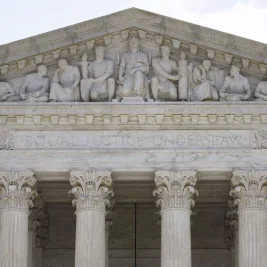
Legal analysts emphasize that protecting the right to vote requires direct constitutional modifications to counteract recent judiciary rollbacks.
Advocates are calling for explicit reforms to the highest court, aiming to introduce term limits and strict ethical guidelines to rebuild public trust.
Clarke noted that the Supreme Court has moved at "lightning speed" to hollow out the Voting Rights Act and the 14th and 15th Amendments.
"We need to strengthen our constitution so that there is a true affirmative right to vote for every American, regardless of race, ethnicity or economic status," she said.
She also called for Supreme Court reform, including term limits, meaningful ethics requirements, and a ban on the shadow docket.
Despite the challenges, Clarke expressed hope, citing public protests against racial gerrymandering and increased attention to the midterm elections.
Eliel Cruz, co-founder of a gender liberation movement, called for dismantling oppressive systems to ensure safety for LGBTQ+ youths.
"I want to see the United States finally reckon with its history, dismantle the oppressive and violent systems that have harmed generations of marginalized people," Cruz said.
Summer Lopez, PEN America co-CEO, warned that free expression is under threat from unprecedented book bans, restrictive classroom laws, and federal attempts to ban words from government documents.
"These are textbook authoritarian tactics," Lopez said, urging writers and citizens to defend free speech and engage in robust public discourse.
Yasmin Cader, ACLU deputy executive director, noted that the criminal legal system is inseparable from racial subordination, from convict leasing to mass incarceration.
"The protections of the constitution have not applied fairly to all," Cader said, adding that progress has come from people insisting the country live up to its promises.
Celina Stewart, CEO of the League of Women Voters, said trust has been eroded by political shortcomings and inhumane policies toward immigrant communities.
"Our hope is not just to preserve democracy, but to evolve it – to make it more representative, more inclusive and, above all, more resilient," Stewart said.
Indigenous organizations emphasize moving away from viewing land as a commodity toward active environmental stewardship, noting that the taking of land from Indigenous peoples is a deep stain on the nation's soul.