The Trump administration has turned to the U. S.
Supreme Court in an effort to restart a border security project stretching across the Big Bend region of West Texas.
The Justice Department filed an emergency request on October 21, 2026, seeking to overturn a preliminary injunction issued earlier that month by U.
S. District Judge Kathleen Cardone.
Cardone's October 2 ruling barred the Department of Homeland Security from building barriers or related infrastructure and from conducting ground-disturbing activities in the affected area.
The project covers more than 500 miles of the U. S.
-Mexico border and includes infrastructure near Big Bend National Park.
Legal Fight Centers on Waiver Authority
At the heart of the dispute is the administration's use of federal immigration law to bypass environmental and historical preservation requirements.
The government relied on a 1996 immigration law that allows the homeland security secretary to waive requirements deemed necessary to build physical barriers and roads near the southern border.
Solicitor General D.
John Sauer argued in the emergency filing that the injunction significantly frustrates the government's ability to stop illegal crossings and drug smuggling.
Sauer said the Big Bend project areas were identified because of high rates of illegal-alien crossings and drug smuggling in the region over the past several years.
The Justice Department said more than 89,000 people were apprehended attempting to enter the United States illegally in the Big Bend Sector between 2021 and 2025.
The sector includes 77 counties in Texas and accounts for more than one-quarter of the U. S.
-Mexico border, according to court filings described by CBS News.
Opponents dispute the characterization of the region as an area of elevated illegal entry.
They said annual apprehensions there represented between 0.3% and 2.2% of total apprehensions along the southern border, placing Big Bend last among the six border sectors.
Cardone found that the administration's authority to waive legal requirements was insufficient to justify the construction plans.
The Court finds that Plaintiffs are likely to succeed on the merits of their major questions doctrine claim that the Big Bend Waivers were issued in excess of the Secretary's authority, Cardone wrote, as quoted by WBAL-TV.
Project Details and Public Backlash
The Department of Homeland Security announced the project in February 2026.
Former Homeland Security Secretary Kristi Noem issued the initial waivers, and her successor, Markwayne Mullin, issued two additional waivers between February and July, according to CBS News.
The planned infrastructure includes steel bollard walls reaching 30 feet, vehicle barriers, patrol roads and surveillance technology.
Customs and Border Protection has said the proposed wall itself will not cut through Big Bend National Park, but related infrastructure would affect the surrounding landscape, including approximately 17 miles of vehicle barriers.
Construction of a 47-mile stretch in the Big Bend region began in September, according to CBS News.
The Justice Department said the government had awarded contracts for five border-barrier projects in the area, while the broader plan would extend infrastructure for more than 300 miles.
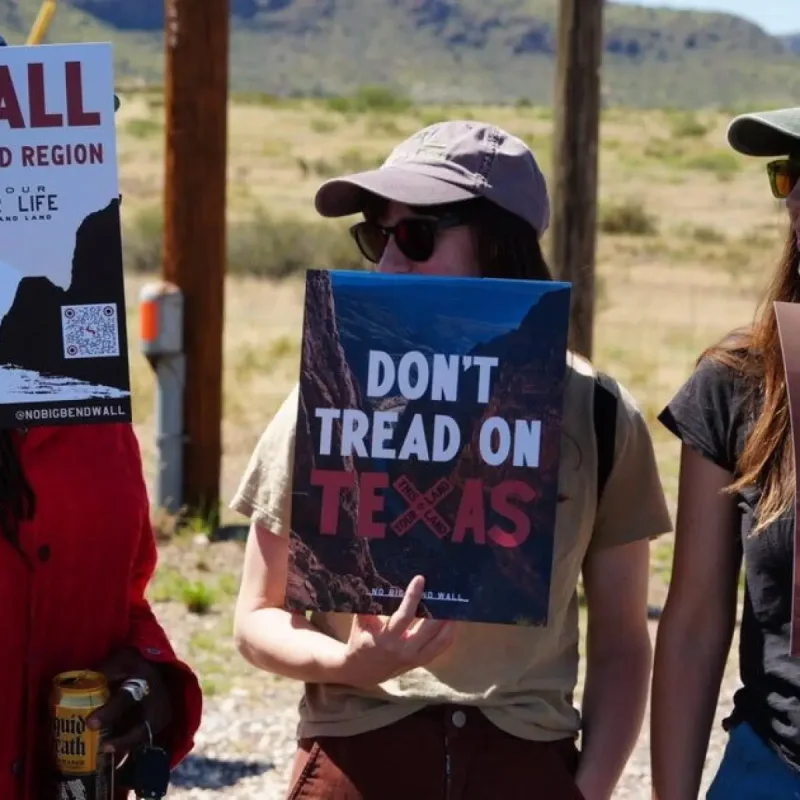
Public opposition intensified in August after videos showed bulldozers clearing land near Santa Elena Canyon inside Big Bend National Park.
Ranchers, residents, business owners, environmental advocates and local officials from both political parties have challenged the project, citing potential damage to wildlife habitats, recreational access and culturally significant sites.
The administration temporarily paused construction inside the national park through the end of September following public backlash, according to CBS News.
Work remained subject to litigation after environmental and community groups, a river outfitter and a religious organization filed a lawsuit in April.
Supporters of the challenge have argued that surveillance towers and drones could provide border monitoring without the expense and environmental disruption associated with extensive physical barriers.
The government has countered that leaving the region without additional infrastructure could redirect unauthorized crossings into Big Bend.
The Supreme Court request followed Cardone's rejection of the administration's attempt to pause her injunction.
The construction halt remains in effect unless the Supreme Court grants the requested emergency relief.