Iran and Oman are collaborating on new arrangements to charge service fees to ships transiting the Strait of Hormuz, Iranian Ambassador to China Abdolreza Rahmani Fazli announced on Saturday at the World Peace Forum in Beijing.
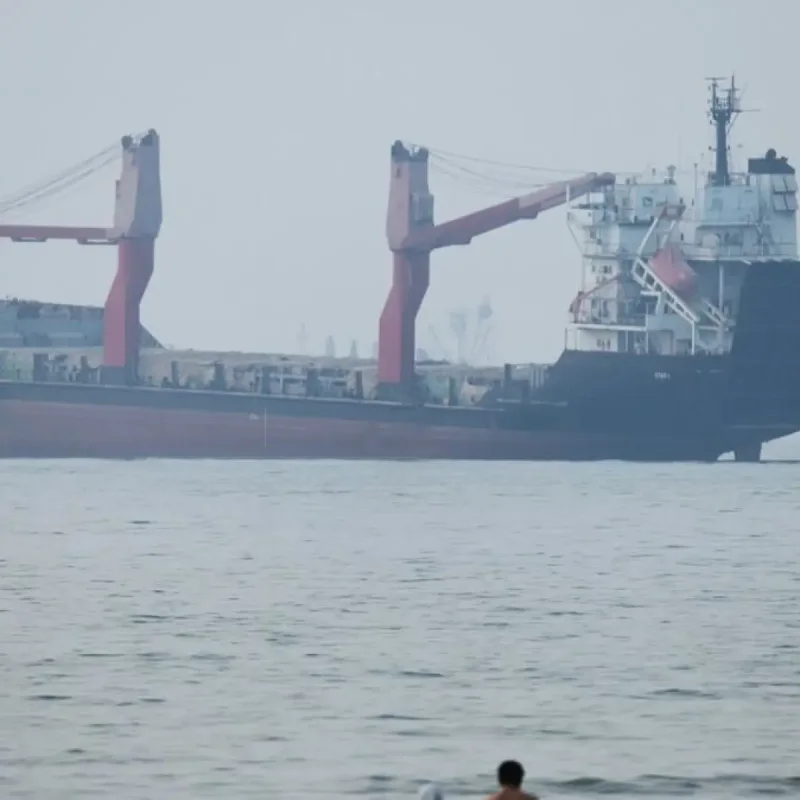
The strategically vital waterway, which handles roughly 20 percent of the world's crude oil and liquefied natural gas, is undergoing a proposed regulatory overhaul after being nearly closed during a recent Middle East war.
Fee Structure and Preferential Terms
An initial 60-day agreement signed between Washington and Tehran on June 17 paused potential transit fees during active negotiations, but Iran remains focused on securing international acknowledgement of its control over the maritime passage.
"As a country where the Hormuz is part of its territorial waters, we will definitely charge service fees," Fazli said.
The diplomat specified that the upcoming financial protocols are intended to manage shipping oversight, secure regional transit, and mitigate environmental damage caused by heavy maritime traffic.
"These new arrangements will be concerning guaranteeing the security of passage through the Straits of Hormuz, supervision of the passage of the vessels...
and also guaranteeing and dealing with the environmental consequences of the massive number of ships," Fazli said.
The Iranian government indicated that nations maintaining positive diplomatic ties with Tehran during past geopolitical friction will receive preferential terms under the new transit policy.
"We will definitely consider special treatment for the countries that were friendly to us and specially stood by us during the hard times," Fazli said.
Oman's Strategic Ambiguity
Oman, often recognized as an intermediary between Western nations and Tehran, faces geopolitical pressure from the United States, which strongly opposes any monetary levies on international shipping lines inside the strait.
"You have a regional power, such as Iran, and then you have a global power, the U. S.
, putting pressure on Oman," Dania Thafer, executive director of Gulf International Forum, told CNBC.
The policy research institution noted that Omani authorities are utilizing a cautious approach to preserve relations with both competing global powers.
"So, they're trying to use a degree of strategic ambiguity to try to stay out of the conflict as much as possible and not undermine these very strong players," Thafer said.
International oil and energy markets continue to watch the negotiations closely, as changes to governance rules could alter global shipping costs and insurance premiums without requiring a direct military incident.
"Markets tend to price disruption risk but pay less attention to governance risk.
That creates a blind spot," Neil Quilliam, Middle East specialist at Chatham House, wrote in an email to CNBC.
Analysts suggest that Omani diplomats are balanced between the legal limits of transit passage laws and the economic incentives of co-signing a joint regional fee structure.
"As a result, we've seen Omani diplomats tack back and forth between insisting no toll will be charged, and suggesting that ships might be asked to pay a fee which will be called something other than a toll," Andrew Leber, non-resident scholar at the Carnegie Middle East Program, wrote in an email to CNBC.
Independent experts believe Oman will maintain its diplomatic posture until the pricing framework causes an outright policy rift with neighboring Arab states or Washington.
"It is highly likely that Oman continues to co-sign some kind of Iranian service-fee plan or put a gentler spin on it until that brings it into direct conflict with its Arab neighbors or the United States," Leber wrote.