Southern Water has introduced a mandatory hosepipe ban for approximately one million customers across Hampshire and the Isle of Wight, effective Friday, July 10, 2026.
The measure comes in response to severe drought conditions threatening the region's main water supplies.
The ban follows a record-breaking summer heatwave, with UK temperatures reaching 34.4 degrees Celsius at Wisley in Surrey on July 9.
This marked the eighth day at or above 34 degrees Celsius within a calendar year, an unprecedented occurrence.
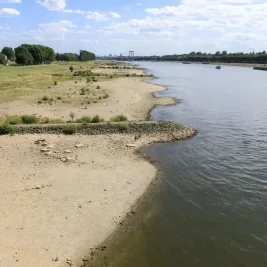
Water levels in the River Test, a rare chalk stream that supplies most of the local area's drinking water, have dropped 25 percent below the seasonal average.
This follows the warmest spring on record, as reported by ITV News.
“We’re working round the clock to keep taps flowing and protect the River Test, which is at a critically low level following recent hot weather,” said Tania Flasck, Director of Water Operations at Southern Water.
The utility company highlighted that a single hosepipe uses 1,000 liters of water per hour, equivalent to the average weekly usage of an individual.
Residents are urged to switch to buckets and watering cans.
“I want to thank people for the incredible efforts they made last year to save water during the hosepipe ban,” Flasck stated.
“Their actions really made a difference.”
Exemptions are available for vulnerable individuals, including WaterSure customers and Blue Badge holders with specific health or mobility requirements.
“By working together, we can ensure we keep the taps flowing, protect the environment and reduce pressure on the River Test,” Flasck added.
The Environment Agency has designated sections of the region as experiencing prolonged dry weather, continuing a pattern similar to a six-month dry spell declared in 2025.
“The changing climate has seen a whiplash from an exceptionally wet start of the year to prolonged dry weather,” said Richard O'Callaghan, Environment Planning & Engagement manager at the Environment Agency.
Regional rainfall data for the Solent and South Downs area showed a drastic decline in precipitation through the spring of 2026.
“The pressures on the environment will become heavier,” O'Callaghan noted, adding, “The Environment Agency is positioning itself to get ahead of that.”
Water conservation recommendations include using low-flow showerheads, avoiding pre-rinsing dishes, and operating washing machines only with recommended capacities.
“We are ready to tackle any incidents during this time and make sure that the needs of the environment are balanced against demands for more water from our most sensitive waterways,” O'Callaghan stated.
Similar measures are expanding across the region, as South East Water previously instituted its own ban on July 3 for multiple areas across Kent, including Ashford and Tunbridge Wells.
The National Drought Group, comprising the Met Office, government regulators, and agricultural experts, continues to track the environmental impact and is scheduled to meet next on July 20.