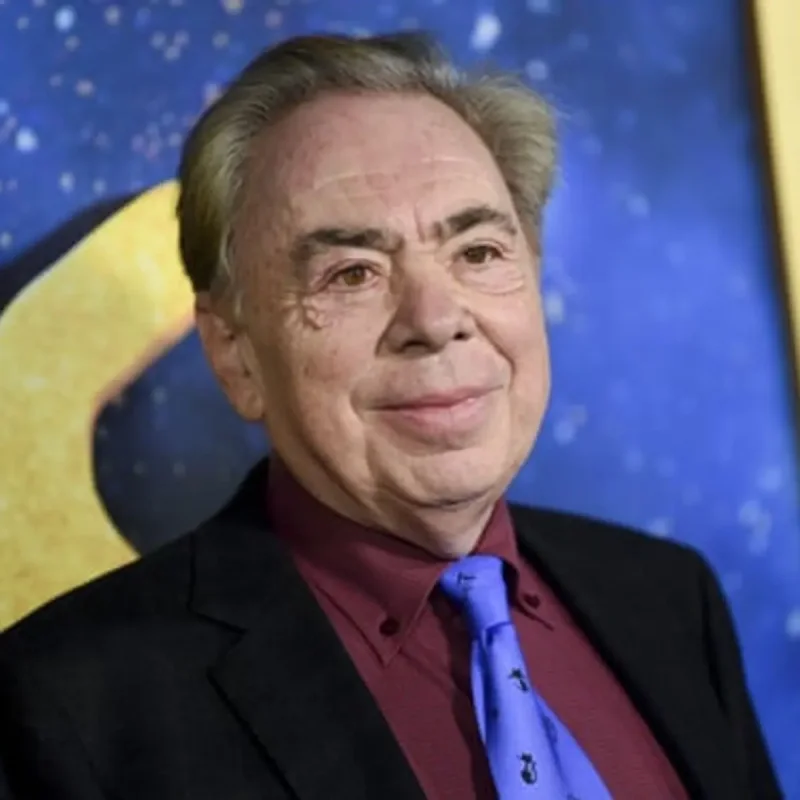
Legendary composer Andrew Lloyd Webber warned Tuesday that Broadway faces severe creative and commercial danger following the abrupt closure announcement of his three-time Tony-winning revival, Cats: The Jellicle Ball, after just five months.
The $18 million production failed to recoup its initial investment despite maintaining high audience popularity and generating approximately $1 million in weekly grosses, burdened by the immense expenses of operating in New York's theater district.
Unsustainable Financial Conditions
"Broadway is more than a street or a collection of buildings.
It is an idea—and one of the greatest cultural ideas America has given us," wrote Lloyd Webber.
The composer expressed immediate concern for the future of the theatrical landscape, highlighting that creators and investors alike are facing unsustainable financial conditions under the current economic climate.
"That idea is now in dire danger.
I beg everyone with the power to protect it: come together before it is too late," he wrote.
The financial pressure extends across the industry, with a New York Times report noting that 46 musicals have opened since the Covid-19 pandemic at a total cost of around $800 million, yet multiple big-budget shows cancelled within four months.
"The painful truth is that, with things as they are, bringing almost any new show to Broadway makes little financial sense," said Lloyd Webber.
Impact on Creators and Investors
The legendary theater icon pointed out that the current economic structure forces the artistic community to compromise on financial returns, limiting their long-term career viability.
"The costs are immense.
Creators, writers and directors are often forced to accept minimal royalties simply to get work staged," he said.
Lloyd Webber emphasized the growing disparity between industry professionals and production profits, questioning how the next generation of talent can sustain themselves under the current industry standards.
"Many now survive on a fixed weekly fee rather than sharing properly in the success of the work they helped to create," he said.
He also underscored that the ongoing financial instability risks deterring crucial financial backers who are essential to launching new productions.
"How can the next generation build a life in theatre under those conditions? Young creatives cannot live on goodwill alone," he said.
Despite these warnings, the overall Broadway market showed strong consumer demand, with the 2025-2026 season achieving a record $1.91 billion in ticket sales, driven by star-led productions such as Daniel Radcliffe's Every Brilliant Thing.
"The situation is scarcely better for investors. Many count themselves fortunate if they recover even part of their money.
Without investors willing to take risks, and artists able to make a living, where will Broadway’s next generation of shows come from?"
said Lloyd Webber.
Meanwhile, established properties continue to find success, as Lloyd Webber’s Evita revival starring Rachel Zegler recently announced a Broadway transfer to the Winter Garden theatre for spring 2027 after a West End run.
"Of course, Broadway’s established hits remain profitable," wrote Lloyd Webber.
The composer noted that long-term industry health relies on promoting experimental endeavors alongside established blockbusters, pointing to the extended New York run of Masquerade as an example of alternative success.
"But Broadway cannot survive creatively or commercially on three old shows.
New and daring work must have a future — whether on Broadway itself or in new forms such as Masquerade, now nearing a year in New York," he wrote.
Reflecting on his lifelong dedication to the medium, the composer expressed hope that collaborative industry reform could prevent New York venues from suffering the same fate as quiet film studios.
"I am still as in love with Broadway as I was as a teenager," he said.
The musical maestro concluded with an urgent call to action for all primary theater stakeholders to coordinate immediate structural solutions.
"I want future generations to experience that same sense of possibility," he said.
Lloyd Webber stressed that cooperative engagement remains the only path forward to preserve the live theater ecosystem.
"Theatre owners, unions and producers must come together urgently," he added.
The final performance of Cats: The Jellicle Ball is scheduled to take place on August 8.
"Every part of the industry has a stake in finding a solution," he added.
The West End veteran warned that failure to adapt would permanently alter the vibrant landscape of commercial American theater.
"Without action, Broadway risks rivalling Hollywood’s empty soundstages: increasingly dark theatres where bold new work once lived," he added.