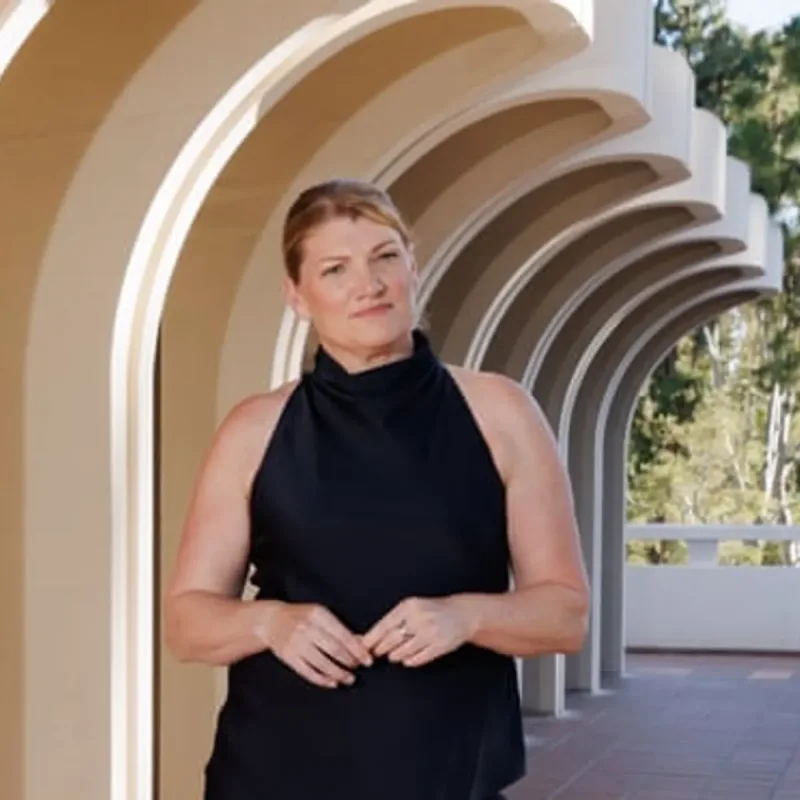
Developmental psychologist Candice Odgers, who has studied adolescent mental health for 25 years, warns that the push to ban social media for teenagers may be misguided.
She argues that the debate overlooks bigger issues facing youth, such as the impact of COVID-19 and the health of their caregivers.
Odgers, a professor at the University of California, Irvine, says the quickest way to make the internet safer for children would be to remove all adult men from it.
Men are the primary perpetrators of sextortion and misinformation, she notes, though she does not advocate this as policy.
Her stance contrasts sharply with social psychologist Jonathan Haidt, author of The Anxious Generation, who argues that social media is causing an epidemic of mental illness.
Haidt has kept his 16-year-old daughter off social media entirely.
Odgers, however, gave her children smartphones at age 11 and allowed her daughter to use Snapchat at the same age.
Odgers is frustrated by global efforts to ban phones in schools and restrict social media for under-16s.
She was disappointed when the UK followed Australia in implementing such a ban.
“It’s becoming increasingly clear to me that bans are likely to make things worse, not better,” she says.
She points to research showing that more than 85% of under-16s in Australia continued using social media three months after the ban.
“They are going to be using it regardless,” she says. “The more we make it a forbidden place, the less likely they will report harms.”
Evidence vs. Narrative
Odgers and Haidt agree that adolescent mental health has declined, but they disagree on causes.
Odgers cites multiple factors: the recession, rising adult mental health issues, the COVID-19 pandemic, and opioid addiction.
She calls the focus on social media “misleading” because studies show only small or mixed associations.
In a review of Haidt’s book in Nature, Odgers wrote that hundreds of researchers have searched for large effects but found “no, small and mixed associations.”
Haidt later told the Guardian that Odgers had not read past chapter one, but she says she read the entire book.
During a debate at the University of Virginia, Odgers asked Haidt why most social scientists in the field disagree with him.
Haidt countered that parents would be “crazy” to let their daughters use platforms that double or triple depression risk.
Odgers replied, “It’s not what that research tells you. You need to stop telling people it doubles or triples your risk.”
Odgers acknowledges that scary stories sell, especially to anxious parents. She notes that Haidt’s arguments resonate because they fit pre-existing worries.
“He needs about five seconds to convince people. I need about 15 minutes,” she says.
Real Risks and Solutions
Odgers emphasizes that cyberbullying is harmful but often overlaps with offline bullying.
“The most likely place for children to be harmed is in their home, in schools, in their communities, by people they trust,” she says.
She supports tighter regulation of tech platforms, including prosecuting perpetrators of sextortion and image-based abuse.
However, she believes bans are ineffective and divert resources from proven solutions like funding more teachers and school counsellors.
“All this energy could be going into building things versus banning things,” she says.
She also warns that restrictions do not address how to help children develop a healthy relationship with artificial intelligence.
Odgers’ recent TED Talk, “What we’re getting wrong about kids and tech,” highlights that teenagers today are better educated and less violent than previous generations.
“Teenagers today are amazing,” she says.
She urges policymakers not to make decisions out of fear.
“We would not accept this level of evidence for other things that harm our children,” she says, comparing the social media debate to blaming purple dye for childhood leukemia.