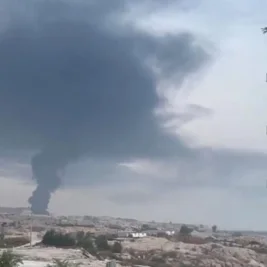
American military forces carried out a series of targeted strikes against Iranian infrastructure early Thursday, aiming to reduce Tehran's ability to threaten maritime traffic in the Strait of Hormuz, according to The Guardian.
The operation prompted immediate retaliatory missile and drone launches from Iran against US-allied nations in the region, including Bahrain, Kuwait, and Jordan.
US Central Command said the strikes focused on the southern port city of Bandar Abbas, a key hub for the Iranian navy and the Islamic Revolutionary Guard Corps.
This marked the first time during the current escalation that explosions affected areas around the capital Tehran, with reports of blasts near civilian nuclear and ballistic missile production plants in several provinces.
US Central Command confirmed that American aircraft disabled an oil tanker attempting to breach the naval blockade in the Strait of Hormuz by firing missiles into its smokestack.
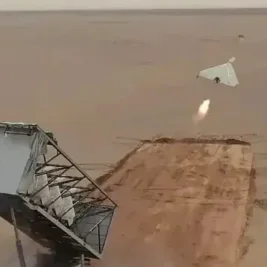
In response, the Iranian army targeted American communication networks and fuel depots in Jordan with kamikaze drones, though Jordanian forces intercepted eight incoming missiles.
Iranian authorities said the strikes hit an army barracks, killing at least seven soldiers and wounding hundreds.
The Iranian health ministry reported that recent US operations in southern Iran have killed at least 30 people and injured 260.
Global oil markets reacted to the hostilities, with Brent crude rising above $85 per barrel on Wednesday, a 15 percent increase from pre-war levels but still below the peak conflict valuation of nearly $120.
"The US military is holding Iran accountable at the commander in chief’s direction," US Central Command stated.
President Donald Trump told reporters he avoided setting specific timelines for foreign operations. "They know the story … They better behave," Trump said.
Trump also thanked Tehran for allowing Dena Karari, a dual US-Iranian national detained since December 2024, to leave the country.
"She is now safely outside of Iran, and in good condition," he said.
Iranian Parliamentary Speaker Mohammad Bagher Ghalibaf outlined the Islamic Republic's strategic stance, balancing diplomacy with defense.
Referring to a bilateral memorandum of understanding, he said, "We have no reason to adhere to such an understanding."
Ghalibaf noted that Iran has never sought conflict.
"We never welcomed war, nor do we now," he said, urging citizens to maintain defensive vigilance and "use the tools of diplomacy and negotiation to achieve and consolidate national interests" alongside armed resistance.