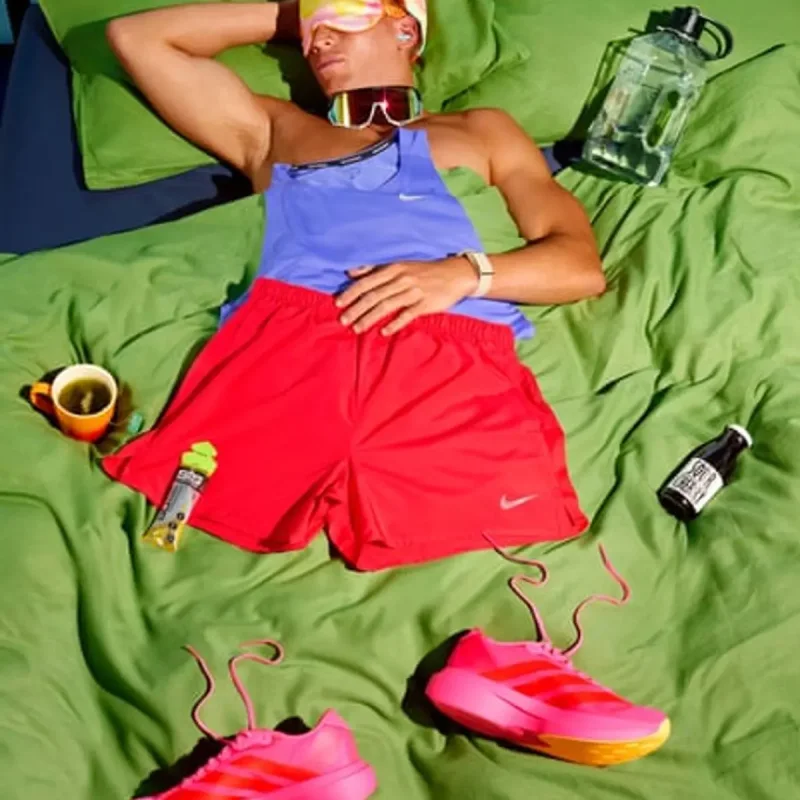
Elite British sports stars have detailed the diverse and rigorous sleep strategies they use to maintain peak physical condition during major tournaments, as reported by The Guardian.
Trackers, specialized diets, customized bedding, and strict psychological boundaries form the backbone of their recovery regimes.
Heptathlete and Swimmer Prioritize Sleep Quality
Two-time world champion heptathlete Katarina Johnson-Thompson, 33, manages a strict rest window between grueling technical events, prioritizing a consistent 10 p.
m. to 7 a.
m. sleep schedule.
“The Olympic Village is one of the toughest places to get a good night’s sleep,” Johnson-Thompson said, noting challenges like paper walls and cardboard beds during international competitions.
To combat stress before major events, she focuses on banking 10 to 11 hours of nightly sleep alongside daytime naps during the preceding week.
She also experiments with consuming a kiwi fruit two hours before bedtime for its vitamins and antioxidants, and uses a weighted blanket to minimize physical tossing.
Psychiatrist Steve Peters advised her to manage competition anxiety by allocating a specific morning time slot for worrying.
“Before bed, I say to myself: ‘Now is not the time to think about this,’” Johnson-Thompson explained.
Triple Olympic gold medalist swimmer Adam Peaty, 31, balances early morning pool sessions with parenting, shifting his focus toward deep sleep quality rather than merely counting hours in bed.
Peaty tracks his biological data using a wearable device and collaborates with a sports science team to monitor key physiological metrics.
“We also have a sports science team, and we do blood biomarkers, and look at our natural testosterone, free testosterone, melatonin and magnesium levels, which are all related to your circadian rhythm,” Peaty stated.
His routine includes eating exactly three hours before sleeping, maintaining a two-liter hydration bottle nearby, and using firm posture pillows between his hips and arms.
For long-haul travel, the 95kg swimmer carries custom mattress covers for support and plays six-hour World War II history fact videos on YouTube to fall asleep on airplanes.
Football, Weightlifting, and Other Sports Adapt
Aston Villa and England defender Ezri Konsa, 28, highlights that late-evening kick-offs present the greatest hurdle due to lingering adrenaline spikes that disrupt standard sleep cycles.
Konsa relies on consistent bedtime habits and deep preparation throughout the training week to lower pre-match anxiety.
Olympic silver medalist weightlifter Emily Campbell, 32, uses a daily morning questionnaire to report her alertness, stress levels, and sleep quality to her coaching staff.
She invested in a specialized firm mattress with an integrated cooling layer to regulate body temperature.
Her evening routine consists of drinking peppermint and honey tea, consuming vitamin D and glucosamine, and taking two scoops of creatine while ensuring she never goes to bed hungry.
Northampton Saints rugby player Henry Pollock, 21, uses an Apple Watch to monitor sleep depth, avoids heavy meals late at night, and consumes a protein hit or collagen shot for muscle recovery.
He winds down by turning off his phone 30 minutes before bed to read a book, and drinks homemade mint tea from his personal herb garden.
International cricketer Amy Jones points out that late-finishing T20 matches force players to stay awake into the early hours, prompting some to use sleep meditation apps or sour cherry juice sachets.
Jones notes that hotel environments during the summer tournament season are often loud, making earplugs essential.
British tennis player Harriet Dart, 29, shifts her sleep schedule forward if she faces a late-evening match, using a silk eye mask for a pitch-black environment.
She uses Epsom salt baths as a primary de-stresser, manages jet lag with short 20-minute naps, and wears compression socks during long flights.
Triple Olympic gold medalist swimmer Tom Dean maintains a strict rule against daytime napping during the first three days after landing in a new time zone to force rapid circadian adjustment.
He consumes a 600-calorie snack of Greek yoghurt, fruit, granola, and peanut butter right before bed to prevent waking up hungry.
Olympic champion triathlete Alex Yee, 28, restricts his fluid intake during the final 90 minutes before bed to protect his sleep cycle from nighttime disruptions.
Yee listens to podcasts or audiobooks nightly to settle racing thoughts, emphasizing that athletes must remain adaptable when unexpected factors alter their schedules.
During the Paris Olympics, competitors had to wake up at 3 a. m.
to check if water pollution levels in the Seine would permit their triathlon event.
“So, over that period, you just had to try to stay as relaxed as possible, understand that everyone was in a similar position, and that it’s all about how you respond to having too little sleep,” Yee stated.