A U. S.
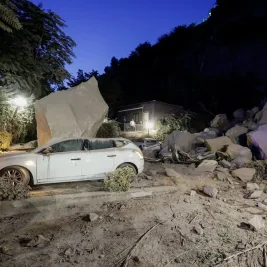
bombing campaign in Caracas and a subsequent double earthquake killing over 3,000 people have fundamentally altered Venezuela's political and social landscape, according to a report by Dutch media outlet NRC on July 8, 2026.
Following the January military intervention that resulted in the abduction of President Nicolás Maduro—who now faces drug trafficking charges in the United States—interim President Delcy Rodríguez has taken control while cooperating with U.
S. President Donald Trump to manage the nation's massive oil reserves.
Local resident Paula Navas stated that the daily reality in the capital's poorest neighborhoods has shifted significantly since the removal of the previous administration.
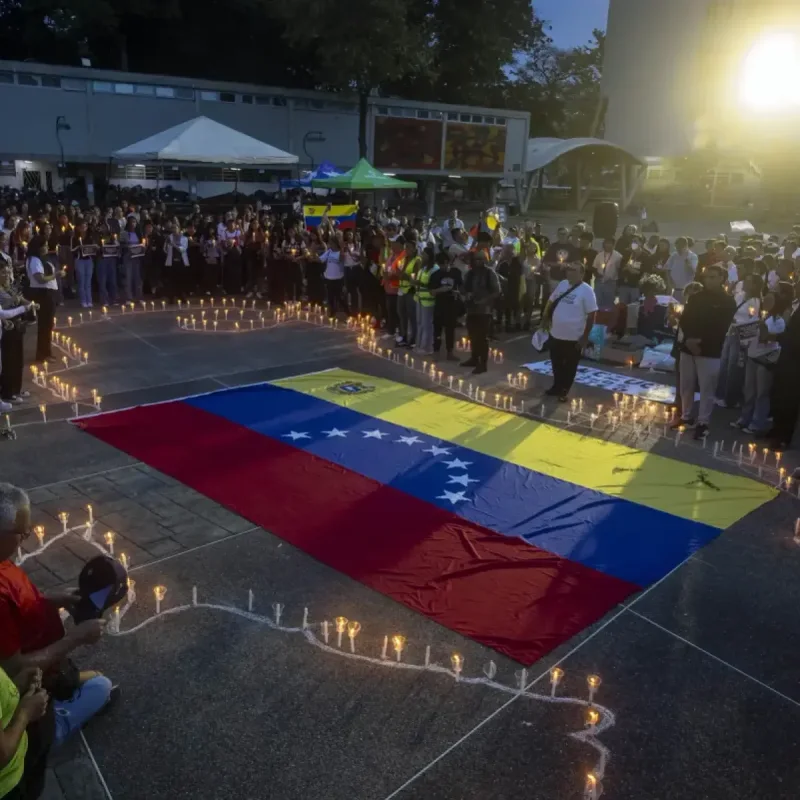
"We are all in mourning. Everyone is trying to do something.
We, residents of this slum, do not have much, but we still try to give something, or offer help," said Navas, a 59-year-old resident of the Petare neighborhood who collected children's clothing for earthquake victims.
Navas noted that the presence of armed, government-backed motorcycle gangs has declined significantly in recent months.
"It strikes me that there are much fewer colectivos on the street," said Navas.
Navas explained that she had personal experience with the groups during past political disputes.
"The last time they came to my house was on January 11.
I was at home with my daughters and they wanted to know if I was an opposition supporter.
It was very terrifying. But apart from some warnings and threatening language, fortunately nothing else happened," said Navas.
Navas expressed desire for a complete democratic transition despite the ongoing political stagnation under the current interim leadership.
"I think the phase we are in now can lead us to a real transition," said Navas hopefully.
Navas emphasized that the public expects the restoration of standard electoral processes.
"Ultimately there will have to be elections, that is what we Venezuelans want," said Navas.
Navas questioned the U. S.
administration's narrative regarding public sentiment toward the foreign intervention.
"According to Trump, we Venezuelans are now dancing in the streets here," said Navas skeptically.
Navas rejected the authority of both the U. S.
leadership and the current interim president.
"But that is nonsense. We don't want Trump here, we are a sovereign country.
We don't want Rodríguez either. We want fair and free elections in which opposition leader María Corina Machado also participates," said Navas.
Navas criticized the legitimacy of the interim president, who previously held high-ranking positions under Maduro.
"She must return. The regime that is there now was not elected by us.
Delcy Rodriguez comes from Maduro's stable. Just like Maduro, she has no legitimacy," said Navas firmly.
Market vendor Marisluar Mateus reported experiencing operational changes and an increased sense of personal safety under the interim government.
"I feel that there is more freedom and stability under acting President Rodríguez.
There are also fewer military personnel on the street monitoring us," said Mateus while selling food during an earthquake-related state of emergency.
Mateus noted that consumer activity remained high despite the closure of standard storefronts.
"I am less afraid to give my opinion," said Mateus.
Political activist and lawyer Luis Isturiz, who was released alongside 185 political prisoners under a February amnesty law, detailed his previous detention following the 2024 elections.
"As a result, I was a danger to the government.
We, the opposition, had kept track of results per polling station and therefore we knew we had won significantly.
Maduro never showed results but did declare himself the winner," said Isturiz, who was imprisoned in El Helicoide for holding voting records.
Isturiz stated that his detention began violently immediately after the election results were disputed.
"The evening of the bombings, on January 3, I heard all kinds of sounds that," said Isturiz.