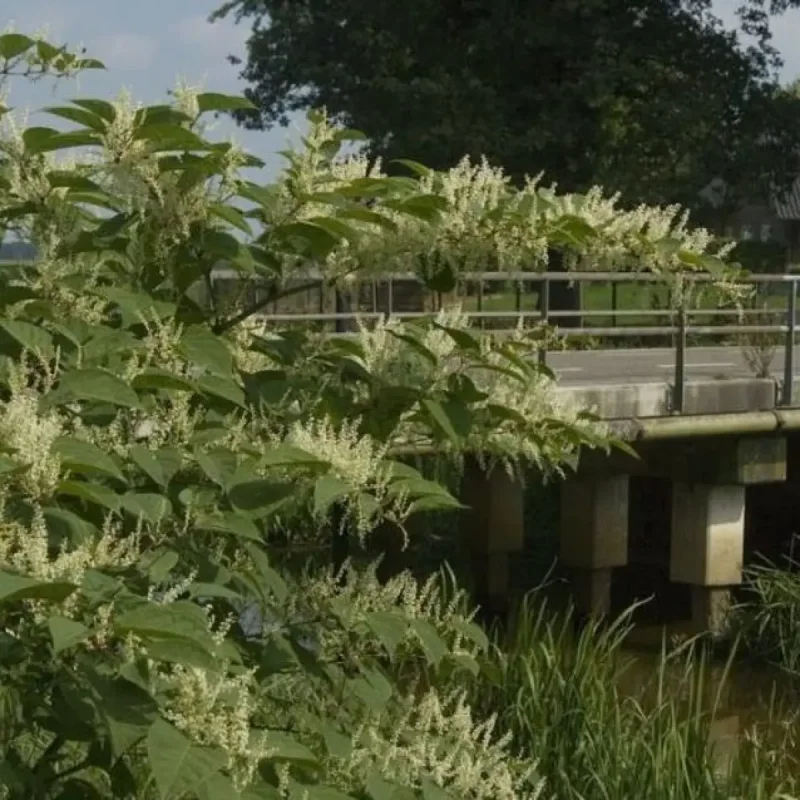
Dutch provincial and municipal authorities are calling on residents to help eradicate the invasive Japanese knotweed, which is rapidly spreading across Limburg, Gemert-Bakel, and Groningen as of July 2026.
The aggressive plant displaces native species and threatens public infrastructure by growing through asphalt, foundations, and pipelines.
Severe Risks to Property
An expert from the province of Limburg highlighted the severe risks posed by the weed to both public and private properties.
"The Japanese knotweed is capable of causing major damage to almost everything that humans like to use: buildings, roads, tunnels, and other infrastructure," said an expert from the province of Limburg.
Eradication costs for homeowners can vary significantly depending on how far the roots, which can reach depths of three meters, have penetrated the ground.
"That depends on how widespread the plant already is," stated the province of Limburg.
While minor infestations might cost only a few dozen euros to manage, extensive growth requires professional intervention.
"It could concern a few tens of euros.
There is also a chance that it will cost a citizen hundreds to thousands of euros," the province of Limburg added.
Property owners are advised to act immediately upon discovering the plant to avoid full-scale excavation of their gardens.
"Sometimes this also involves excavating a lot of soil. The costs of this can quickly add up.
It is therefore very important to be there early if you find the Japanese knotweed in your garden," explained the province of Limburg.
The Netherlands Food and Consumer Product Safety Authority (NVWA) issued operational guidelines, warning that traditional landscaping methods can exacerbate the infestation.
"A long breath is needed to combat the knotweed," wrote the Netherlands Food and Consumer Product Safety Authority (NVWA).
According to the agency, tiny fragments of the stem or rhizome left on machinery can easily take root in new areas.
"Mowing alone does not help, and actually increases the risk of spreading," warned the Netherlands Food and Consumer Product Safety Authority (NVWA).
National infrastructure agency Rijkswaterstaat confirmed that large-scale resources are being deployed to manage the weed near major highways and bridges.
"If we do nothing, dangerous situations will arise. That is not an option," said Rijkswaterstaat.
Local governments, including the municipality of Gemert-Bakel and the province of Groningen, have established dedicated digital platforms to help citizens identify the plant's bamboo-like stems and report sightings for targeted eradication efforts.