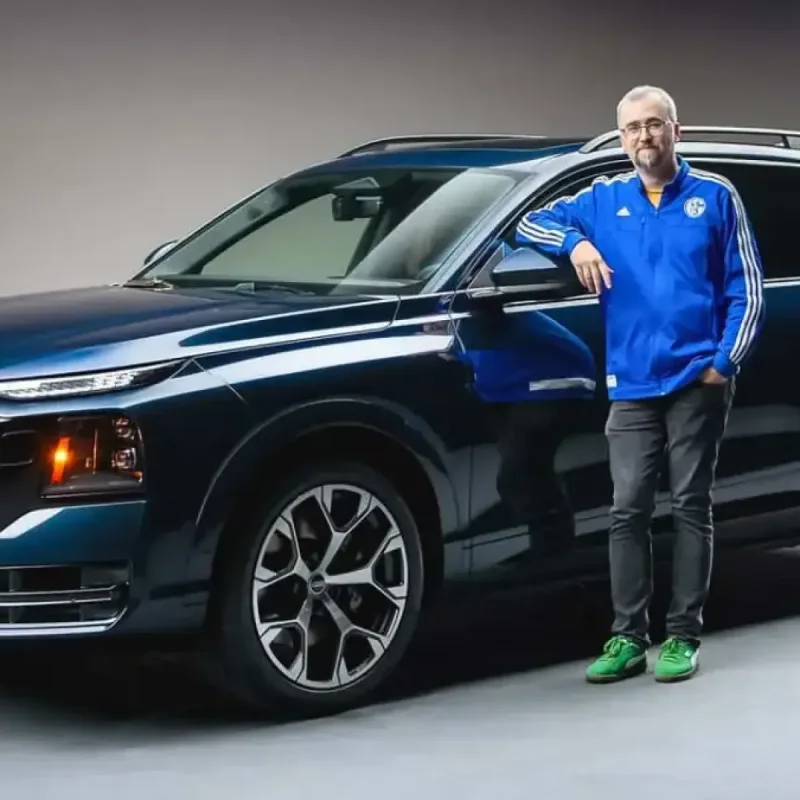
Audi has unveiled two new flagship SUVs, the Q9 and SQ9, aimed at competing with the Mercedes GLS and BMW X7 in the luxury market.
The Q9 is now available for order and is expected to reach customers in the last quarter of 2026.
Prices start at €108,400, significantly higher than the related Q7, which begins at €87,900.
Design and Space
The Q9 features an extended wheelbase of 3.14 meters and a length of 5.31 meters, providing ample space for up to seven passengers.
The second row can be configured with two electric captain's chairs for added comfort, while the base version offers a three-seat bench.
As Audi's technical flagship, the Q9 includes electric doors, a feature typically found in luxury-class vehicles.
Both the Q9 and SQ9 offer three rows of seats for up to seven occupants, with options for two individual seats in the second row to create a lounge-like atmosphere.
Electrically adjustable seats facilitate access to the third row, even with child seats installed.
The cabins feature premium materials such as fine Nappa leather, carbon trim, and customizable color schemes.
Comfort amenities include ventilated, heated, and massage seats, along with a five-zone climate control system and multiple USB charging ports.
Both SUVs are equipped with the largest panoramic glass roof Audi has installed in a production model, enhancing cabin brightness.
Engine and Performance
Initial engine options for the Q9 include a 3.0-liter V6 diesel with 220 kW (299 hp) and mild-hybrid technology that enables electric-only movement during parking maneuvers.
The sportier SQ9 model upgrades to a 4.0-liter V8 bi-turbo producing approximately 588 kW (800 hp).
It uses an 8-speed Tiptronic transmission and a rear-biased quattro all-wheel-drive system for dynamic performance.
"The sprint from 0 to 100 km/h is achieved in just 3.8 seconds," said Audi, highlighting the SQ9 as one of the fastest three-row SUVs in its class.
The SQ9 also includes an electronically controlled rear differential and standard rear-axle steering, which reduces turning radius at low speeds and enhances stability at higher speeds.
The adaptive air suspension with variable damping is standard on the SQ9, allowing the system to adjust ride height and suspension stiffness to match road conditions and driving modes.
Optional sport packages further refine the suspension and integrate with driving programs that adjust engine, transmission, steering, and chassis settings.
The model is designed not only for speed but also for comfort and practicality, with a towing capacity of around 3,500 kg.
Technology and Safety
Digital technology includes Audi's Digital Stage infotainment system, featuring a digital instrument cluster, central touchscreen, a passenger display, and a head-up display.
Voice control via Amazon Alexa is integrated, and a premium Bang & Olufsen 4D sound system with seat bass actuators is optionally available.
Lighting technology uses digital Matrix LED headlights and digital OLED taillights with individually controllable segments and animated light signatures.
A unique feature is the projection of a turn signal symbol onto the road to alert pedestrians and cyclists at night.
Safety and driver assistance systems include standard emergency braking, blind-spot monitoring, cross-traffic alert, a 360-degree camera, and parking assistance.
Both models also support semi-autonomous driving on suitable highways.
To address concerns about its large size, Audi has equipped the Q9 with all-wheel steering and advanced assist systems, including automatic parking and trailer reversing assistance.
Visually, the SQ9 features a prominent Singleframe grille, wide wheel arches, and a muscular hood.
Signature elements like aluminum accents, quad exhaust tips, and 22-inch wheels (with optional 23-inch variants) underscore its sporty character.