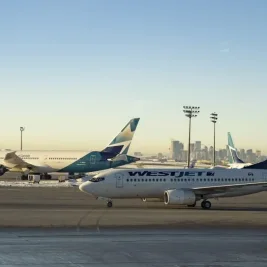
WestJet cabin crew could begin grounding flights as early as Friday if contract negotiations between the carrier and union representatives fail to produce an agreement before a mandatory cooling-off period expires.
The potential labor disruption follows a mid-July vote in which unionized flight attendants voted 99 percent in favor of a strike mandate.
Any work stoppage requires a formal 72-hour notice from the Canadian Union of Public Employees (CUPE), which could trigger pre-emptive flight cancellations ahead of the peak summer long weekend.
To mitigate travel disruptions, WestJet announced that passengers scheduled to fly between July 30 and August 4 may modify or cancel their reservations without incurring fees.
The airline confirmed that regional WestJet Encore flights and partner code-share routes, including those operated by Delta Air Lines, will remain unaffected by the union action.
Key Issues in Negotiations
Unpaid work during ground operations and overall wage increases represent the primary impasses in the negotiations, mirroring labor tensions that led to an Air Canada work stoppage involving 10,000 cabin crew members last year.
"The sticking point right now for us is unpaid work and how our wage is triggered.
In addition to that, it’s our actual wage rate," said Alia Hussain, Chair of the CUPE WestJet Contingent.
Negotiations continue as the union maintains that cabin crews are required to perform significant duties prior to flight departures without receiving hourly pay.
"We believe that there is a large amount of unpaid work, which is why this remains an outstanding issue at the bargaining table," Hussain said.
Addressing the ongoing dispute, management stated that the strike authorization is a standard procedural step during collective bargaining rather than a guarantee of a shutdown.
"We are steadfast in our commitment to reach a meaningful agreement with CUPE that recognizes the contribution and professionalism of our cabin crew members and keeps WestJet competitive and sustainable," said Alexis von Hoensbroech, Chief Executive Officer of WestJet.
Industry analysts emphasize the financial risks associated with a potential operational disruption during peak summer demand across Canada.
"WestJet can’t afford a complete shutdown during their peak summer travel period," said John Gradek, Aviation Management Professor at McGill University.
The union has intensified public advocacy efforts leading up to the deadline, including a July 14 rally where roughly 250 off-duty flight attendants picketed in uniform outside WestJet headquarters in Calgary displaying signs such as "Ready to Strike" and "Unpaid work won't fly."
Passenger advocacy groups note that federal regulations require airlines to rebook affected travelers on alternative carriers if flights are canceled ahead of a potential shutdown.
"Those actions are business decisions within WestJet’s control and are not required for safety reasons," said Gabor Lukacs, President of Air Passenger Rights.
Passengers facing cancellations before an actual strike begins may also be entitled to cash compensation reaching up to $1,000 depending on the circumstances, with full refund options available if a strike officially halts operations.