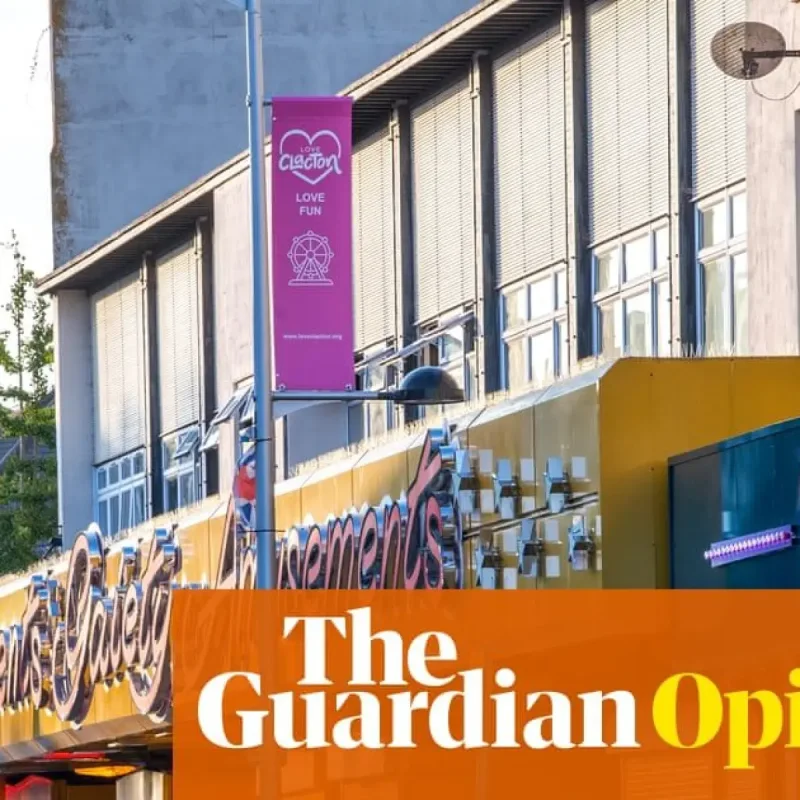
Reform UK leader Nigel Farage faces an unprecedented drop in public approval as he contests a self-triggered by-election in Clacton ahead of the August 13 vote.
The decline follows intense scrutiny over his personal finances, particularly a parliamentary standards investigation into an undeclared £5 million personal gift from Thailand-based crypto billionaire Christopher Harborne.
Polling Data Shows Sharp Decline
Polling data from YouGov indicates that Farage's popularity has plummeted to an all-time low, with only 22 percent favorable support.
Meanwhile, 68 percent of British voters hold an unfavorable view, giving him a net approval rating of minus 46.
Patrick English, head of elections and political and social data at YouGov, noted that Farage's net favourability score has been trending downward since May last year.
English said the current campaign has failed to reverse that negative trajectory.
“It remains to be seen whether the ongoing Clacton by-election campaign will further impact his popularity, but so far at the very least it does not seem to have interrupted that trend,” he said.
The political fallout coincides with shifting nationwide polling, where a recent YouGov survey shows Reform UK, Labour, and the Conservative Party in a statistical tie at 22, 22, and 21 percent respectively.
Local Sentiment Divided
Local sentiment in Clacton remains sharply divided between frustration over economic conditions and skepticism about the motivations behind the by-election.
“The cost of living these days is stupid,” said a Clacton resident wearing a mechanic's shirt, adding that despite working 40 or 50 hours a week, financial pressure remains constant.
Other voters expressed indifference toward political controversies, viewing financial scandals as typical conduct for elected officials.
“I know how corrupt everything is,” said a former soldier who served 22 years, adding that voters have limited alternatives.
Discontent with major political parties continues to drive voters toward alternative choices despite reservations about individual candidates.
“Do you want him as a prime minister? Probably not, but what choice do we have?”
said an elderly male resident.
Some voters expressed willingness to support non-traditional candidates despite previous electoral regrets.
“You’ve got to give them a chance,” said an elderly resident when questioned about supporting candidates who admire former leadership.
Skepticism over migration issues also remains prominent among the electorate in the coastal constituency.
“It’s an easy route out, isn’t it?” said a young resident regarding blame placed on migrants, while reaffirming his intention to back Farage.
False claims regarding demographic integration have also circulated among local voters during the campaign.
“Eighty-five per cent of Muslim women can’t even speak English, and that’s a fact,” said a middle-aged resident, who refused to provide specific evidence when asked for the source.
Census data contradicts the claim, showing two-thirds of Muslim women speak English as their main language, with 87.7 percent speaking it proficiently.
Other residents expressed deep dissatisfaction with the general state of national affairs.
“This country’s in a right mess,” said a middle-aged local resident, summarizing his view as “everything about it.”
Concerns were also raised regarding the motivation behind Farage's decision to resign his seat to force a new vote.
“He wants to show everyone that even after the £5 million bung, they still want me,” said a focus group participant.
Some former supporters expressed confusion over the necessity of triggering the by-election.
“I thought it was a bit peculiar and I can’t understand why he wants to do it again,” said a former voter.
Other voters questioned Farage's positioning against the political establishment.
“He talks about putting two fingers up to the establishment. But he is the establishment,” said a resident.
Opinions on the campaign's justification remained mixed among Clacton residents.
“He’s quite brave, I think,” said one local voter.
Another voter supported the principle of seeking a renewed mandate from constituents.
“He wanted to show that the people of Clacton wanted to keep him, and I think that’s reasonable,” said the voter, who plans to vote for satirist Count Binface.
Conversely, critics argued the by-election imposes unnecessary financial costs on the community.
“He’s been using people as pawns in his little game to prove a point to the government,” said a local resident.
Taxpayers' financial burden was highlighted as a primary concern given the area's economic challenges.
“It also costs a lot of money, and we’re a low socio-economic area to start with,” said a constituent.
Voters also discussed Farage's connection to working-class issues in contrast to his personal wealth.
“Some of the things he’s come out with, everyone was thinking that someone had to say it, but only he has,” said a focus group attendee.
Dissatisfaction with mainstream political options continued to drive interest in alternative figures.
“I think the British people are looking for an alternative. The Conservatives have let them down.
Labour have let them down,” said a voter.
Supporters argued Farage willingly addresses controversial political subjects despite criticism.
“Because the subjects he’s addressing are labelled as racism, whoever brings them up is always going to get hammered,” said a resident.
However, opponents questioned whether his public persona matches his background.
“He comes across like, oh, I’m just like one of you, but he isn’t. How many houses does he have?”
said a voter.
Others challenged the authenticity of his pub-frequenting public image.
“He’s very good at giving this impression, beer in one hand, fag in the other, cor blimey, I’m one of your mates down the pub,” said a resident.
Confusion surrounding the origin of the £5 million gift remained common across focus group participants.
“I think he got the money from a crypto guy who’s basically a fraudster,” said a local resident, dismissing the idea that Farage's mother could have provided the funds.
Voters offered varying interpretations regarding the intent of the financial donation.
“If it was for the security side of things, that’s fair enough,” said one participant.
Others speculated on potential commercial motivations for the funds.
“Was it in order to promote cryptocurrency?” said a voter.
Alternative explanations centered on political encouragement prior to the election.
“I thought he was given it by this donor to encourage him to be an MP,” said a participant.
Defenders maintained that private financial gifts received prior to taking office were unrestrictive.
“He wasn’t an MP at the time, was he?” said a resident.
Supporters asserted that personal gifts remain at the recipient's sole discretion.
“It was a personal gift to him. So he can do what he wants,” said a voter.
Nevertheless, previous supporters expressed concern regarding donor influence over elected officials.
“But what did they want in return for the five million? Nobody should have influence over an MP like that,” said a 2024 voter.
Public statements regarding the gift drew further criticism from residents struggling financially.
“He stood there and said ‘this money is mine. I could buy a Ferrari with it’.
I found that a little bit, like, you’re talking to people that don’t have any money,” said a voter.
Constituents noted that such comments highlighted a disconnect with local economic reality.
“I feel this is why he can’t relate to normal people. He gets a £5 million bung and thinks it’s no big deal,” said a resident.
Critical voters suggested that early disclosure could have mitigated the ongoing controversy.
“As soon as he became an MP he should have said ‘by the way, I was given five million by a foreign businessman,’ and he’d have been alright,” said a participant.
The decision of major political parties to refrain from running candidates in the by-election drew mixed reactions.
“I don’t disagree with them, to be honest, based on the fact that he called an election. He should have carried on,” said a constituent.
Some voters viewed the decision by major parties as a strategy to deny legitimacy to the contest.
“I suppose he’s doing it to get a mandate, so they can say ‘we didn’t stand, so that doesn’t prove anything’,” said a voter.
Other focus group members offered alternative explanations for the absence of major candidates.
“They’re probably scared,” said a participant.
With major parties abstaining from the race, Farage faces a field of independent candidates, including satirist Count Binface, in the upcoming August 13 vote.