The U. S.
Department of Justice is seeking to revoke the citizenship of 40 naturalized Americans accused of fraud, concealment or serious offenses during immigration proceedings.
The cases include residents in Arizona and Florida and form part of an expanded denaturalization effort under the Trump administration.
Complaints were filed in multiple federal courts between Aug. 21 and Oct.
2, according to the Justice Department.
The allegations range from immigration fraud and identity misuse to criminal conduct that prosecutors say was not disclosed during naturalization.
U. S.
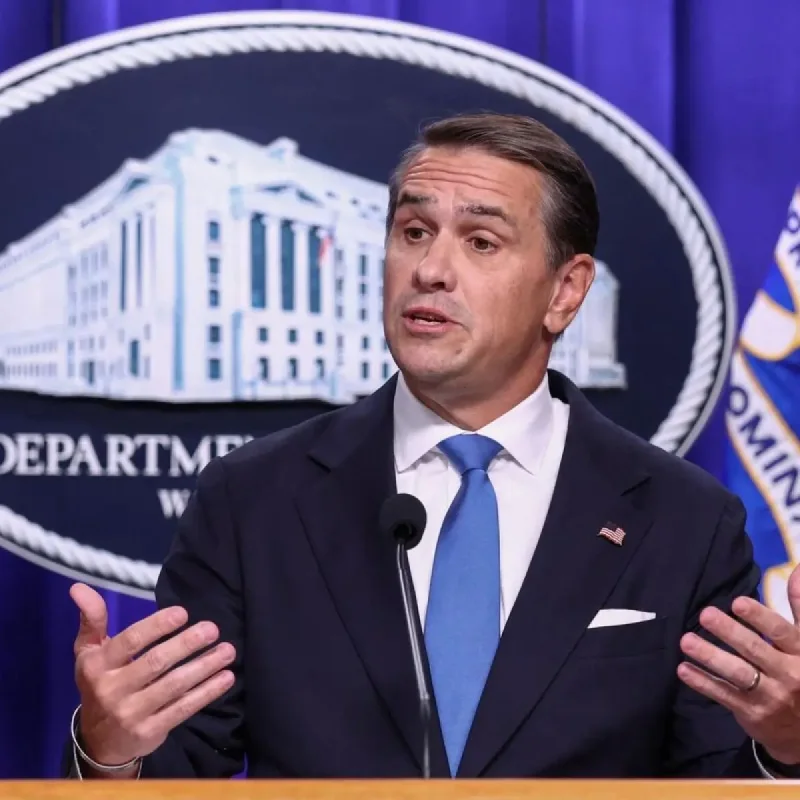
Attorney General Todd Blanche described the action as a major expansion of denaturalization cases in a written statement.
"The move to strip citizenship of the 40 people marks the largest denaturalization effort in modern history," Blanche said.
The Justice Department said the cases involve people from 20 countries, with defendants ranging in age from 26 to 76.
Prosecutors said the complaints seek court orders because citizenship was allegedly obtained through unlawful means.
"Every single one of these individuals lied their way into U. S.
citizenship," said Brett A. Shumate, Assistant Attorney General of the Justice Department's Civil Division.
One Case Centers on a Chicago Resident
One case involves Emmanuel Tayo Akinkunmi, a Chicago resident born in Nigeria who became a U. S.
citizen in 2011.
A complaint filed in Illinois alleges he used another identity before seeking immigration benefits and concealed prior immigration history.
The government alleges Akinkunmi had previously abandoned green card status under another identity.
It also alleges he later denied using other names or having prior immigration exclusions when applying for residency and citizenship.
According to Newsweek, the complaint used the phrase "procured his naturalization unlawfully" to describe the government's allegation against Akinkunmi.
Newsweek also reported the filing included the allegation that he "willfully misrepresented and concealed material facts in applying to naturalize."
The Justice Department also filed cases against two Arizona residents.
Prosecutors allege Gilbert Barraza falsely claimed U. S.
birth history and later concealed those issues during his citizenship process.
"The United States seeks Barraza's denaturalization because he was not lawfully admitted for permanent residence and made numerous material misstatements to obtain his U.
S. citizenship," the department said.
Other Arizona and Florida cases involve allegations of false identities, undisclosed criminal conduct and financial crimes.
The department said courts must determine whether citizenship was obtained illegally.
In one case, the department said the court should revoke Nabavi's naturalization because his criminal act and false testimony in naturalization proceedings rendered him unable to demonstrate the required good moral character.
The department also said he procured his naturalization by concealment of material facts and willful misrepresentations.
Federal courts can revoke naturalized citizenship if the government proves it was obtained through illegal means or by hiding material facts.
Previous cases have been limited, with the Brennan Center for Justice reporting an average of about 11 denaturalization cases initiated annually between 1990 and 2017.
The U. S.
Supreme Court previously placed limits on denaturalization authority in Maslenjak v. United States.
The ruling held that an illegal act during the naturalization process must have contributed to obtaining citizenship.