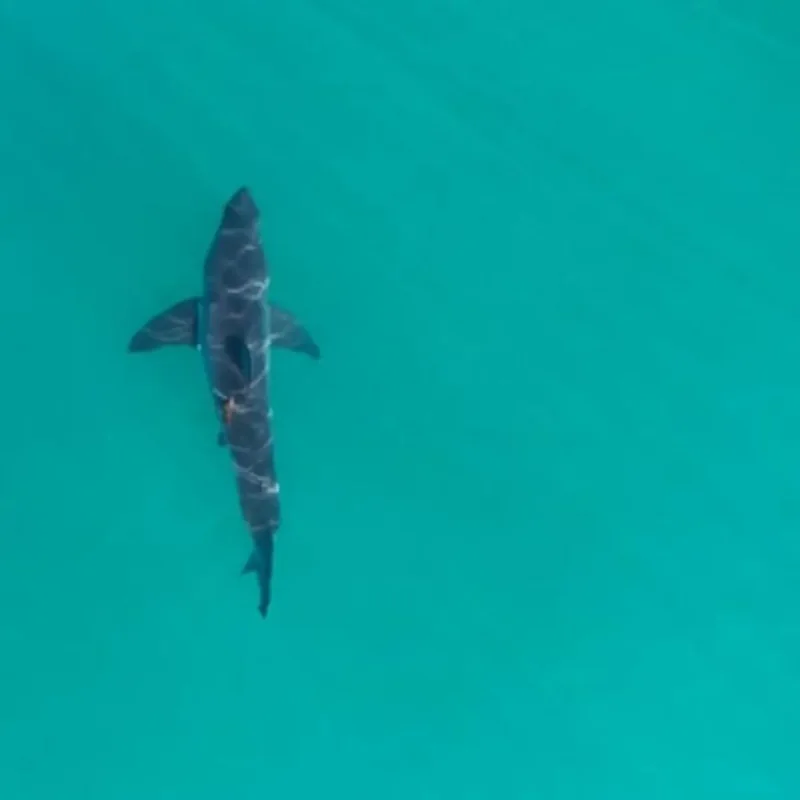
"Our conclusion is we think sharks can actually tell the difference between people, and because we don't smell like food, sound like food, look like food, they don't consider us food," Lowe said.
"We know that, because could you imagine the number of people that would be bitten or consumed in California?"
Understanding Shark Behavior
Shark encounter rates vary significantly by region due to differing shark species.
Florida, which saw 11 unprovoked bites in 2025 comprising 44% of the US total, is primarily populated by reef sharks like blacktips.
Meanwhile, recent shark bites in Australia have involved bull sharks and white sharks, with warmer ocean temperatures drawing bull sharks closer to populated areas like Sydney.
Gavin Naylor, the director of the Florida Program for Shark Research at the University of Florida, explained the species differences.
"A white shark is about as different from a blacktip shark as a kangaroo is from a dog," Naylor said.
"You cannot compare bites in California with bites in Florida. The bites in Florida are from completely different species."
Australia experiences more bites on average because the sharks near population centers are significantly larger than the juvenile sharks found near California beaches.
"I tell people all the time that if sharks really did target people we'd have about 10,000 bites in the US alone," Naylor says.
"Humans are like little plump sausages, they're very easy to eat. It'd be a smorgasbord."