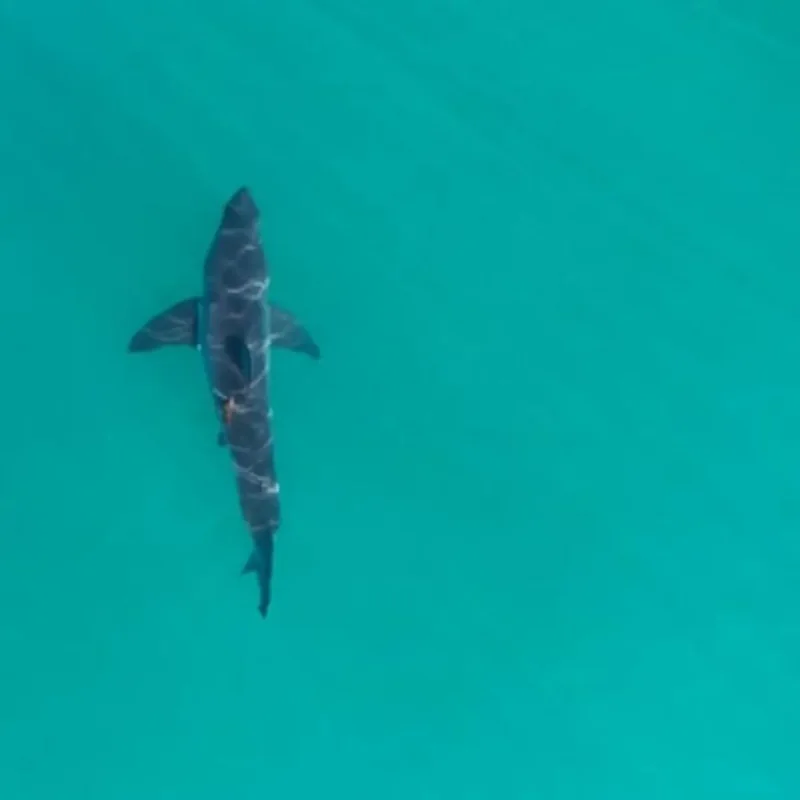
"What that tells you, the sharks are actually doing their level best to avoid people."
The primary theory for unprovoked shark attacks remains mistaken identity, though data shows California white sharks adapt quickly even if an incident occurs.
"You've got these animals swimming around this environment all the time," Lowe said.
"Maybe the sharks that mistakenly bite people haven't been around people much, or maybe they don't make mistakes very often, period," he said.
"I just don't know how else to explain it."
Drone data showing sharks turning away from humans after getting close has altered safety perspectives over the last two decades.
"My advice was any shark that's bigger than a person could be a potential threat," Lowe said.
"Flash forward 20 years … I swim with these white sharks every day and I have no qualms doing it because of the data that we collected."