The United Nations' climate agency warned on Friday that a rapidly intensifying El Nino phenomenon will develop into a strong event by September, threatening global food production already strained by geopolitical conflicts and fertilizer supply shocks.
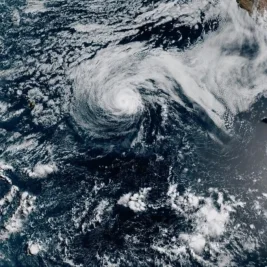
According to the World Meteorological Organization (WMO), ocean temperatures across the central and eastern equatorial Pacific are warming consistently.
This climate pattern disrupts worldwide weather, bringing droughts to Asia and Australia alongside heavy rainfall to South America.
The current weather disruption coincides with a severe fertilizer supply shock.
Reports from the International Rice Research Institute note that nitrogen-based fertilizer prices in Thailand and the Philippines have surged 40% to 50% since the start of the Iran conflict, which has blocked shipping through the critical Strait of Hormuz.
Experts warn that higher energy costs and reduced fertilizer use will weaken crop yields and resilience just as extreme weather patterns intensify.
Output for wheat and rice is expected to fall this year, with global rice crops projected to see a double-digit decline.
WMO officials emphasized that while climate change does not directly increase El Nino frequency, a warmer atmosphere amplifies its effects by providing more moisture and energy for heatwaves and extreme precipitation.
"El Nino conditions have developed in the tropical Pacific and are forecast to strengthen rapidly over the coming months, increasing the likelihood of extreme weather events in many parts of the world," the WMO said.
The agency stated that global climate models predict sea-surface temperature anomalies will exceed 2 degrees Celsius in key monitoring regions, extending weather impacts well into 2027.
It noted a rapid development into a strong El Nino event during July-September.
WMO Climate Scientist Alvaro Silva explained that confidence has grown regarding the strength of the developing conditions in the equatorial Pacific.
"We have much more confidence that strong El Nino conditions are developing in the equatorial Pacific," said Silva.
He noted that further updates will be issued if the phenomenon intensifies into an even more severe classification.
"For example, if we have forecasts suggesting this will be a really strong El Nino," Silva said.
The scientist added that these environmental impacts will endure across multiple regions globally.
"The impacts of El Nino will be felt in different regions until the end of the year and beyond, also during 2027," underlined Silva.
WMO Chief Celeste Saulo stated that early warning support is being increased to protect vulnerable economic sectors like public health and agriculture.
"Such moves are vital to save lives and cushion the impact on our economies and our communities," said Saulo.
She warned that the climate event increases severe environmental risks across both land and marine environments.
"El Nino conditions are already under way and are forecast to strengthen rapidly into a strong event," she said.
The WMO chief concluded that changing pressure patterns will worsen extreme moisture fluctuations globally.
"This will intensify the chances of drought and heavy rainfall and the risk of heatwaves on land and marine heatwaves in many regions," she said.
In response to these immediate climate threats, Peru has already declared a 60-day state of emergency across 800 municipalities due to imminent flooding and landslide risks affecting over 9.3 million citizens.