Severe storms, wildfires, and intense heat waves disrupted communities across Canada on July 3, 2026, as international climate monitors warned that a newly developed El Niño event is strengthening rapidly in the tropical Pacific Ocean.
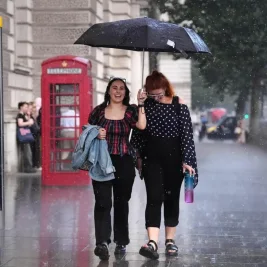
The extreme weather triggered flooding in Manitoba, prompted wildfire evacuations in the Northwest Territories, and brought destructive thunderstorms that canceled Canada Day celebrations in Ottawa.
Meteorologists indicate that a shifting jet stream and the transition from La Niña are driving the current summer volatility, while a looming "super" El Niño threatens heavier global disruptions by winter.
Regional Weather Disparities
Environment and Climate Change Canada officials noted that the country is experiencing vast regional weather disparities, which remains typical for its large geography.
Officials urged residents to monitor local alerts and prioritize safety during severe heat and lightning storms.
"We've had a lot of wild weather," said Jennifer Smith, an Ottawa-based meteorologist with Environment and Climate Change Canada.
Smith emphasized the necessity of staying hydrated during extreme heat waves and monitoring vulnerable neighbors.
"When thunder roars, go indoors," said Smith, providing immediate safety guidance regarding ongoing summer thunderstorms.
Government scientists explained that while El Niño conditions were officially declared on June 11, drawing definitive conclusions about its direct impact on the current summer season remains premature.
The fast-flowing atmospheric jet stream has remained stuck, compounding regional droughts and heavy rains.
"Canada has a very variable climate.
It's usually hot somewhere, cold somewhere, wet somewhere, dry somewhere," said Barrie Bonsal, a Saskatoon-based research scientist with Environment and Climate Change Canada.
Bonsal stated that historical weather trends should guide public expectations, though residents must prepare for increasingly intense conditions.
"I think it's telling us something, that these impacts are getting stronger," said Bonsal, noting that public observations reflect an escalating shift in climate severity.
Forecasters from the Weather Network noted that the current atmospheric instability stems from a turbulent seasonal transition.
While the weather roller coaster is expected to settle, erratic patterns will likely persist through the remaining summer months.
"The change in the atmosphere is rarely smooth sailing," said Doug Gillham, senior meteorologist at the Weather Network.
Gillham predicted that Western Canada will experience warmer, drier conditions, though severe droughts remain restricted to parts of British Columbia.
"The roller coaster will settle down, but it's not going to stop," said Gillham, cautioning that long-term forecasting cannot offer absolute certainties.
International climate agencies confirmed that the prolonged warming of sea surface temperatures will likely intensify global weather risks.
The World Meteorological Organization noted that the system is developing quickly during the July–September period.
"El Niño conditions are already underway and are forecast to strengthen rapidly into a strong event, as accurately anticipated by WMO forecasts," said WMO Secretary-General Celeste Saulo.
Saulo warned that the phenomenon will elevate the global risks of extreme heat waves and severe precipitation.
"El Niño conditions will pour fuel on the fire of a warming world," warned United Nations Secretary-General António Guterres, raising concerns about how the climate cycle interacts with existing global temperature rises.
Data from the National Oceanic and Atmospheric Administration indicates a 63 percent chance that ocean temperatures will rise 2°C above historical averages by winter, classifying it as a "super" El Niño.
Scientists stated that while stronger cycles increase the probability of severe global economic and environmental impacts, regional outcomes can still vary.
"Stronger El Niño events do not ensure strong impacts; they can only make certain impacts more likely," said Michelle L'Heureux, a physical scientist at NOAA.