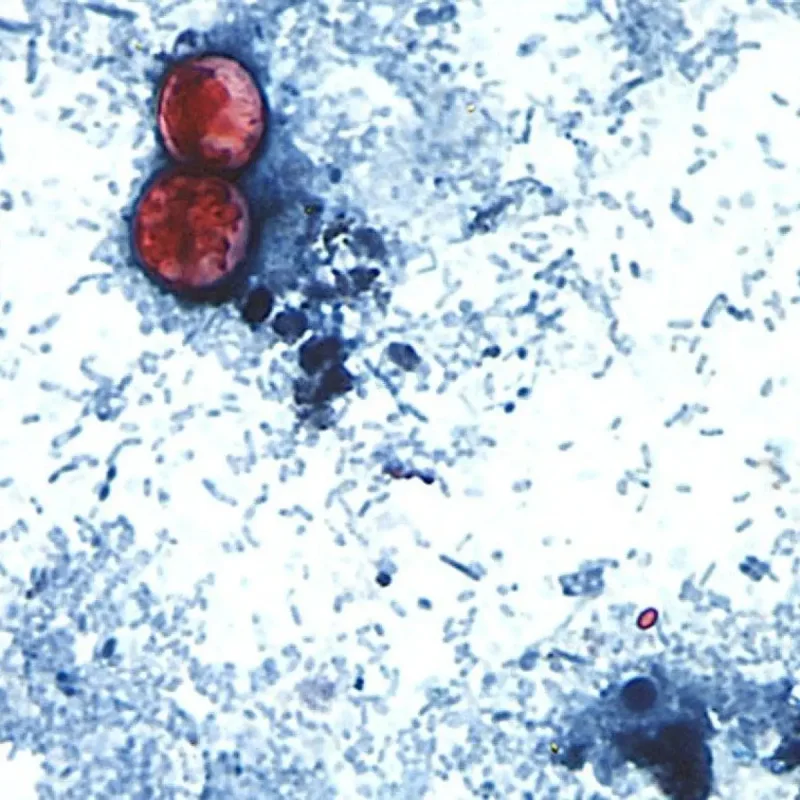
A widespread outbreak of cyclospora, a microscopic parasite, has caused over 2,000 cases of severe diarrhea across 21 US states, according to health authorities.
The pathogen contaminates fresh produce such as berries, salad leaves, and coriander, leading to gastrointestinal distress. Dozens of patients have required hospitalization due to extreme dehydration.
Challenges in Detection and Tracing
Health officials have not yet identified the specific source of the contamination. Tracing the illness is difficult because symptoms often appear days or weeks after consuming contaminated food.
Diagnosis requires a specific test.
"The doctor has to specifically send off for a Cyclospora stain to detect it," said Dr. Linda Yancey, an infectious-disease specialist at Memorial Hermann Health System.
Standard stool exams do not routinely scan for cyclospora, complicating detection across healthcare networks.
Dr. Yancey noted that outbreaks of cyclospora are rare compared to listeria, E. coli, or salmonella.
Unlike common viral infections, cyclosporiasis is not transmitted person-to-person. Infection occurs only by ingesting contaminated water or food.
The illness can last for weeks or months.
"If you get norovirus, you might have a rough 24 or 48 hours, but people with this parasite can be sick for weeks or sometimes even months with a sort of relapsing pattern," said Dr. Caitlin Rivers to CNN.
The parasite is resilient, surviving standard chemical sanitization like bleach. It can persist in pools, lakes, and rivers.
Thorough cooking to an internal temperature of at least 70 degrees Celsius is needed to destroy it.
Geographic Impact
Michigan is the epicenter with over 1,200 cases, a 25-fold increase over its typical annual average. Ohio has confirmed nearly 500 infections, with at least 28 hospitalizations.
New York, Illinois, Indiana, North Carolina, and Texas have also reported rising case counts.